AI Verifies Wild Mushroom as Non-Toxic—Man Eats Without Doubt, Ends Up in ICU
Published atAug 19, 2026 03:16 pm
After the typhoon, a large number of wild mushrooms sprang up in the mountains, meadows, and park green belts. Many people took photos and uploaded them to social media, even using artificial intelligence (AI) to identify whether the mushrooms were poisonous. However, the reliability of AI in identifying wild mushrooms has sparked attention.
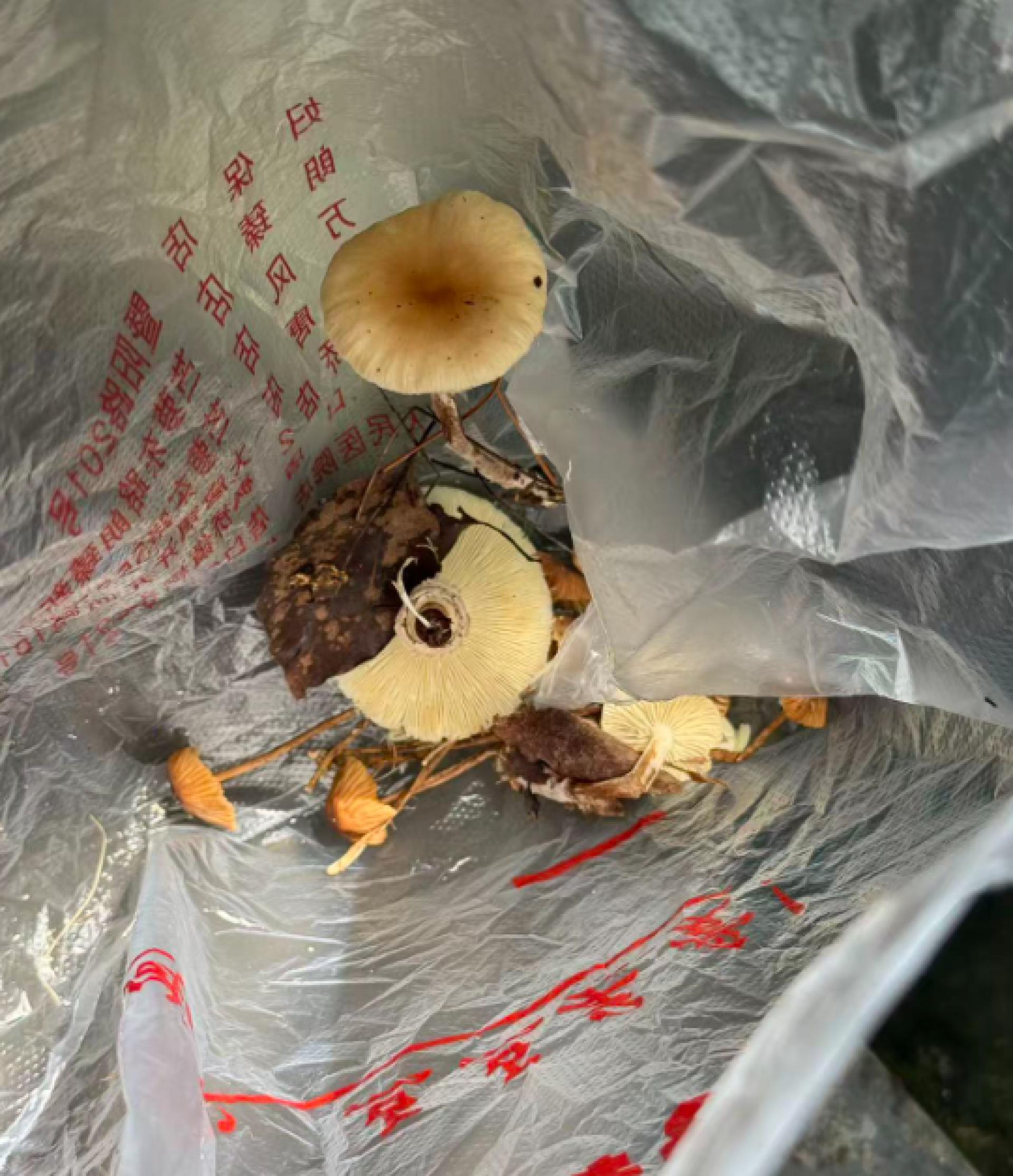
According to China’s 'Metropolis Express', a man surnamed Wang from Zhuji, Zhejiang, recently suffered severe poisoning and was urgently admitted to the intensive care unit (ICU) after mistakenly eating wild mushrooms identified as “non-toxic” by AI.
The report stated that Mr. Wang found a large quantity of wild mushrooms growing near his home and picked some to eat. To ensure safety, he specifically took a photo and used AI to identify them before cooking. After being informed by AI that the mushrooms were “non-toxic,” he cooked and ate them for lunch.
For several hours after eating, Mr. Wang had no obvious symptoms, until around 5 p.m., when he began to experience abdominal discomfort and had five episodes of watery diarrhea, followed by soreness in both arms and generalized weakness.
After his family noticed something was wrong, they immediately took him to Zhuji People's Hospital.
Upon examination, Mr. Wang’s creatine kinase (CK) level was as high as 28,771 U/L—about 100 times the normal value—and he also had acidosis and high lactic acid, indicating acute kidney injury and rhabdomyolysis. The situation was critical.
After communication with his family, Mr. Wang was urgently transferred to the ICU for treatment. After detoxification, symptomatic treatment, and organ function protection, he has since recovered and been discharged from the hospital. AI's successive identifications included Leucocoprinus birnbaumii, Leucocoprinus cretaceus, Leucocoprinus rigidipes, Chlorophyllum molybdites, and Leucocoprinus cepistipes. Some species were clearly marked as toxic, others noted as similar to certain highly toxic mushrooms and advised against eating.Reporter Tests AI With Five Wild Mushrooms—AI Misidentifies Two
To assess the accuracy of AI in identifying wild mushrooms, the reporter collected five species of wild mushrooms and used the phone’s video call function for AI-assisted identification.
AI’s results included Leucocoprinus birnbaumii, Leucocoprinus cretaceus, Leucocoprinus rigidipes, Chlorophyllum molybdites, and Leucocoprinus cepistipes. Some species were clearly marked as toxic, and others were flagged as similar to extremely poisonous mushrooms with recommendations not to eat.
However, according to Lin Wenfei, Director of the Science Outreach Committee of the Chinese Mycological Society and Executive Deputy Director of the Institute of Edible and Medicinal Fungi, School of Life Sciences, Zhejiang University, the actual species were Leucocoprinus birnbaumii, Leucocoprinus rigidipes, Chlorophyllum molybdites, and Psathyrella candolleana, with two being the same species.
Comparing the expert’s identification to the AI’s, there were two discrepancies. The mushroom AI identified as “Leucocoprinus cretaceus” was actually Leucocoprinus rigidipes; the one identified as 'Leucocoprinus cepistipes' was actually Psathyrella candolleana.
In addition, when the reporter used different phones to identify the same wild mushroom via AI, the results differed as well. For example, for the second mushroom, one phone identified it as 'Leucocoprinus cretaceus,' and another as 'Psathyrella prona,' neither of which matched the expert’s identification of 'Leucocoprinus rigidipes.'
Experts Warn: “Do Not Pick or Eat Mushrooms You Don’t Recognize” After Rains Bring Out Masses of Mushrooms
After recent rainfall, large numbers of wild mushrooms have appeared in parks, green belts, and grassy areas of residential complexes in Hangzhou, with many residents snapping photos and uploading them online.
Lin Wenfei said that during recent visits to Hangzhou’s residential areas and Xixi Wetland, he collected over 20 species of fungi and “more than half were toxic.”
It is worth noting that these poisonous mushrooms are not only found deep in the mountains but can also appear in park lawns, by streams, and in residential green areas—places where people are likely to come in contact. Lin Wenfei said that during recent visits to several Hangzhou residential communities and Xixi Wetland, he collected 20+ species of fungi, and 'more than half are toxic.' Lin Wenfei advised that when picking wild fungi, you must first confirm the species. If you cannot be 100% certain, do not pick or eat the wild mushrooms.
He also pointed out that even if a mushroom is confirmed to be a known edible species, it must be thoroughly cooked. Furthermore, people should not use mushroom color to distinguish between edible and poisonous, since some deadly poisonous mushrooms appear grayish-white, nondescript, or look very similar to edible ones sold in markets.
Regarding wild-mushroom safety, Lin Wenfei emphasized: “If you don’t know the wild mushroom, don’t pick it, don’t eat it. That’s the safest rule.”
Han Shenghua, honorary chair of the Culture Branch of the Chinese Mycological Society and with over 30 years of wild mushroom outreach experience, warned that if one feels unwell after mistakenly eating wild mushrooms, seek medical attention as soon as possible.
He suggested that when foraging, it is best to keep an extra one or two complete mushrooms and take clear photos. If discomfort occurs after eating, bring the mushroom samples and photos to the hospital to help doctors quickly determine the species and type of toxin involved, enabling targeted treatment.
Experts also remind that wild mushroom poisoning symptoms vary greatly depending on the toxins. Some cases result in vomiting and diarrhea, but neurotoxic or hemolytic species can further damage the liver and kidneys, and severe cases can even be fatal.
Therefore, AI identification results cannot be used as a basis to determine whether wild mushrooms are edible, let alone serve as a safety guarantee because AI says “non-toxic.”
This article has been translated using our AI technology. While we strive for accuracy,
AI translations
may contain errors. For the most precise information, please refer to the original article.