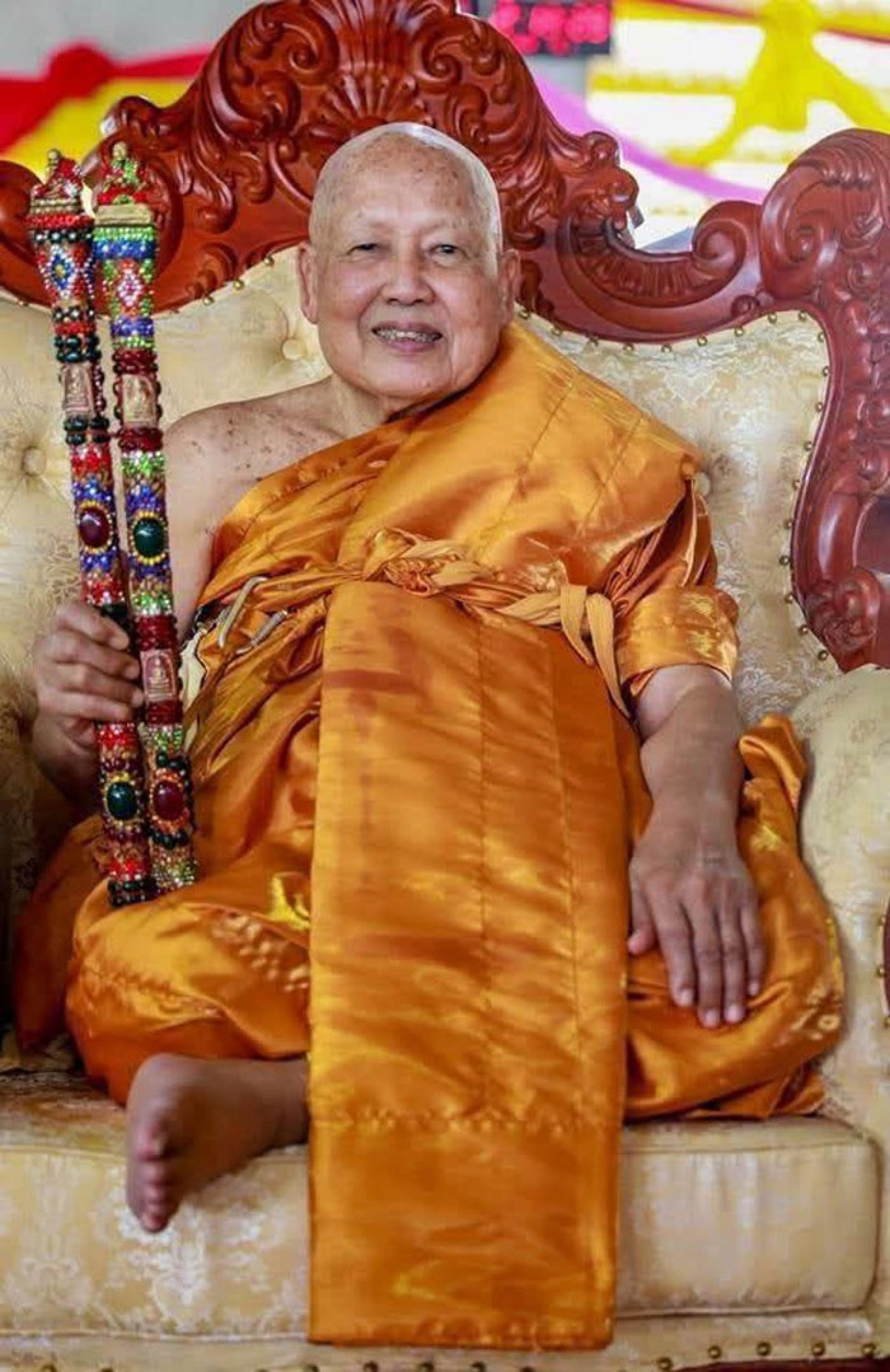
Famous Thai monk and former abbot of Krabi's Tiger Cave Temple (Wat Tham Suea), “Luang Phor Jamnian Seelasettho,” passed away peacefully in Malaysia on August 18, 2026, at the age of 90, after 69 years in monkhood.
Luang Phor Jamnian was one of the most revered meditation masters in the Thai Theravada Buddhist tradition, dedicating his life to Dhamma and meditation. He traveled to the USA, Taiwan, Hong Kong, Indonesia, Malaysia, Singapore, and other countries to spread the Dhamma and guide meditation practice, earning a large following both in Thailand and abroad.

Ordained at 21, Embarked on Decades-Long Meditative Journey
Luang Phor Jamnian was born on May 1, 1936 (B.E. 2479) in a rural village in Nakhon Si Thammarat, southern Thailand.

During his spiritual journey, he immersed himself in both Samatha and Vipassana Kammathana (meditation practices), constantly searching for wise teachers, mentors, and suitable locations for dedicated meditation.
Venturing into the Tiger Cave; Founding Krabi Tiger Cave Temple
In 1975 (B.E. 2518), Luang Phor Jamnian led a group of monks to the “Tiger Cave” area in Krabi for spiritual practice. At that time, the location was still deep jungle, reportedly inhabited by tigers and other wild animals.

There are numerous legends about the Tiger Cave Temple's founding.
According to stories passed down at the temple, when Luang Phor Jamnian entered the jungle-covered valley, he chose to meditate deep within the main limestone cave. It is said that during his deep meditative absorption, he saw tigers calmly moving around the cave without disturbing or attacking the meditating monks.
Later, the monks discovered natural rock formations on the cave walls that resembled and featured the markings of tiger paw prints. To honor the original “owners” of the land, Luang Phor Jamnian named the place “Wat Tham Suea,” or “Tiger Cave Temple.”
Once a remote forest hermitage, the place gradually developed over the years into today’s renowned Krabi Tiger Cave Temple, becoming one of the region’s important Buddhist sanctuaries.
Bonds with Southern Masters; Guidance Toward Inner Practice
Luang Phor Jamnian also shared a deep karmic connection with the prominent southern Thai master, “Pho Than Khlai Wachasit” from Nakhon Si Thammarat.
Historical accounts indicate that, as a young monk, Luang Phor Jamnian greatly revered Pho Than Khlai, personally visiting him for advice, blessings, and guidance.
The teachings from this lineage did not focus on seeking “the most powerful amulets,” but guided disciples to a more fundamental principle—how to care for one’s own mind.
This became an essential aspect of Luang Phor Jamnian’s lifelong spiritual path.
Not Just An Amulet Monk, But an Esteemed Meditation Teacher
In the Thai amulet community, Luang Phor Jamnian was instantly recognizable for his unique appearance—wearing numerous amulets, protective talismans, and sacred objects, even earning the nickname “Phra Hoi Phra,” or “the monk covered in amulets.”

Yet, amulets and sacred objects were only one aspect of Luang Phor Jamnian’s image. More importantly, he was a monk who dedicated his life to meditation and spiritual cultivation.
Over the years, he traveled extensively to teach the Dhamma, giving talks, and personally guiding many people in the practices of meditation, mindfulness, and mind-training.
Due to his long-standing role teaching meditation practices around the world, Luang Phor Jamnian built a broad network of disciples, including not only Thai monks but also Western mindfulness teachers and Buddhist practitioners.
Retirement Years Spent in Solitude: Malaysia Became His Final Home
As he advanced in age, frequent travels and many Dhamma invitations became physically taxing.
Around 2010 (B.E. 2553), Luang Phor Jamnian settled at Wat Khao Lao for the monastic rains retreat, with temple records mentioning that his disciples were concerned for his health and found the location peaceful and suitable for rest and continued practice.
In fact, Malaysia was not a recent part of Luang Phor Jamnian’s later life.
As early as March 3, 2017 (B.E. 2560), the Royal Thai Consulate General in Kota Bharu formally recorded visits to supply lunch to Luang Phor Jamnian in the Gua Musang area of Kelantan. This shows that there had been a group of longtime disciples and followers of Luang Phor Jamnian in Malaysia for many years.