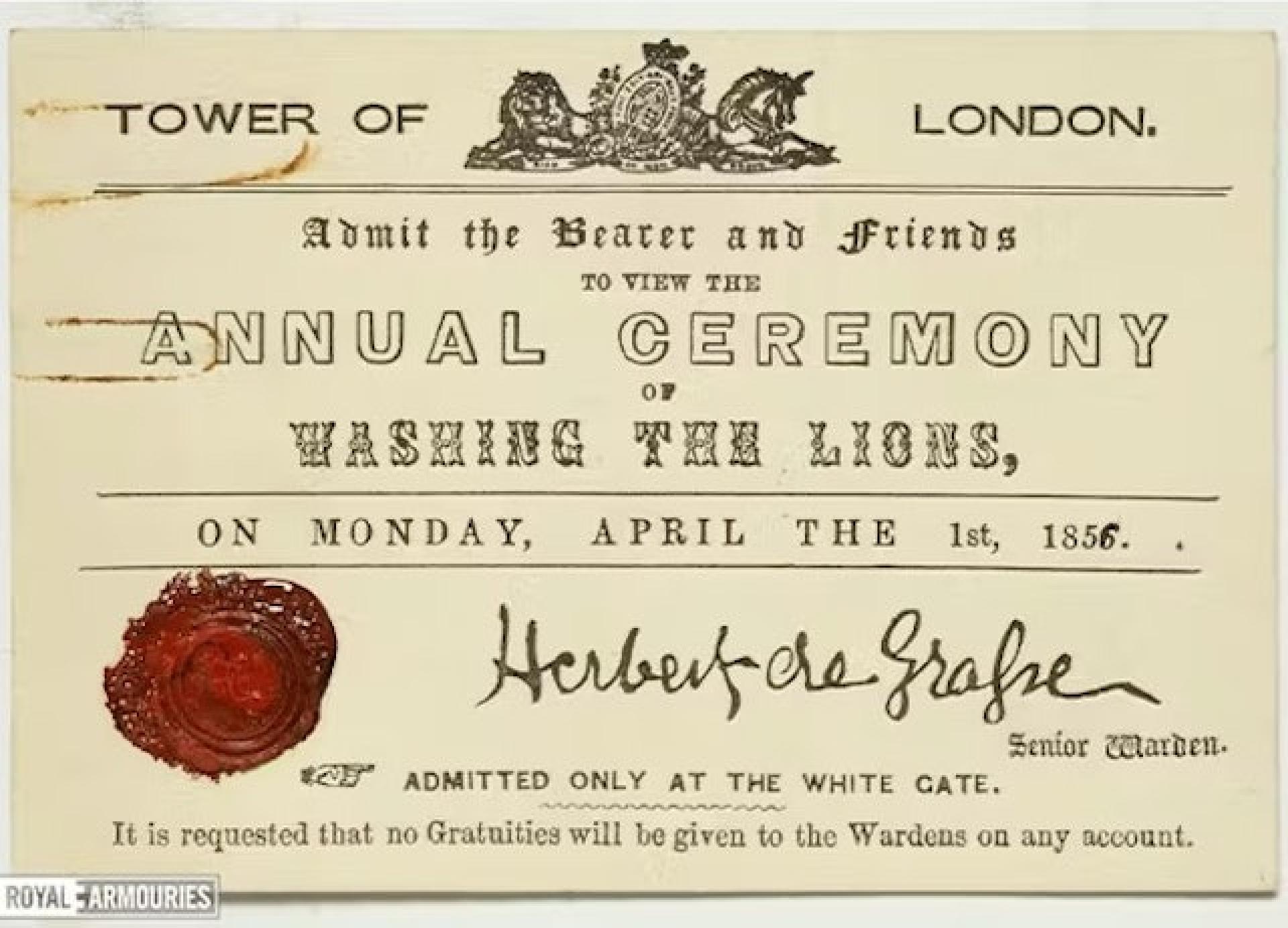
April 1st is April Fools' Day. On March 30th, the Museum of London recounted famous April Fools' Day pranks on social media, which can even be traced back to the 17th century in 1698, with the prank known as the 'Washing of the Lions Ceremony' at the Tower of London. This joke was so successful that it attracted local residents to repeat it year after year—for as long as 160 years.
There are different versions of the origin story of April Fools' Day, but many historians believe the tradition began when France changed its calendar.
In ancient times, the French celebrated New Year in April. In 1582, Pope Gregory XIII introduced a new calendar, moving New Year's Day to January 1st, and France officially adopted the new system. However, due to poor communication at the time, many people did not get the news, or some simply refused to change their tradition, and continued to celebrate New Year in April as before. As a result, they became the target of jokes and pranks by others, leading over time to the custom of playful trickery on April 1st.
The earliest recorded April Fools' Day prank dates back to 1698. According to Alex Boese, founder of the website Museum of Hoaxes, in an interview with National Geographic, London residents at the time were 'informed' that there would be a 'Washing of the Lions Ceremony' at the Tower of London on that day, meaning people could watch lions being bathed. The news drew crowds, who only realized they were the victims of a prank upon arrival.
This prank proved to be very 'successful', as people continued to spread the word and repeat the gag every year, targeting mainly out-of-town visitors. Boese explained, 'By the middle of the 19th century, pranksters even began printing fake tickets, and hundreds or even thousands of people came... only to discover they had been fooled.'
On March 30th, the Museum of London shared a post and uploaded an image of a fake ticket from 1856. The museum explained, 'It looks entirely genuine, but it actually isn't. The date on the ticket is 1856, with an official crest and wax seal, stating that the bearer may use it to attend the official lion washing ceremony.'