Chinese state media Global Times published a full-page article citing the viewpoints of multiple scholars suggesting that Beijing should claim sovereignty over the Batanes Islands, a province island chain north of the Philippines. The article emphasized that this claim has ample historical and international legal basis.
On page eight, the Global Times carried a long article titled “Domestic Scholars Suggest Claiming Sovereignty Over the Batanes Islands,” which disclosed details of an academic seminar held on June 30 in Guangzhou. This seminar was co-hosted by Jinan University’s Regional and Country Studies Institute and the Center for Philippine Studies at the School of International Relations, focusing on “The Issue of Sovereignty over the Batanes Islands Amid Japan-Philippines ‘Delimitation’.”
According to Jinan University’s official website, scholars from the National Institute for South China Sea Studies, the Chinese Academy of Social Sciences, Nanjing University, and other universities and official think tanks attended. “From geographical, cultural, historical, and legal perspectives,” they reached the conclusion that the Batanes Islands “legally belong to China's Taiwan Island,” and that the Philippines' control over the islands lacks historical and legal basis.
The scholars put forth four arguments: Geographically, the Batanes Islands and Taiwan Island both belong to the southern segment of the Ryukyu-Taiwan Arc, making the islands a natural extension southward of Taiwan proper; culturally, the Ivatan people on the islands belong to the same ethnic group as the indigenous peoples of Taiwan; legally, the 1898 Treaty of Paris signed between the US and Spain did not include areas north of 20 degrees north latitude—where the Batanes Islands are located—within the Philippines; historically, the Batanes Islands have always been under Chinese administration, rather than the Philippines.
The Global Times report revealed more of the scholars' arguments. The article stated that as early as over 3,000 years ago, the ancestors of Taiwan migrated to live on the Batanes Islands. The people living on the islands are closely related by blood with the Tao people of Taiwan’s Orchid Island (Lanyu), and they can still communicate fluently to this day.
The article reviewed that during the Three Kingdoms period and at the end of the Ming and beginning of the Qing dynasties in China, the Batanes Islands were under Chinese control until they were occupied by Japan after the First Sino-Japanese War. After World War I, the territory division between the US and Japan put areas south of 20 degrees north under the American colonial Philippines, while areas to the north of that, including the Batanes Islands, remained under Taiwan’s jurisdiction. After World War II, according to international treaties such as the Cairo Declaration and Potsdam Declaration, the Batanes Islands should have been returned to China, but “due to the complicated situation at the time, the Philippines took the opportunity to occupy the islands.”
Dr. Wang Yuanyuan, a researcher at the Institute of South China Sea Historical and Cultural Studies, National Institute for South China Sea Studies, said that as early as 1895, the North Otago Times of New Zealand and the New York Times of the US both carried cables from St. Petersburg indicating that the weak Qing government planned to cede the Batanes and Babuyan Islands to Japan. This, Wang argued, reflected the international recognition at the time of China’s sovereignty over the Batanes Islands.
Ju Hailong, Dean of the School of International Relations at Jinan University, stated that Article III of the 1898 Treaty of Paris set the northern border of Philippine territory at 20 degrees north latitude, and that the core island of Batanes—Batan Island—is entirely north of this line (between 20 degrees 25 minutes and 21 degrees north latitude). Forcing inclusion of islands north of the 20th parallel into the Philippines, he asserted, is essentially “an illegal occupation.”
The report said that several attending scholars have concluded that the Philippines’ current de facto control over the Batanes Islands “is entirely the result of wartime chaos after World War II,” and they called for China to claim sovereignty over the islands. So far, Beijing has not publicly expressed support for this position.
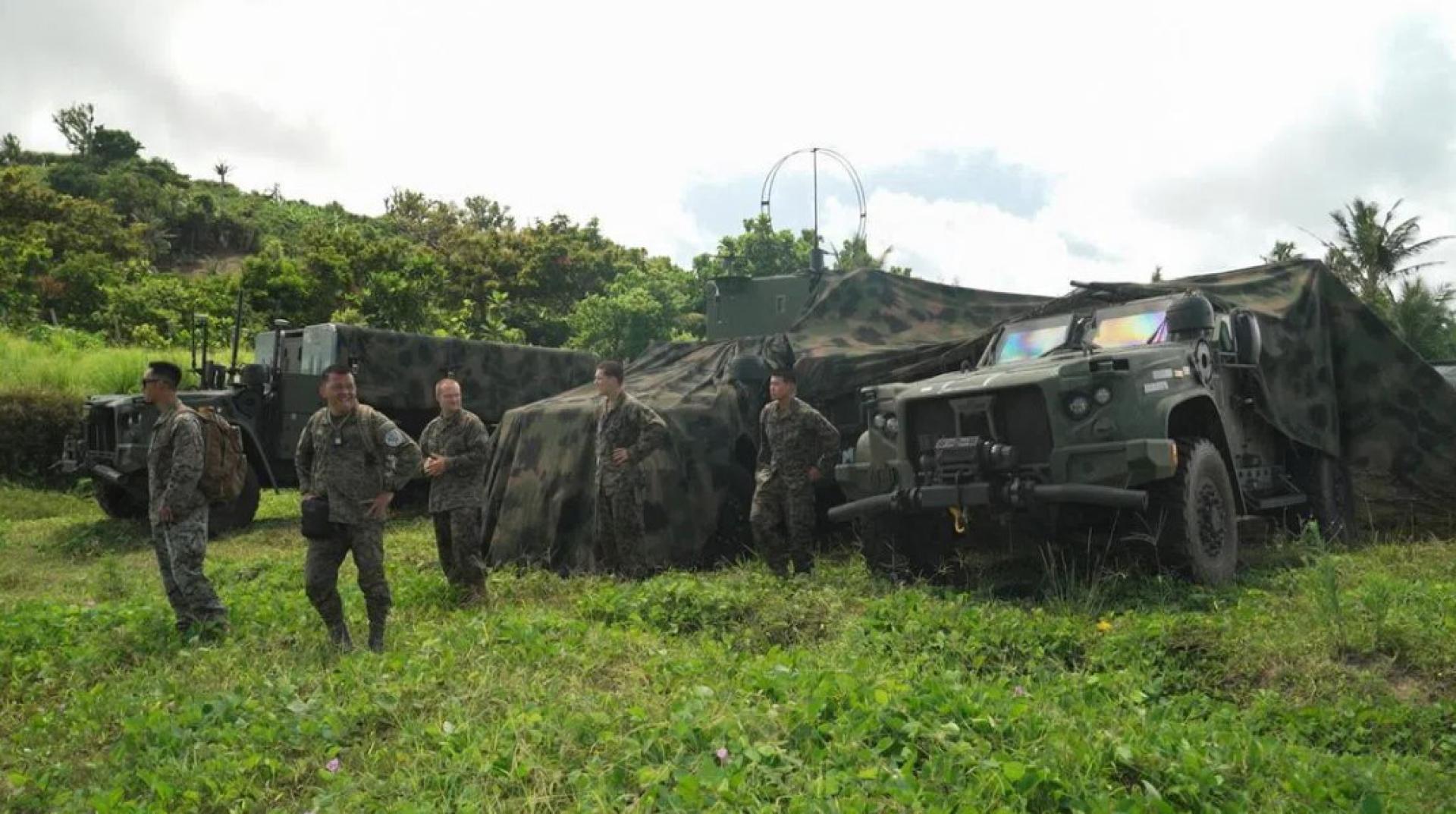
The Batanes Islands have a population of around 20,000 and lie just 160 kilometers north of Taiwan, commanding the strategic Bashi Channel—the key passageway connecting the South China Sea and Pacific Ocean. As regional tensions have risen, the Batanes Islands have become increasingly important in security planning and have repeatedly served as sites for joint US-Philippines and Japan-Philippines military drills.
Philippine Defense Secretary Teodoro on Thursday (July 9) criticized China’s claim as “groundless” and “ridiculously absurd.” He warned that this could be a prelude to Beijing’s intention to control the entire Pacific, and said the Philippines must push back, but did not specify what countermeasures would be taken.
The international maritime media outlet The Maritime Executive analyzed that the Chinese scholars’ proposal was intended to counter the ongoing maritime boundary negotiations between Japan and the Philippines. According to international law, an exclusive economic zone (EEZ) must be based on contiguous or adjacent coastlines; if the northern part of the Batanes Islands were included in Taiwan’s territory, this “Chinese island” would sit squarely between the Japanese and Philippine EEZs.
According to Jinan University’s official website, scholars from the National Institute for South China Sea Studies, the Chinese Academy of Social Sciences, Nanjing University, and other universities and official think tanks attended. “From geographical, cultural, historical, and legal perspectives,” they reached the conclusion that the Batanes Islands “legally belong to China's Taiwan Island,” and that the Philippines' control over the islands lacks historical and legal basis.
The scholars put forth four arguments: Geographically, the Batanes Islands and Taiwan Island both belong to the southern segment of the Ryukyu-Taiwan Arc, making the islands a natural extension southward of Taiwan proper; culturally, the Ivatan people on the islands belong to the same ethnic group as the indigenous peoples of Taiwan; legally, the 1898 Treaty of Paris signed between the US and Spain did not include areas north of 20 degrees north latitude—where the Batanes Islands are located—within the Philippines; historically, the Batanes Islands have always been under Chinese administration, rather than the Philippines.
The Global Times report revealed more of the scholars' arguments. The article stated that as early as over 3,000 years ago, the ancestors of Taiwan migrated to live on the Batanes Islands. The people living on the islands are closely related by blood with the Tao people of Taiwan’s Orchid Island (Lanyu), and they can still communicate fluently to this day.
The article reviewed that during the Three Kingdoms period and at the end of the Ming and beginning of the Qing dynasties in China, the Batanes Islands were under Chinese control until they were occupied by Japan after the First Sino-Japanese War. After World War I, the territory division between the US and Japan put areas south of 20 degrees north under the American colonial Philippines, while areas to the north of that, including the Batanes Islands, remained under Taiwan’s jurisdiction. After World War II, according to international treaties such as the Cairo Declaration and Potsdam Declaration, the Batanes Islands should have been returned to China, but “due to the complicated situation at the time, the Philippines took the opportunity to occupy the islands.”
Dr. Wang Yuanyuan, a researcher at the Institute of South China Sea Historical and Cultural Studies, National Institute for South China Sea Studies, said that as early as 1895, the North Otago Times of New Zealand and the New York Times of the US both carried cables from St. Petersburg indicating that the weak Qing government planned to cede the Batanes and Babuyan Islands to Japan. This, Wang argued, reflected the international recognition at the time of China’s sovereignty over the Batanes Islands.
Ju Hailong, Dean of the School of International Relations at Jinan University, stated that Article III of the 1898 Treaty of Paris set the northern border of Philippine territory at 20 degrees north latitude, and that the core island of Batanes—Batan Island—is entirely north of this line (between 20 degrees 25 minutes and 21 degrees north latitude). Forcing inclusion of islands north of the 20th parallel into the Philippines, he asserted, is essentially “an illegal occupation.”
The report said that several attending scholars have concluded that the Philippines’ current de facto control over the Batanes Islands “is entirely the result of wartime chaos after World War II,” and they called for China to claim sovereignty over the islands. So far, Beijing has not publicly expressed support for this position.
The Batanes Islands have a population of around 20,000 and lie just 160 kilometers north of Taiwan, commanding the strategic Bashi Channel—the key passageway connecting the South China Sea and Pacific Ocean. As regional tensions have risen, the Batanes Islands have become increasingly important in security planning and have repeatedly served as sites for joint US-Philippines and Japan-Philippines military drills.
Philippine Defense Secretary Teodoro on Thursday (July 9) criticized China’s claim as “groundless” and “ridiculously absurd.” He warned that this could be a prelude to Beijing’s intention to control the entire Pacific, and said the Philippines must push back, but did not specify what countermeasures would be taken.
The international maritime media outlet The Maritime Executive analyzed that the Chinese scholars’ proposal was intended to counter the ongoing maritime boundary negotiations between Japan and the Philippines. According to international law, an exclusive economic zone (EEZ) must be based on contiguous or adjacent coastlines; if the northern part of the Batanes Islands were included in Taiwan’s territory, this “Chinese island” would sit squarely between the Japanese and Philippine EEZs.