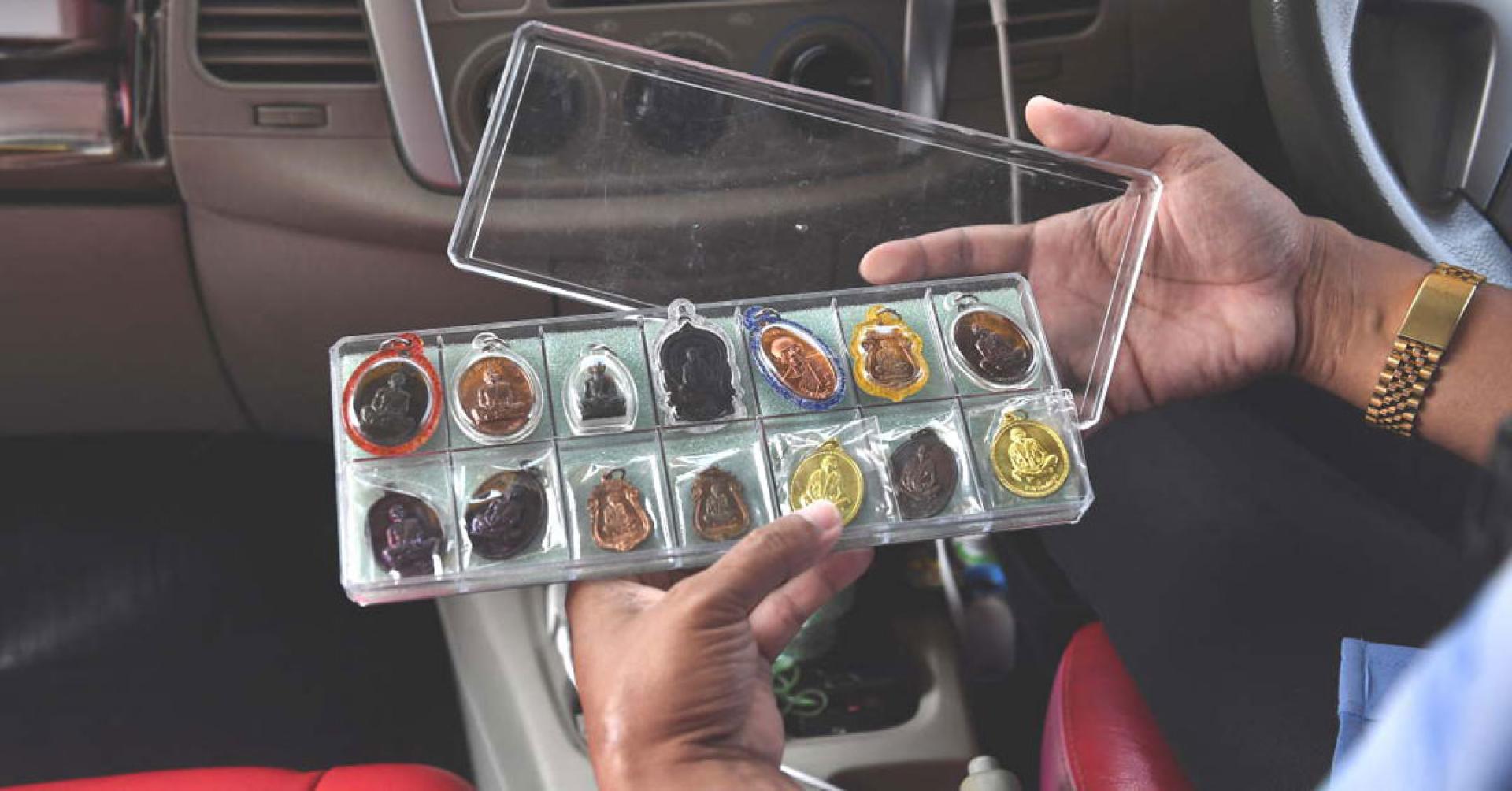
Thai amulets and sacred objects have sparked a frenzy across Asian markets, but have also caught the attention of criminals. The Thai Immigration Bureau has issued a warning: due to the lack of objective pricing mechanisms for these sacred items, the grey market is exploiting fake auctions, temple rentals, and cryptocurrencies for large-scale money laundering.
According to the Bangkok Post, Police Major General Charnlong, Deputy Commissioner and spokesperson for the Thai Immigration Bureau, pointed out that under social and economic pressures, many young Chinese seek good fortune through amulets, Takrut charms, and Kuman Thong. With the support of internet celebrities and stars, trading in sacred items has become a huge cross-border business, boosting tourism and showcasing Thailand's soft power.
However, this craze has also attracted grey capital from online gambling, cyber fraud, and drug smuggling.
Charnlong explained that, compared to gold, stocks, or real estate, religious amulets have no fixed market price. Their value depends entirely on rarity, reputation, history, craftsmanship, and personal belief, making objective valuation extremely difficult.
He revealed that grey networks launder money through fake amulet auctions. Cheap ordinary amulets are packaged as rare sacred objects and are bid up to several million Thai baht by members of these groups. Once a transaction is made, the dirty money is 'cleaned' as legitimate sales income.
"Once the payment is completed and the goods are delivered, the funds are immediately registered as legitimate sales revenue; although in nature, it's just an internal transfer of funds within the same network."
● Renting Commercial Space in Temples
Another method involves temple rentals. Criminal groups, through Thai agents, rent commercial spaces in temples to sell amulets at high prices to foreign tourists––disguising large quantities of cash as legitimate religious and tourism income.
In addition, some groups bypass traditional banking channels, using peer-to-peer cryptocurrency transfers for high-value amulet transactions; there are even foreign individuals conducting unauthorized commercial livestreams in temples.
● Scrutinizing Permits for Foreigners Engaged in Business
Currently, the Thai Immigration Bureau has joined forces with the Anti-Money Laundering Office, Central Investigation Bureau, cyber police, and customs in cross-department enforcement, focusing on scrutinizing foreigners carrying out business without visas or work permits, and strictly investigating abnormal commercial activities and travel patterns.
Charnlong calls on legitimate businesses and believers to stay vigilant, verify customer identities, and conduct transactions via official banking channels. He urges against assisting with asset holding or serving as commercial agents for others. "Amulets are part of Thailand's cultural heritage and beliefs, and should not become a cover for criminal activities."