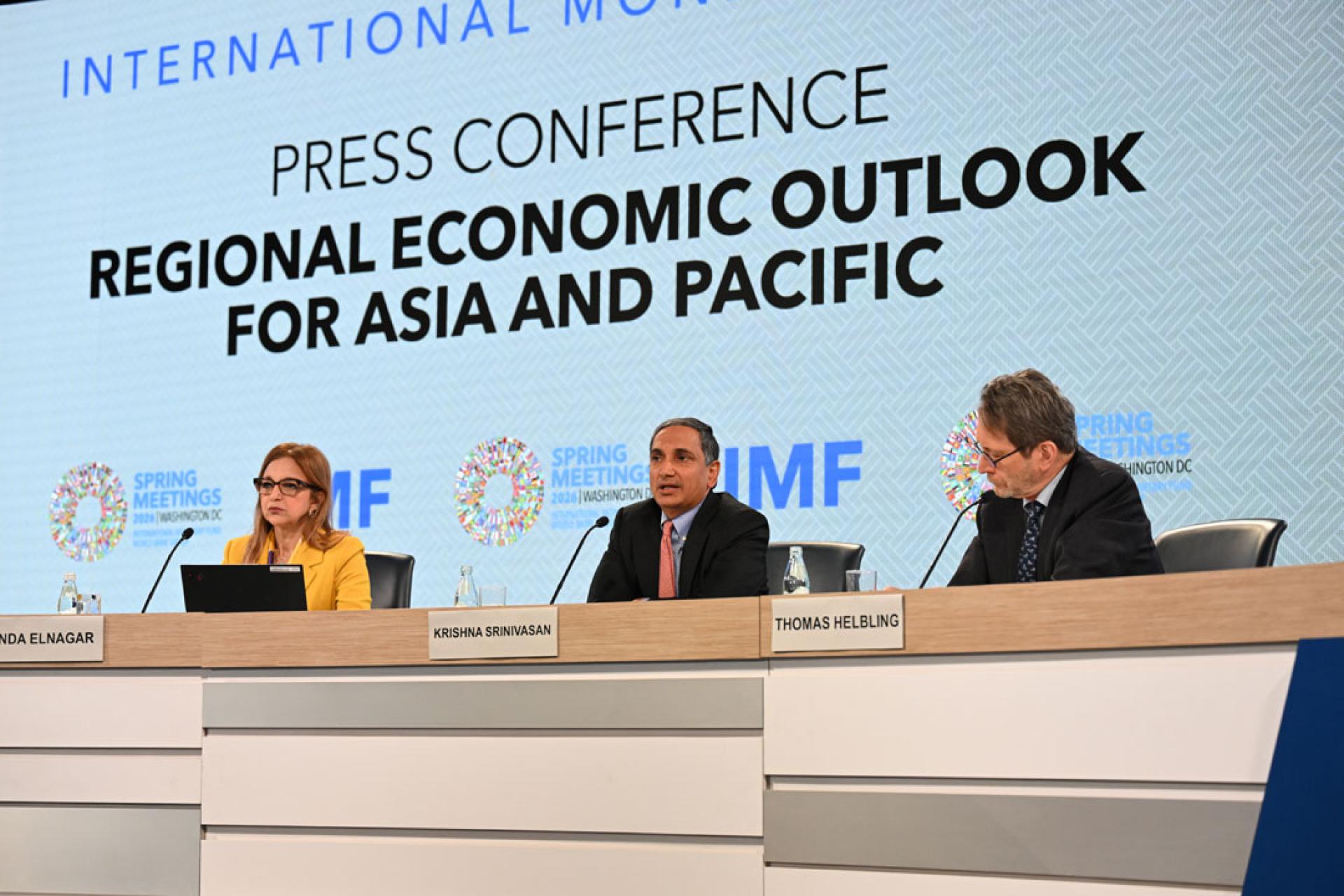
Srinivasan, Director of the Asia-Pacific Department at the International Monetary Fund (IMF), stated on the 16th that despite the resilience of the Asian economy at the start of the new year, a new round of energy shocks will have a negative impact on Asia, given the region's heavy reliance on fossil fuels and commodities from conflict zones.
The IMF and World Bank Spring Meetings are being held this week in Washington, D.C., the capital of the United States. At a press conference, Srinivasan said that by the end of 2025, the growth performance of most Asian economies is better than expected, largely due to stronger-than-expected exports and consumption, supported by accommodative policies and a favorable financial environment. In terms of exports, the recent strong performance has mainly been driven by robust demand for technology products. In addition, diversified trade with other parts of the world has also cushioned the impact of weakened import demand from the United States.
He pointed out that against the backdrop of war in the Middle East, oil and gas prices have risen sharply, and there is significant uncertainty regarding the duration of the shocks, with Asia being more affected by this energy shock. If the conflict continues, it could cause broader pressure on supply chains.
He said that the negative effects of the energy shock are offset by the favorable factors that previously supported the region's growth. If the scope of the conflict is limited and the duration is short, Asia's growth forecast will remain largely unchanged from January and the region will remain a major engine of global growth. Regional growth is expected to slow from 5% in 2025 to 4.4% in 2026.
Srinivasan stated that in terms of policy, the short-term task for Asian economies is to absorb the shock while maintaining price signals and policy credibility, and the medium-term task is to build a stronger, more balanced, and more inclusive growth model.