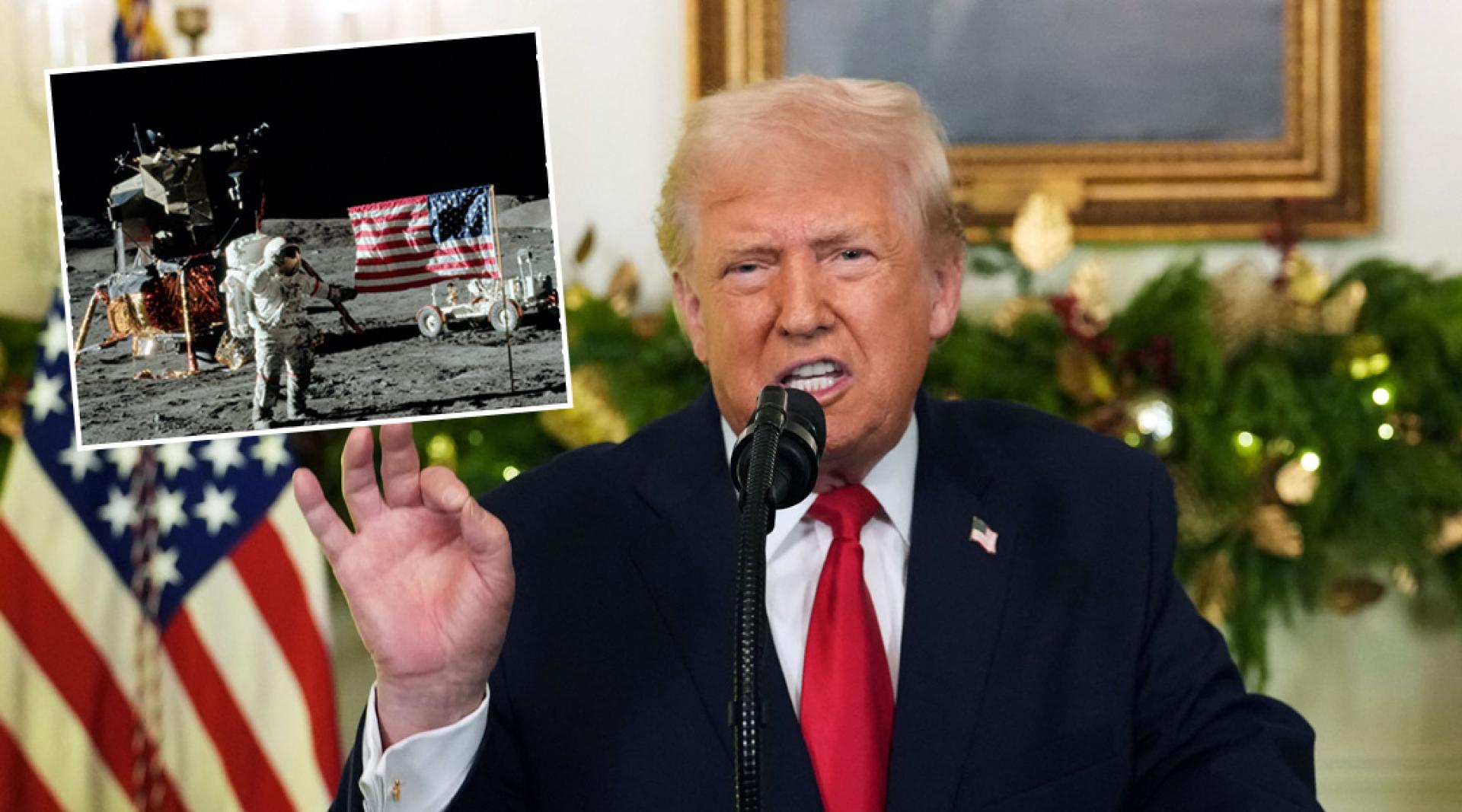
On the 18th, U.S. President Trump issued an executive order, officially establishing the goal for the United States to return humans to the Moon before 2028 and to defend space from weapons threats. This is his second term’s first major space policy initiative.
According to foreign media reports, the order also reorganizes national space policy, with Trump's chief scientific adviser, Dr. Kelvin Droegemeier, in charge.
This order effectively abolishes the White House National Space Council. The National Space Council, composed of several cabinet members, was reestablished by Trump during his first term but was considered for dissolution this year.
This order, titled “Ensuring America's Space Advantage,” requires the Pentagon and U.S. intelligence agencies to develop a space security strategy, urges private contractors to improve efficiency, and seeks to showcase missile defense technology under Trump’s “Golden Dome” initiative.
The goal of returning people to the Moon by 2028, before the end of Trump's second term, is similar to his 2019 first-term directive to return to the Moon by 2024. It places the Moon at the center of U.S. space exploration policy, but many in the industry consider the timetable unrealistic.
Due to delays in the development and testing of NASA's Space Launch System and SpaceX’s Starship super heavy rocket, the lunar landing target has been gradually pushed back.
The U.S. is currently competing with China, whose goal is to achieve a crewed lunar landing for the first time by 2030.
Trump’s executive order on the 18th also calls for the establishment of preliminary permanent lunar outpost facilities by 2030, strengthening NASA’s existing objective to develop long-term lunar bases powered by nuclear energy.