While Zhang Xue’s motorcycles are igniting nationwide interest in Chinese-made motorcycles online, Chinese electric motorcycles have already become a big hit overseas.
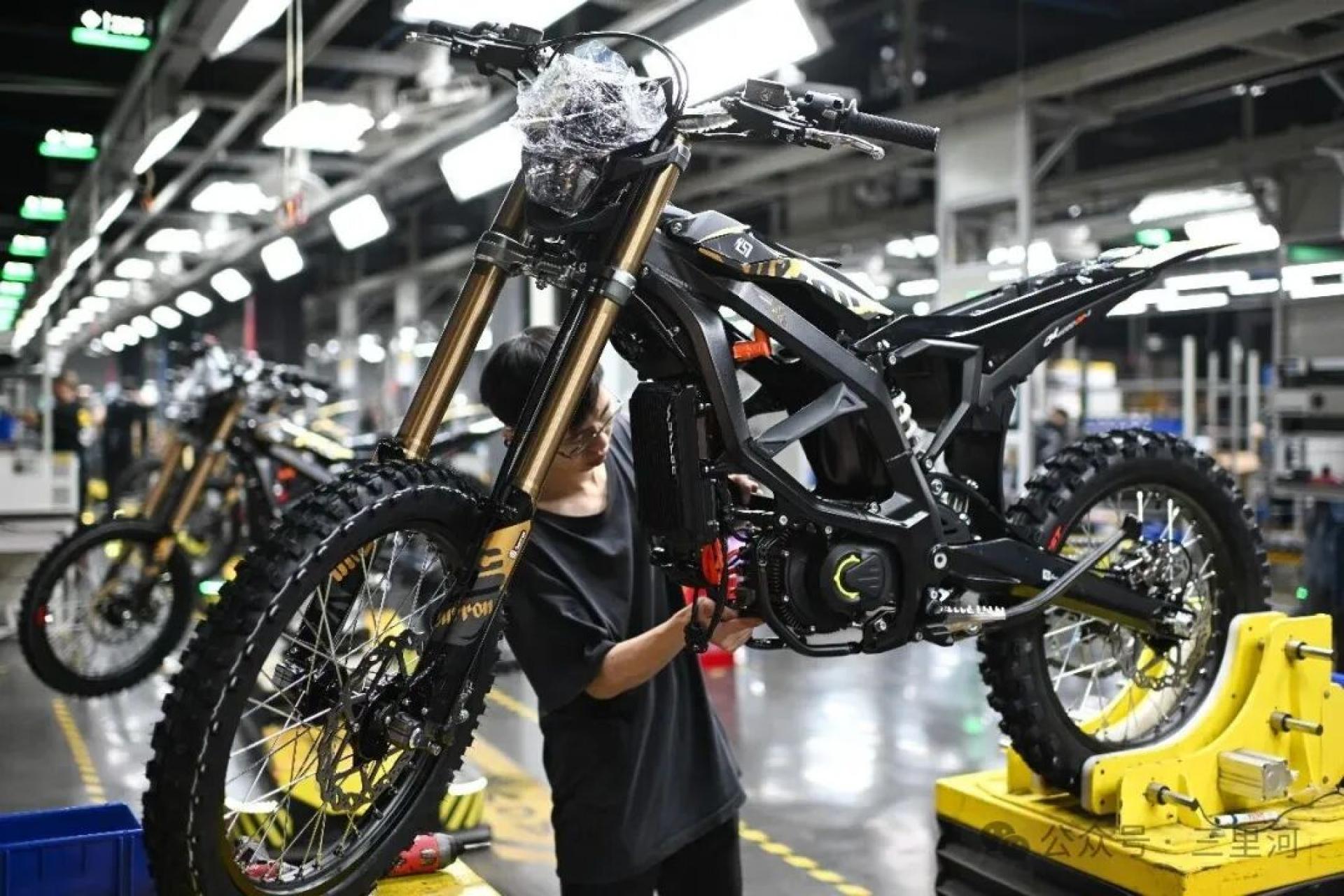
“Our current orders have already been scheduled until July!” In April, Chongqing—while the city’s mist has yet to clear—the final assembly workshop at Qiulong Technology was bustling with activity.
Thousands of miles away at the Canton Fair exhibition hall, buyers from Europe, Southeast Asia, and Latin America surrounded Chinese brands’ new electric motorcycles from Yadea, Jiangmen Zhenghao and others, closely inspecting the bikes. They frequently used translation software to discuss endurance and charging parameters with staff, and some even placed orders on the spot.
“We received over 800 foreign buyers this time,” a Yadea representative said.
In 2024, the export value of Chinese electric motorcycles and e-bikes surpassed 40 billion yuan (about 23.2 billion ringgit) for the first time, and has since continued to see robust growth.
Customs data shows that in Q1 2026, private enterprise exports of electric motorcycles and e-bikes grew 30% year-on-year. In Chongqing, a major motorbike production base, Q1 exports of electric motorcycles and e-bikes reached 170 million yuan (about 99 million ringgit), up 23.6% year-on-year.
According to Vietnamese media reports, by the end of 2025, the market share of electric motorcycles in Vietnam will rise sharply to 13%, a more than five-fold increase within a year. In March this year, amid a surge in oil prices caused by geopolitical conflicts, countries like Vietnam and Thailand saw explosive growth in electric motorcycle sales.
China happens to have a complete electric motorcycle industry chain—from motors, batteries to electric controls—achieving a very high self-sufficiency rate in core components. This means that with the same specifications, Chinese electric motorcycles have lower production costs. The advantages of the supply chain make a “take-off with the trend” possible.
Currently, the mainstream exported models generally have a range exceeding 150 kilometers, while some high-end models achieve even higher mileage through range extension technology or large-capacity batteries, and charging times have been greatly reduced. For power-scarce regions like Africa, some companies have also introduced battery swapping solutions, creating a complete industry ecosystem.
Now, the export of Chinese electric motorcycles does not rely on a single region. From Latin America to Southeast Asia, from Africa to Europe, Chinese electric motorcycles have already appeared in every corner of the globe.
Even more noteworthy is the changing structure of these exports. In markets such as Europe and Central Asia, the mid-to-high-end sector is also gaining a foothold.
From commuter markets in Latin America to high-end off-road markets in Europe, from local factories in Southeast Asia to battery swapping ecosystems in Africa, Chinese electric motorcycles are weaving a diverse, global network that coordinates development across high, medium, and low ends.
This marks a quiet upgrade in the logic of “Made in China” going global: it's no longer just about competing on price, but also on industrial chains, solutions, and local adaptation capabilities.