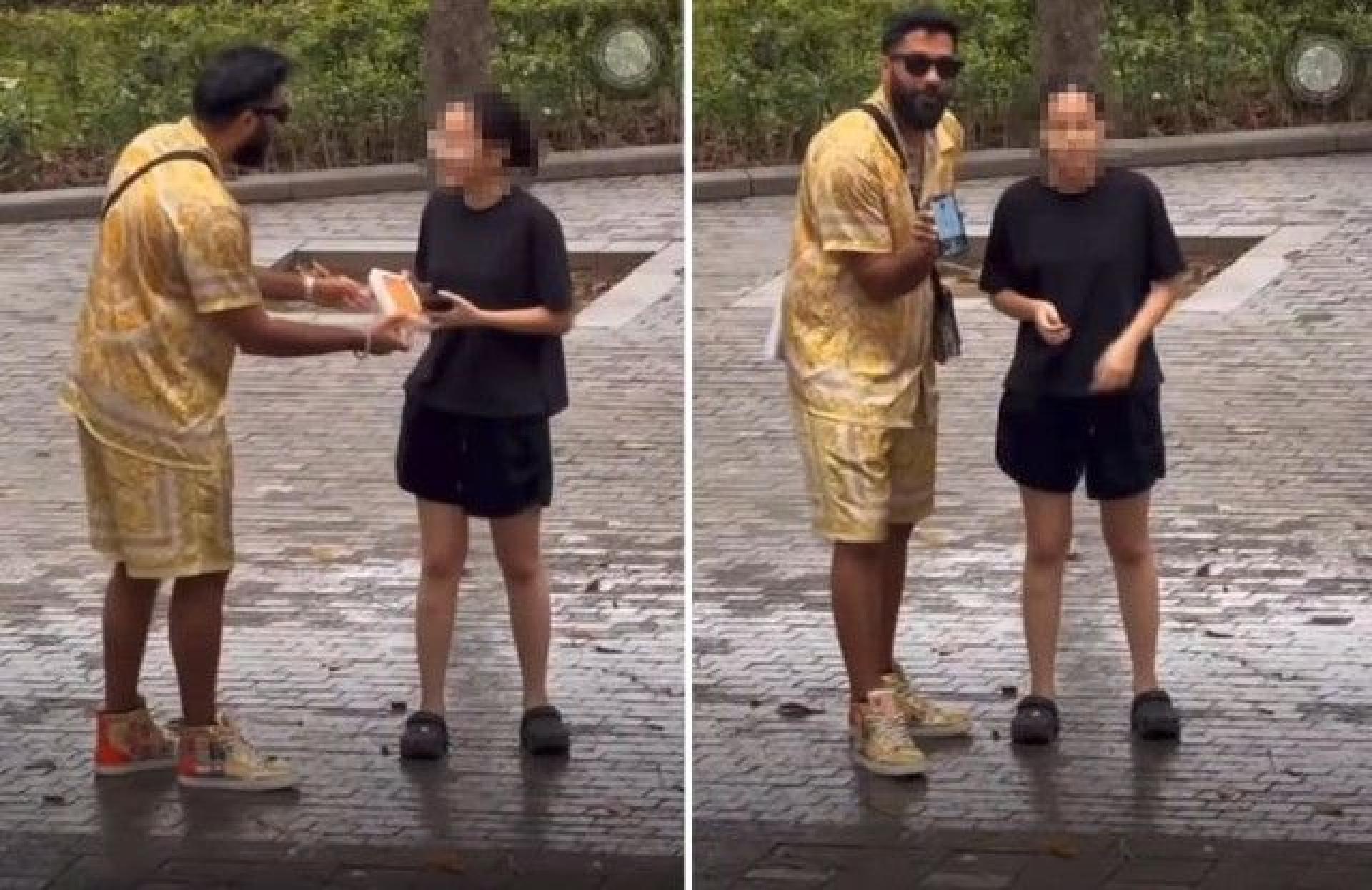
Recently, a short video shot at Hoan Kiem Lake in Hanoi, Vietnam has stirred up huge controversy on overseas social media. Leading influencer Eidan Sanker, who has over 19 million Instagram followers, is accused of fraud and malicious staging after a video where he appeared to randomly give away iPhones on the street.
The video shows Sanker, dressed in his signature yellow outfit, seemingly giving phones to passersby in the streets of Hanoi. However, behind-the-scenes footage later revealed that the female recipient immediately returned the phone to staff members after the shoot, and collected what appeared to be a cash appearance fee on the spot.
In response, Eidan Sanker admitted on social platforms that parts of his content involve scripted scenarios, but he has yet to offer a direct clarification regarding the Hanoi incident.
'Fake charity' has now become a traffic-driving formula for short videos. In recent years, content such as 'giving away cash on the street' or 'randomly helping strangers clear their shopping carts' has become a standardized production line on global short video platforms.
This kind of content exploits the public’s yearning for goodwill, quickly racking up massive views which are then converted into commercial profit.
The frequent occurrence of such incidents is seriously eroding public trust in social media. When kindness is overly commercialized and scripted, the audience is faced not only with questions of authenticity, but also with emotional exploitation and deceit.
In the social media era, algorithms and traffic should not become tools to drain society’s trust.