Rare 'Deep Sea Giant' Stranded on Shore: Two Incidents in a Month Raise Experts' Concerns
Published atDec 20, 2025 12:16 pm
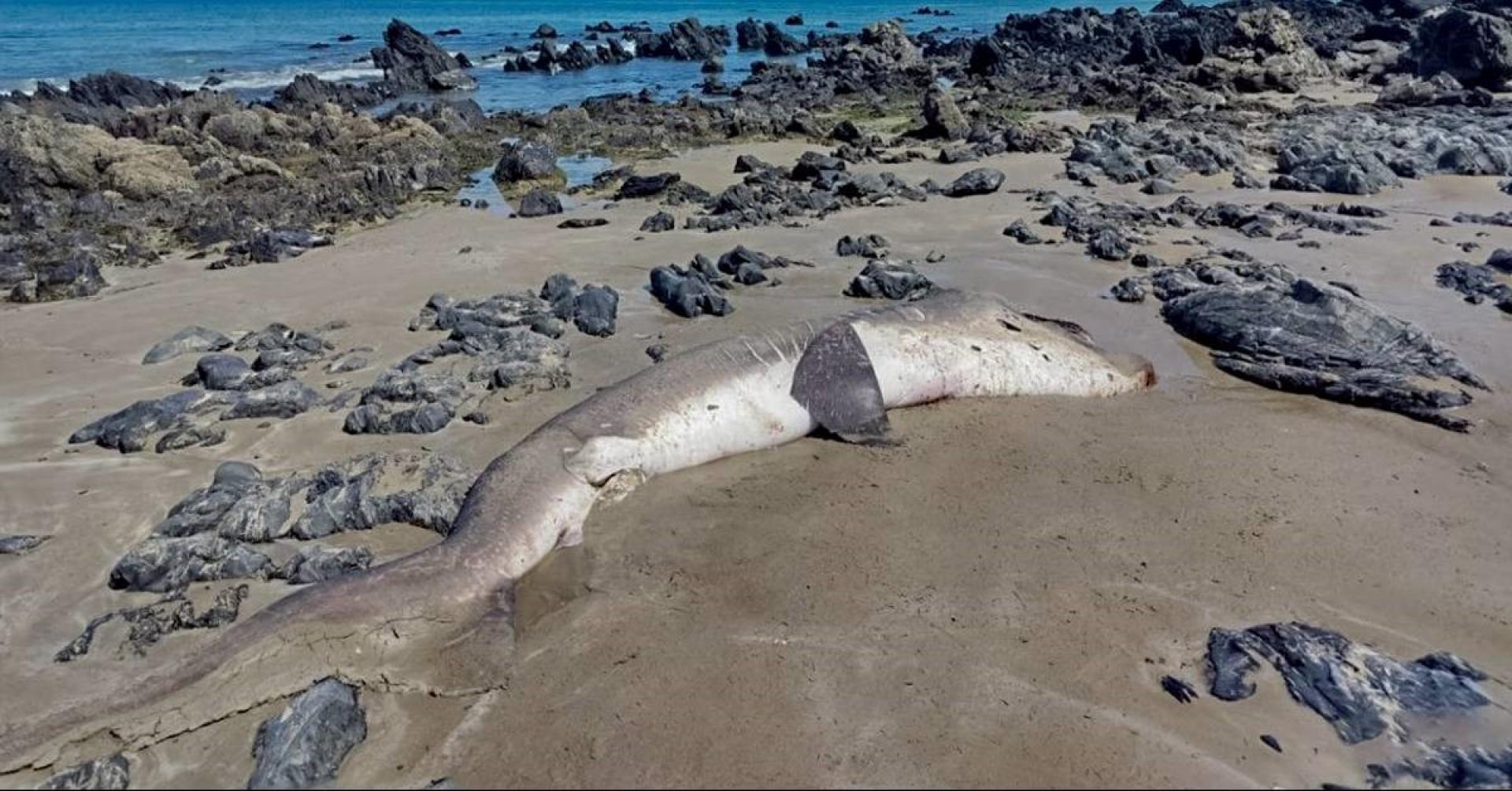
Two rare "deep sea giant" stranding incidents have occurred along the coast of Peru within the past month, attracting attention and concern from marine experts.
According to British media outlet The Mirror, a highly rare megamouth shark was found stranded on the beach along Peru's northern coast on the 17th local time, marking the second incident of its kind in the region within a month.
The megamouth shark measured about 4.5 meters (approximately 14 feet 8 inches) in length and, when discovered, its body was already highly decomposed, making sample collection and research more difficult. Nevertheless, researchers managed to acquire partial data. As "one of the most rarely seen sharks on Earth," the occurrence of two near-simultaneous strandings has caused deep concern among local marine scientists.
The megamouth shark (scientific name: Megachasma pelagios) is also known as the big mouth shark. It is the only extant species under the family Megachasmidae and genus Megachasma. While its distribution ranges across global waters, it mostly inhabits the deep sea and is highly elusive, which has long made it one of the most mysterious creatures of the ocean. 巨口鲨(学名:Megachasma pelagios),又称大嘴鲨,是巨口鲨科、巨口鲨属下唯一的现存物种。According to available information, there have been fewer than 300 recorded sightings of megamouth sharks worldwide, found along the coasts of the Pacific and Atlantic Oceans; there are approximately 226 confirmed catches, with as many as 146—over 60%—from the waters off Taiwan's Hualien and Taitung.
Given the relatively frequent records of sightings and catches off Taiwan's coast, Taiwan's Fisheries Agency revised and implemented the 'Great White Shark, Whale Shark, and Megamouth Shark Catch Control Measures' on November 10, 2020, officially designating the great white shark, whale shark, and megamouth shark as protected from capture. If these species are accidentally caught by fishing vessels, regardless of whether alive or dead, they must be immediately released back into the sea and reported as required.
This article has been translated using our AI technology. While we strive for accuracy,
AI translations
may contain errors. For the most precise information, please refer to the original article.