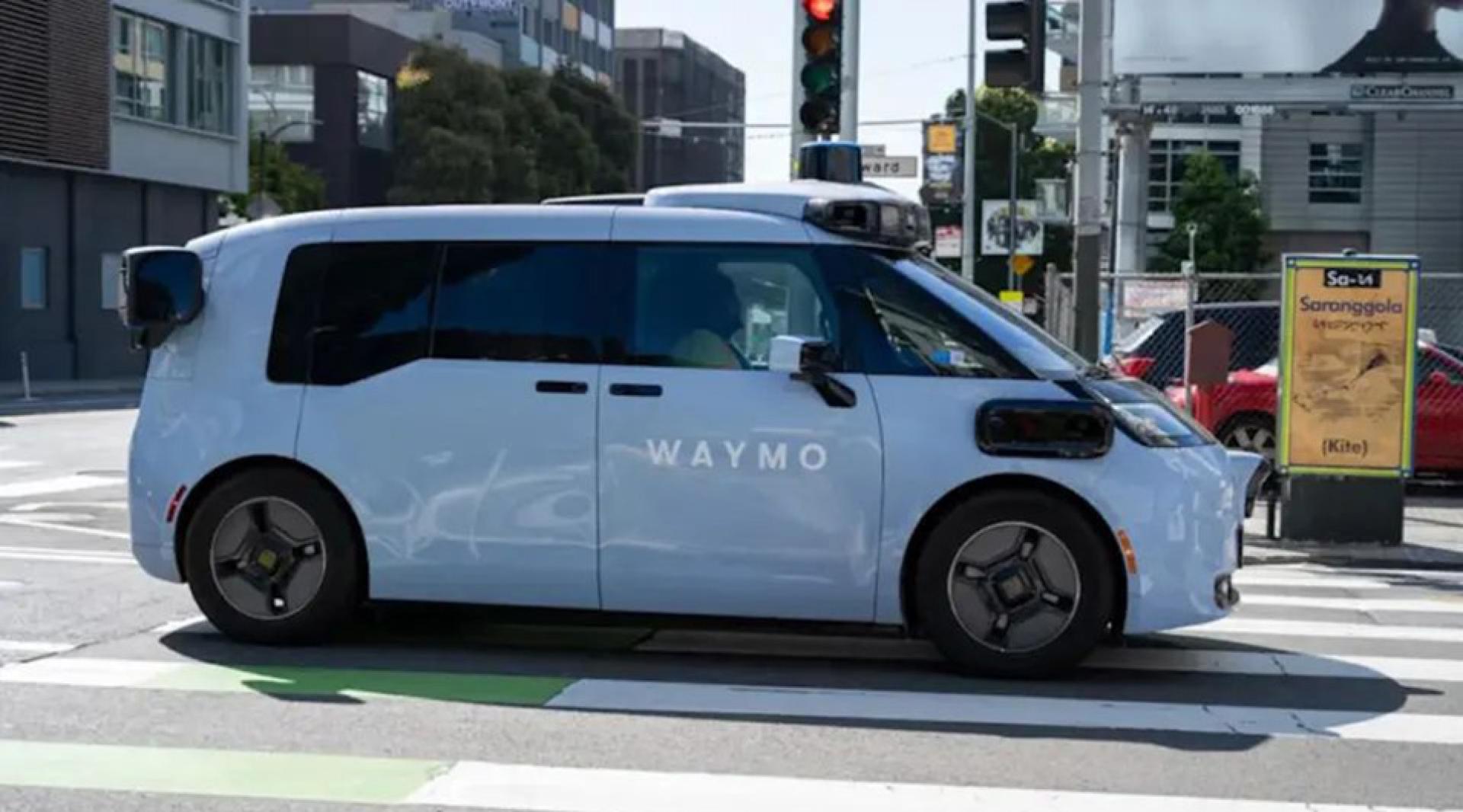
The US has erected high tariff barriers against Chinese electric vehicles, but that hasn't stopped a major US autonomous driving giant from purchasing Chinese cars.
According to the US financial website Moneywise on Sunday, since 2024, Alphabet’s autonomous driving company Waymo has imported around 3,200 Chinese-made electric vehicles via the Port of Los Angeles, with 2,600 of those just this year. Even though these vehicles are subject to tariffs as high as 127.5% upon entering the US, Waymo still considers the deal worthwhile.
These vehicles are produced by Geely’s Zeekr subsidiary and are known as the CM1e in China, but Waymo has dubbed them “Ojai.” In May this year, Waymo began deploying this autonomous taxi model in San Francisco, Los Angeles, and Phoenix, and plans to have thousands of Ojais on the road by the end of the year.
The reason is not complicated: even with hefty tariffs, China-made vehicles still have a cost advantage.
According to the report, based on US import declaration data, each imported Ojai is valued at about $38,000 (around 154,900 ringgit). After the 127.5% tariff is added, the cost rises to about $86,500 (about 352,700 ringgit). Once in the US, Waymo must still install the hardware and software required for autonomous driving. According to Forbes, this part of the cost is estimated at around $25,000 per vehicle (about 101,900 ringgit).
Even so, the total cost for an Ojai is only slightly above $110,000 (about 448,500 ringgit), still clearly lower than the Jaguar I-Pace previously used by Waymo, which reportedly could cost upwards of $200,000 (about 815,500 ringgit) after autonomous driving conversion.
This creates quite a contrast: hefty tariffs have all but shut out ordinary American consumers from Chinese EVs, but for Waymo—which is rapidly expanding its autonomous taxi fleet—Chinese-made vehicles are still cheaper, even after doubling the import tax burden.
To comply with US regulations, these Chinese vehicles have their sensors and computing systems removed before being shipped to the US. Upon arrival, Waymo installs its own autonomous driving system at its plant in Mesa, Arizona. Currently, Waymo is still expanding its operational scope, and California regulators recently authorized further expansion of its service area.