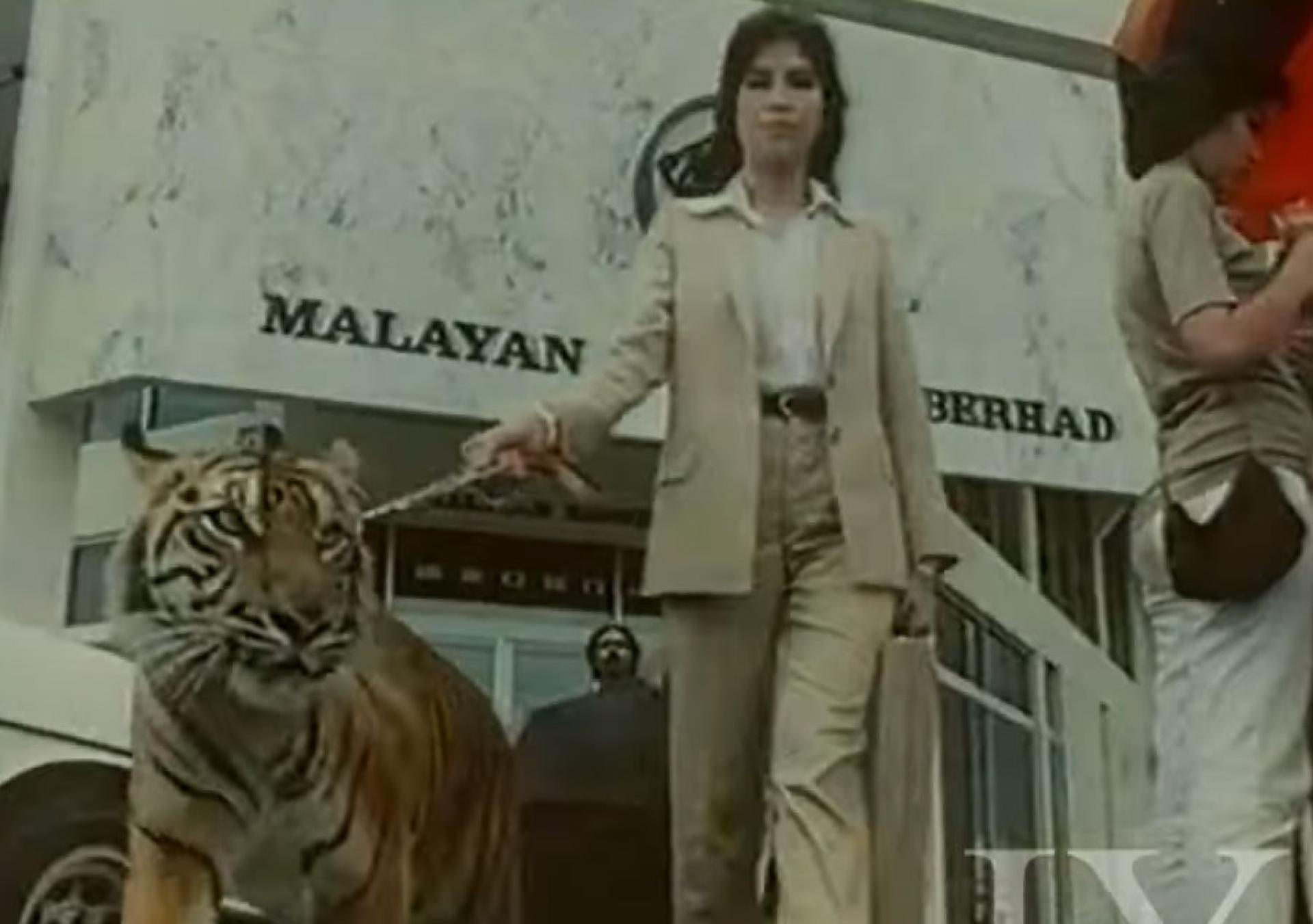
While computer special effects and artificial intelligence technology are now widely used in film and advertising production, a 1985 Malayan Banking (Maybank) TV commercial has recently resurfaced online for its bold use of a “real tiger” on set, sparking lively discussion among netizens.
This approximately 31-second-old commercial has been recirculating on online platforms. Unlike today’s advertisements that typically use computer effects, green screens, or AI technology to create scenes of wild animals, this commercial at the time directly arranged for a real tiger to take part in the shoot, becoming a focal point for many netizens.
The commercial opens with scenes of people avoiding an appearing tiger, before the camera shifts to a man leading a tiger into an office. The tiger then sits next to the office desk, accompanying the bank manager in handling documents, creating a strong visual impact throughout.
Because computer-generated imagery technology was still in its infancy at the time, the commercial relied mainly on live-action shooting. As a result, after being resurfaced years later, many netizens were deeply impressed by the bold creativity of 1980s advertising.

Malayan Banking was founded in 1960, and the tiger has always been an important element of the bank’s brand image, symbolizing strength, security, and protection. As times have changed, banking services have evolved from traditional counters, passbooks, and ATM cards to digital banking and mobile applications, but the tiger as a brand icon remains well-known to people in Malaysia.
The renewed interest in this old commercial has also prompted many netizens to revisit advertising production techniques from the 1980s. In an era without short video platforms, artificial intelligence, or advanced computer effects, advertisers often relied on creativity, practical shooting, and visual design to attract viewers.
Decades later, this “real tiger” that once walked into a bank office has once again become the focus of discussion thanks to the resurfacing of the old commercial, vividly highlighting the stark contrast in creativity and production techniques between different eras of advertising.