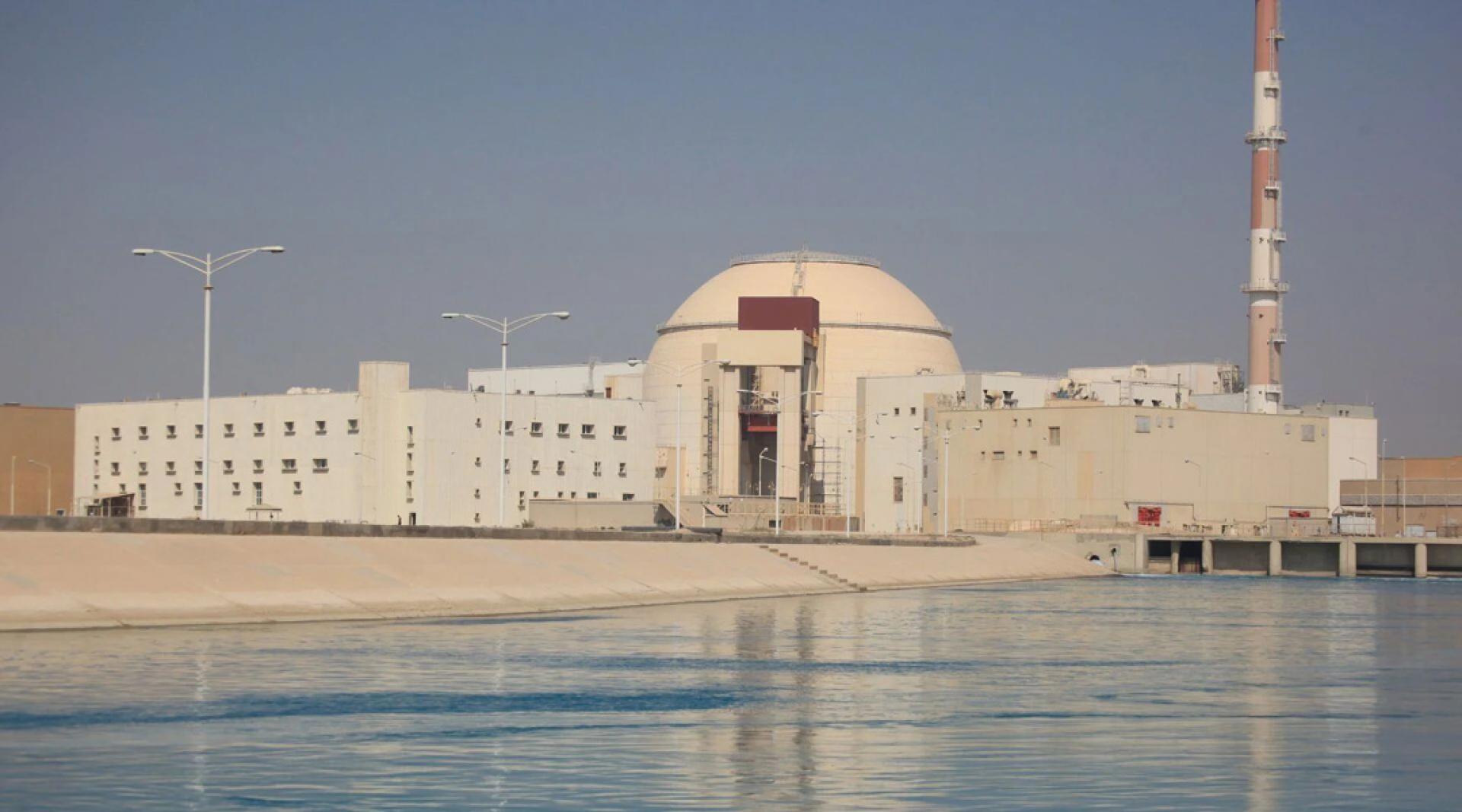
The International Atomic Energy Agency (IAEA) stated on the 27th that it had received notification from Iran that the Bushehr Nuclear Power Plant had once again come under attack that day, marking the third attack on the facility within 10 days.
The IAEA posted on social media, saying Iran reported that the operating reactor was not damaged, there had been no radiation leakage, and the nuclear power plant remained in a normal state.
IAEA Director General Rafael Grossi once again expressed deep concern over recent military activity near nuclear facilities.
He pointed out that if the reactor were damaged, it could trigger a major radiological accident.
He continued to call on all parties to exercise maximum military restraint and avoid the risk of a nuclear accident.
According to reports from Iran’s Noor News Agency, the Bushehr Nuclear Power Plant was attacked on the night of the 27th. The plant is in operation and stores large amounts of radioactive material; any attack on it could provoke a serious nuclear accident and cause irreversible consequences for the surrounding area. The U.S. and Israel attacking facilities used for the peaceful application of nuclear energy is a violation of international law and poses a serious security threat to the region.
In addition to the Bushehr plant, two other Iranian nuclear facilities were also targeted by airstrikes on the 27th.
The IAEA said Iran reported that a “yellowcake” production plant in Ardakan city, Yazd Province, was attacked that day. So far, there have been no reports of increased off-site radiation levels. Another facility, the Khondab nuclear site near Arak, capital of Iran’s Markazi (Central) Province, was also attacked that day. Since the site contains no declared nuclear material, no radiation risk has been found. The IAEA is currently investigating Iran’s reports.
“Yellowcake” is uranium oxide, usually extracted from crushed natural uranium ore. It is an essential intermediate product in nuclear fuel production, but cannot be used directly in nuclear reactors; it is generally used for refining enriched uranium.
Israel Confirms Airstrikes on Two Nuclear Facilities
The Israel Defense Forces (IDF) confirmed on the 27th that they had carried out airstrikes on the Khondab heavy water reactor in Markazi (Central) Province and the uranium processing plant in Yazd Province.
The IDF pointed out that the Khondab heavy water reactor is a major economic asset and source of revenue for the Iranian government. In June 2025, this nuclear facility was struck by IDF airstrikes. Yazd Province’s uranium processing plant takes underground raw material, mechanically and chemically processes it, and ultimately produces feedstock for uranium enrichment. This is Iran's only such plant, and attacking the facility would cut off Iran’s access to the raw materials necessary for uranium enrichment.
Considering Withdrawal from the Nuclear Non-Proliferation Treaty
On the 27th, Rezaei, spokesperson for the National Security and Foreign Policy Committee of Iran’s Majlis (parliament), stated that continuing as a state party to the Nuclear Non-Proliferation Treaty (NPT) brings no benefit to Iran, and “it is time to withdraw.”
He wrote on social media that the NPT has failed to protect Iran’s nuclear facilities from attack and that all relevant international documents and agreements are in effect being completely disregarded. Iran has no intention of manufacturing nuclear weapons, and this policy has not changed in any way.