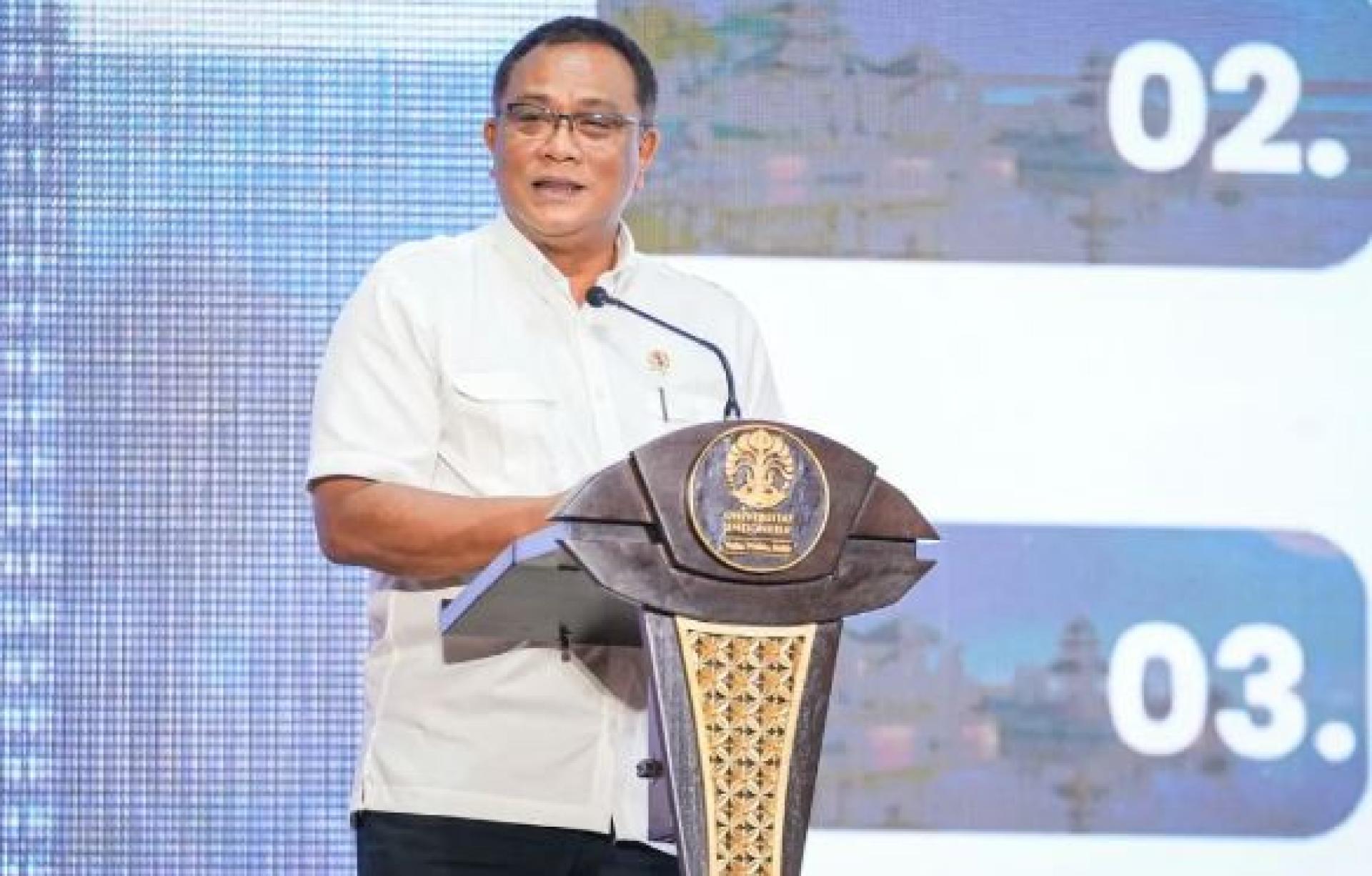
Indonesian Environment Minister Mohdzhom Hurshi Dayat stated that the government is committed to accelerating the restoration and protection of domestic lake ecosystems to ensure national water, food, and energy security.
In a statement issued on Friday, he pointed out that the annual "World Lake Day" on August 27 offers an important opportunity to save inland water ecosystems.
He said that lakes are not only bodies of water, but also essential sources of livelihood, playing a crucial role in food, energy, and water security, tourism, carbon sequestration, and stabilizing the microclimate. At the same time, they are important centers for community cultural activities.
However, he pointed out that Indonesia's thousands of lakes are currently facing severe ecological and environmental pressures, with ecological degradation worsening year by year.
He noted that the issues include damaged catchment areas, lake buffer zones being converted to other uses, water pollution, water body eutrophication, overdevelopment of floating net cage aquaculture (KJA), the proliferation of aquatic plants, the invasion of alien fish species, as well as severe sedimentation leading to continuous shallowing of lake depths.
Hidayat emphasized that due to the relatively long water retention time in lakes, ecological restoration requires a longer period and must adopt a holistic management strategy from upstream to downstream.
“The lake restoration process requires a considerable amount of time, and an integrated approach from upstream to downstream must be taken. This work can no longer be delayed.”
As a concrete measure, he said, the Ministry of Environment is working with local governments to optimize the ecosystem protection and management plans (RPPE) for 15 national priority lakes from 2025 to 2029.
Key policy focuses include improving lake water quality, controlling pollution, planning areas for floating net cage aquaculture, restoring catchment areas, managing aquatic plants, protecting local endemic species, and coordinating local spatial planning.
The Ministry of Environment is also formulating three core commitments for future lake management policies: strengthening ecological protection regulations at the national and local levels, expanding cross-sector cooperation, and enhancing the importance of lakes in the global water resource agenda.