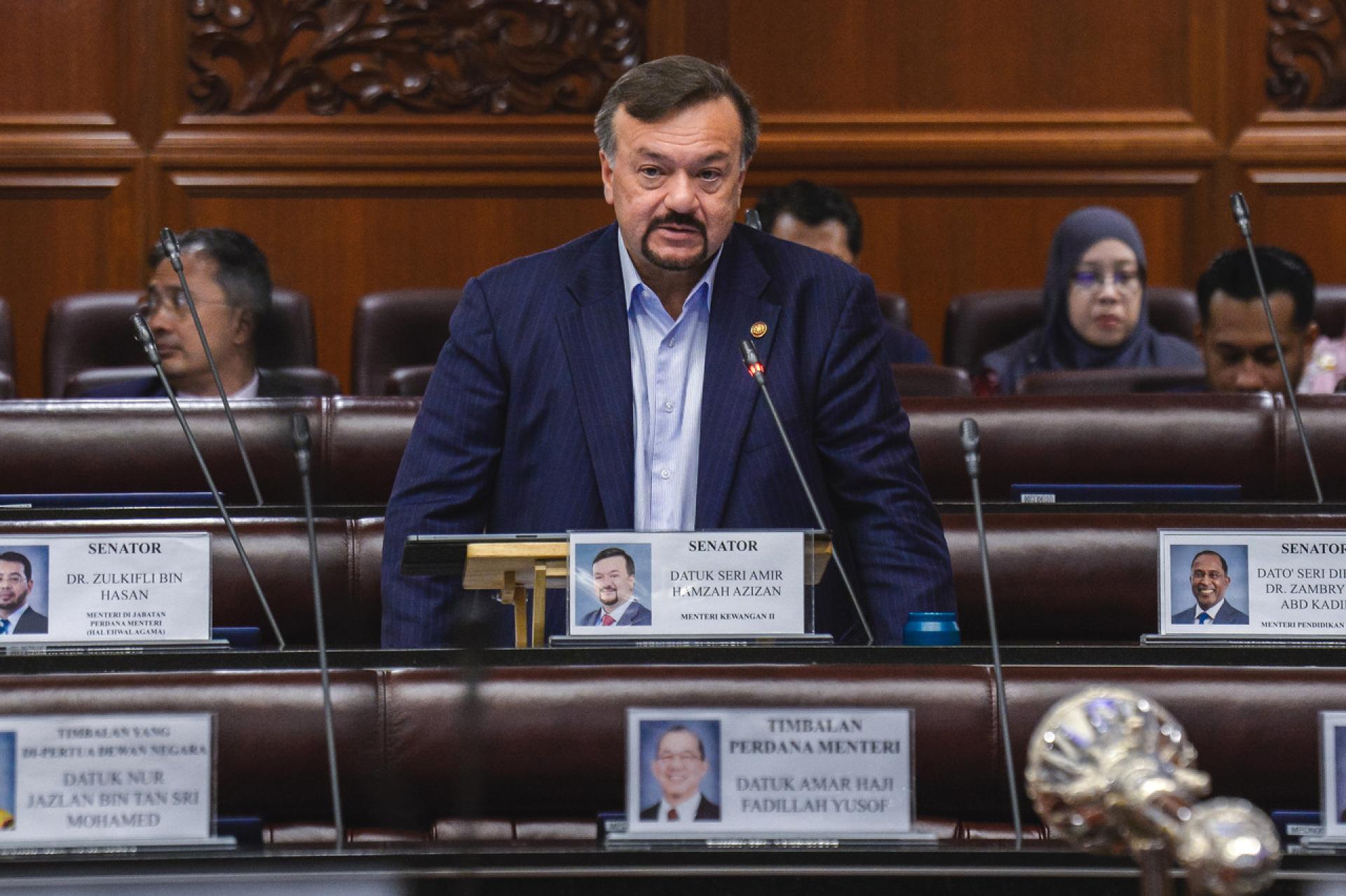
Second Finance Minister Datuk Seri Amir Hamzah said that among the 16.7 million recipients of the MADANI RON95 petrol subsidy program (BUDI95), more than 14.2 million have already enjoyed the subsidy, involving a usage volume exceeding 13.4 billion liters of petrol.
He pointed out that the unsubsidized RON95 price fluctuates according to market prices and is only applicable to those who do not meet the subsidy eligibility criteria, including non-citizens and those who do not qualify for BUDI95.
“According to actual BUDI95 usage data from October last year to June this year, less than 1% of BUDI95 users consistently use more than 200 liters of RON95 petrol.”
“On average, the monthly usage of RON95 petrol is about 100 liters.”
He answered as such during a Q&A session in the Senate today, in response to Senator Datuk Bobbey Suan’s question regarding the annual savings impact from the implementation of targeted RON95 subsidies.
Amir Hamzah said that based on the current implementation of this subsidy, it is estimated that annual government expenditure could save around RM2.5 billion to RM4 billion, with the specific amount depending on global crude oil prices, exchange rates, and actual usage patterns.
In response to an additional question from Senator Lau Hui Yew regarding the Organisation for Economic Co-operation and Development (OECD) recommending Malaysia to gradually replace BUDI95 and, in the medium term, to adopt other mechanisms as government policy, Amir Hamzah said the government has already shifted from previously implementing blanket subsidies to targeted subsidies.
“The eligibility criteria of BUDI95 allow local citizens to enjoy the subsidy for 200 liters of RON95 petrol, while non-citizens are not entitled to this subsidy, which has saved fiscal space for the government.”
“We fully understand that the OECD encourages the removal of all subsidies, but we cannot do so domestically... What is important is that we are implementing targeted subsidies, not removing subsidies as per OECD recommendations.”