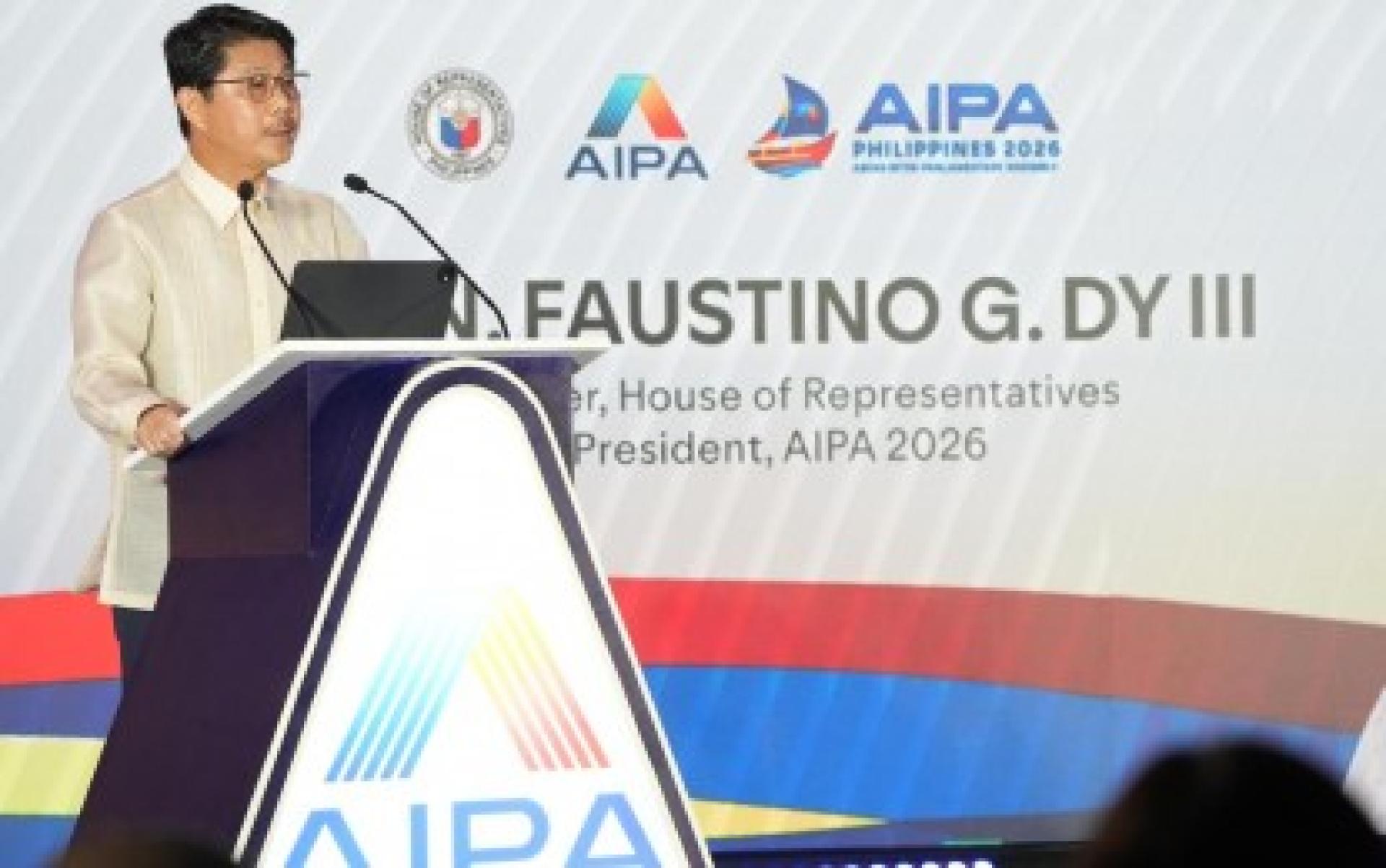
Philippine House Speaker Ferdinand Martin "Bong" Romualdez III announced on Saturday that the Philippines will scale down the number of in-person meetings for the ASEAN Inter-Parliamentary Assembly (AIPA) events it is hosting this year—retaining only the physical sessions for the October General Assembly and the November interface meeting, with all other preparatory meetings to be shifted online.
Romualdez emphasized that this move aligns with President Ferdinand Marcos Jr.'s directive to streamline official ASEAN summit activities and address the economic pressures stemming from the global situation.
He stated in a press release: "Under the President's guidance, we are implementing necessary cost-saving measures in hosting AIPA activities, without compromising their objectives."
He said authorities will concentrate resources on the most important meetings to ensure the continued advancement of parliamentary diplomacy.
Romualdez highlighted that this decision comes at a time when ongoing conflict in the Middle East continues to drive up global oil prices, directly impacting travel and operational costs.
He added that while the Philippines remains committed to its duties as the AIPA host, the Middle East crisis has led to higher oil prices, which in turn will increase burdens related to airfare and logistical arrangements.
Deputy Speaker and Foreign Affairs Committee Chairperson, as well as AIPA event preparatory head, Rachel Arenas, stated that related preparations have been readjusted to ensure a smooth transition to a hybrid model centered around the two key in-person meetings.
She pointed out that the General Assembly in October and the interface meeting in November will proceed as planned, while other preparatory activities will be conducted through secure and efficient online platforms.
Arenas added that this streamlined arrangement demonstrates the Philippines’ ability to respond to the ever-changing global situation, and that, while maintaining cooperation with ASEAN partners, efficiency and results orientation will be enhanced.
Romualdez also stated that Philippine legislators are still committed to advancing a "people-centered and future-oriented ASEAN", and that shifting to digital platforms is both pragmatic and principled, helping to reduce costs, ease the burden on public resources, and fulfill responsibilities to ASEAN partners.
He stated in a press release: "Under the President's guidance, we are implementing necessary cost-saving measures in hosting AIPA activities, without compromising their objectives."
He said authorities will concentrate resources on the most important meetings to ensure the continued advancement of parliamentary diplomacy.
Romualdez highlighted that this decision comes at a time when ongoing conflict in the Middle East continues to drive up global oil prices, directly impacting travel and operational costs.
He added that while the Philippines remains committed to its duties as the AIPA host, the Middle East crisis has led to higher oil prices, which in turn will increase burdens related to airfare and logistical arrangements.
Deputy Speaker and Foreign Affairs Committee Chairperson, as well as AIPA event preparatory head, Rachel Arenas, stated that related preparations have been readjusted to ensure a smooth transition to a hybrid model centered around the two key in-person meetings.
She pointed out that the General Assembly in October and the interface meeting in November will proceed as planned, while other preparatory activities will be conducted through secure and efficient online platforms.
Arenas added that this streamlined arrangement demonstrates the Philippines’ ability to respond to the ever-changing global situation, and that, while maintaining cooperation with ASEAN partners, efficiency and results orientation will be enhanced.
Romualdez also stated that Philippine legislators are still committed to advancing a "people-centered and future-oriented ASEAN", and that shifting to digital platforms is both pragmatic and principled, helping to reduce costs, ease the burden on public resources, and fulfill responsibilities to ASEAN partners.