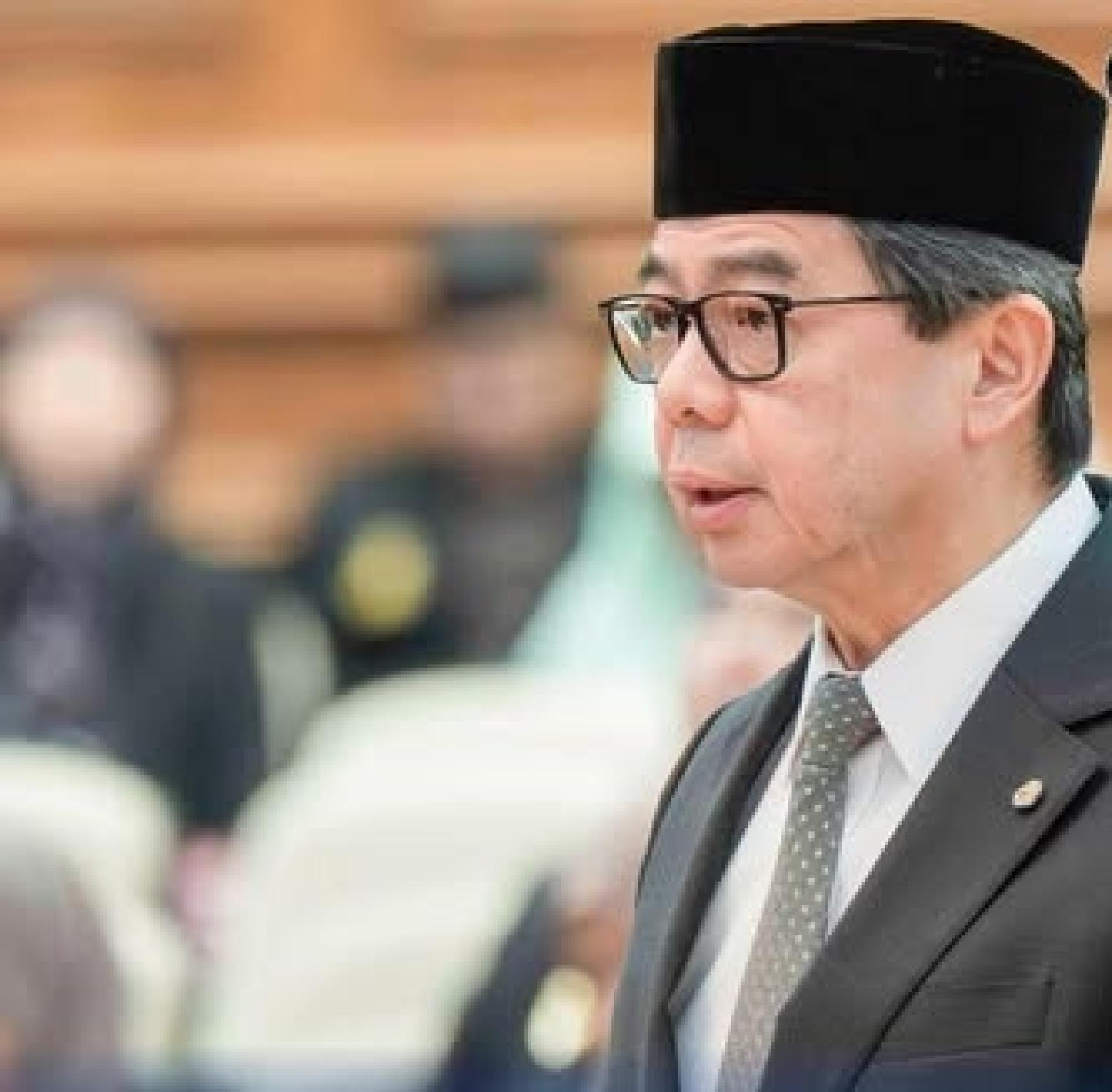
(Bandar Seri Begawan, 17th) Datuk Liu Guangming, Minister at the Prime Minister's Office and Second Minister of Finance and Economy of Brunei, stated in the National Assembly that the Ministry of Finance and Economy will seriously review all suggestions, especially those regarding increasing government revenue and economic diversification. The government will explore new strategies to ensure financial sustainability and ensure that the introduction of any new policies does not add financial pressure to the government.
He emphasized that attracting foreign investment is one of the key factors in promoting Brunei's economic growth and creating job opportunities. He revealed that there are currently 25 foreign-invested enterprises operating in Brunei, with more investment projects underway, which are expected to provide more employment opportunities for the people of Brunei. To this end, the government will continue to enhance the investment ecosystem by improving the business environment, strengthening public-private partnerships, and developing local workforce skills to ensure alignment with industry demands.
He also introduced strategic adjustments made by the Brunei government to attract foreign investment, shifting the focus from merely promoting investment opportunities to providing identified, structured, and implementation-ready investment projects, and showcasing Brunei's position in the regional value chain. This new strategy will help reduce investment risks, accelerate decision-making, and increase the success rate of investments.
During the meeting, the Brunei government specifically highlighted the importance of environmental protection and the green economy. The government recognizes the impact of climate change and energy transition on global economic competitiveness and will continue in the future to promote Brunei's strengths in environmental protection, develop nature-based solutions, attract more green investment, and create more green job opportunities.
The government has established a dedicated task force to promote the implementation of green building projects and to strengthen cooperation between the public and private sectors, ensuring that all projects can genuinely contribute to sustainable development. Additionally, Brunei plans to introduce green building standards (such as the Brunei Accreditation Green Unified Seal, B.A.G.U.S.) to facilitate the implementation of environmental projects.
He also emphasized the importance of local consumption. He mentioned that household consumption is the main driving force for any economic growth, and that local consumption can not only drive economic growth but also promote the development of local enterprises and create more job opportunities. He called on all sectors to support the local economy by choosing to buy local products and services, directly helping to strengthen the country's economic foundation.
He pointed out that the government will take measures to ensure a balance between international trade and the local economy so that more funds remain in the country, thereby enhancing the productivity of local enterprises and creating higher-quality employment.
He stated that Brunei's food industry has shown a positive growth trend in recent years. According to data from 2015 to 2025, the domestic production value (GDP) of Brunei's food industry averaged a growth of 1.3%, in which the growth of the fisheries and livestock industries played a key driving role. Specifically, chicken meat production increased from around 23,000 metric tons to nearly 30,000 metric tons, egg production grew from 131 million to 205 million, while aquaculture production also rose from 984 metric tons to 1,533 metric tons. The export value of food commodities also increased from 6.98 million Brunei dollars in 2015 to 13.8 million Brunei dollars in 2025. This growth has not only strengthened the country's food self-sufficiency but also made an important contribution to economic diversification.
Regarding Brunei's fiscal sustainability, he stated that the government will continue to strengthen fiscal management by effective expenditure management and results-oriented budgeting to ensure national economic stability. The government will also implement reforms in tax administration, optimize tax policies, ensure sustainable growth in fiscal revenue, and support the development of local enterprises.
He further pointed out that the government has taken measures, including improving efficiency through tax reforms and currently reviewing corporate tax policies to ensure a fairer and more transparent tax system.
When discussing the execution of government projects, the minister emphasized that the government will continue to strengthen project execution supervision to ensure that every public expenditure can be effectively implemented and produce actual benefits. The government plans to further increase the effectiveness of each expenditure item by strengthening project monitoring and ensuring that projects proceed as planned.
The minister concluded that the Brunei government will continue to work towards realizing "Brunei Vision 2035," promote national economic diversification, enhance the competitiveness of local enterprises, and promote the sustainable development of social welfare. He called on all parties to work together to ensure that every policy and initiative can bring tangible welfare and progress to the people of Brunei.
He emphasized that attracting foreign investment is one of the key factors in promoting Brunei's economic growth and creating job opportunities. He revealed that there are currently 25 foreign-invested enterprises operating in Brunei, with more investment projects underway, which are expected to provide more employment opportunities for the people of Brunei. To this end, the government will continue to enhance the investment ecosystem by improving the business environment, strengthening public-private partnerships, and developing local workforce skills to ensure alignment with industry demands.
He also introduced strategic adjustments made by the Brunei government to attract foreign investment, shifting the focus from merely promoting investment opportunities to providing identified, structured, and implementation-ready investment projects, and showcasing Brunei's position in the regional value chain. This new strategy will help reduce investment risks, accelerate decision-making, and increase the success rate of investments.
During the meeting, the Brunei government specifically highlighted the importance of environmental protection and the green economy. The government recognizes the impact of climate change and energy transition on global economic competitiveness and will continue in the future to promote Brunei's strengths in environmental protection, develop nature-based solutions, attract more green investment, and create more green job opportunities.
The government has established a dedicated task force to promote the implementation of green building projects and to strengthen cooperation between the public and private sectors, ensuring that all projects can genuinely contribute to sustainable development. Additionally, Brunei plans to introduce green building standards (such as the Brunei Accreditation Green Unified Seal, B.A.G.U.S.) to facilitate the implementation of environmental projects.
He also emphasized the importance of local consumption. He mentioned that household consumption is the main driving force for any economic growth, and that local consumption can not only drive economic growth but also promote the development of local enterprises and create more job opportunities. He called on all sectors to support the local economy by choosing to buy local products and services, directly helping to strengthen the country's economic foundation.
He pointed out that the government will take measures to ensure a balance between international trade and the local economy so that more funds remain in the country, thereby enhancing the productivity of local enterprises and creating higher-quality employment.
He stated that Brunei's food industry has shown a positive growth trend in recent years. According to data from 2015 to 2025, the domestic production value (GDP) of Brunei's food industry averaged a growth of 1.3%, in which the growth of the fisheries and livestock industries played a key driving role. Specifically, chicken meat production increased from around 23,000 metric tons to nearly 30,000 metric tons, egg production grew from 131 million to 205 million, while aquaculture production also rose from 984 metric tons to 1,533 metric tons. The export value of food commodities also increased from 6.98 million Brunei dollars in 2015 to 13.8 million Brunei dollars in 2025. This growth has not only strengthened the country's food self-sufficiency but also made an important contribution to economic diversification.
Regarding Brunei's fiscal sustainability, he stated that the government will continue to strengthen fiscal management by effective expenditure management and results-oriented budgeting to ensure national economic stability. The government will also implement reforms in tax administration, optimize tax policies, ensure sustainable growth in fiscal revenue, and support the development of local enterprises.
He further pointed out that the government has taken measures, including improving efficiency through tax reforms and currently reviewing corporate tax policies to ensure a fairer and more transparent tax system.
When discussing the execution of government projects, the minister emphasized that the government will continue to strengthen project execution supervision to ensure that every public expenditure can be effectively implemented and produce actual benefits. The government plans to further increase the effectiveness of each expenditure item by strengthening project monitoring and ensuring that projects proceed as planned.
The minister concluded that the Brunei government will continue to work towards realizing "Brunei Vision 2035," promote national economic diversification, enhance the competitiveness of local enterprises, and promote the sustainable development of social welfare. He called on all parties to work together to ensure that every policy and initiative can bring tangible welfare and progress to the people of Brunei.