In Zhuanghe, Liaoning, China, an 8-year-old boy named Sun Dianfeng recently went to the mountains with his family to pick wild vegetables. Using his knowledge of indicator plants, he excitedly told his family, 'There's gold down there!' His father then used AI to identify the plants and nearby rocks, and discovered that the clues matched up—proving the boy's discovery was highly accurate. In response, a geological expert revealed that the relevant evidence indeed suggests there is a 'high probability of gold' in the area, but whether there is an actual gold mine still needs to be confirmed by further exploration.
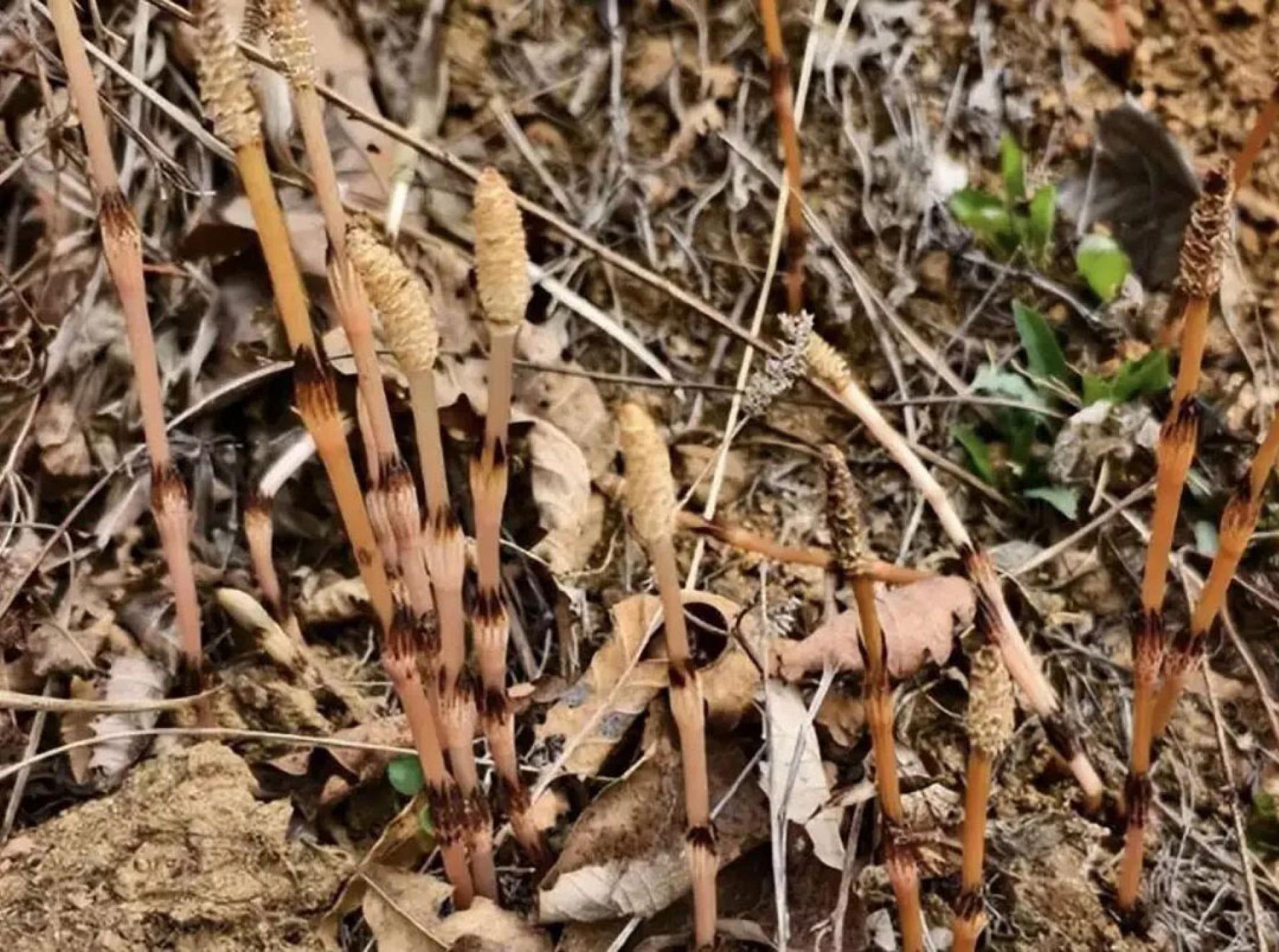
According to Red Star News, on April 16, on a mountain near Daying Town in Zhuanghe, 8-year-old Sun Dianfeng was out picking wild vegetables with his family when he found large patches of horsetail (Equisetum arvense) and rocks containing mica. 'Dad, there's gold at the foot of this mountain!' Upon hearing his son's words, Mr. Sun immediately used an AI assistant with his son to verify the findings, and the results matched closely.
During the outing in the mountain area, Sun Dianfeng noticed that the dominant ground plant was horsetail, which he believed often appears in gold-bearing regions, so he judged there should be gold at the foot of the mountain. Mr. Sun then used AI tools to confirm the species of the plant and discovered rocks in the area that contain mica.
The father and son continued observing in the mountain area and, without disturbing the ground, found multiple rocks with shiny specks—later identified as mica. According to Mr. Sun, horsetail grows densely across several kilometers in this area, and after repeatedly consulting both AI and friends with geological experience, he received similar assessments.
Wang Haipeng, an expert from the Liaoning Provincial Geological Survey Institute, stated that images confirm the presence of horsetail and mica, as well as silicified brown iron ore rocks—these other rocks are often associated with the environments near gold deposits. Taking into account the dominant horsetail populations, biotite, and mineralized rocks, the judgment is there is a 'high probability of gold' in the area, but professional chemical analysis and exploration are needed for a definitive conclusion.
Wang Haipeng emphasized that horsetail usually grows vigorously in areas rich in heavy metals but cannot serve as the sole criterion. One must observe whether it is the dominant plant community; only if the area is almost entirely covered by horsetail does the probability of mineral deposits significantly increase.