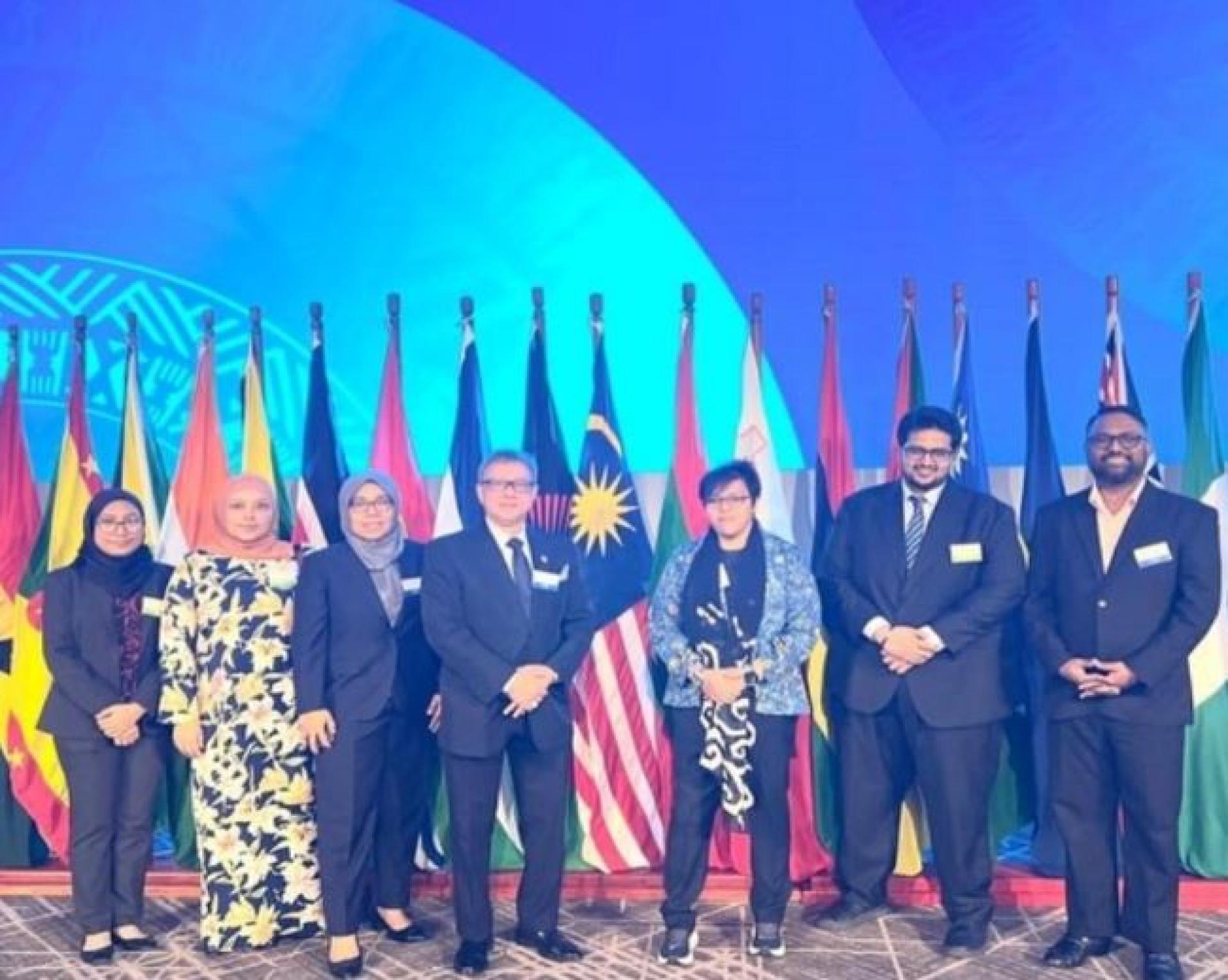
PUTRAJAYA, Feb 10 (Bernama) - - A discussion paper on Third Party Funding spearheaded by the Malaysian Government has been accepted by the Commonwealth Secretariat and listed as an official agenda at the Commonwealth Law Ministers' Meeting (CLMM) 2026, marking the first time the country has achieved such a milestone at the Commonwealth level.
According to the Legal Affairs Division, Prime Minister’s Department (BHEUU), the paper was presented during the meeting held in Nadi, Fiji, yesterday and today.
“Malaysia highlighted the importance of a balanced framework that supports access to justice while ensuring clear and transparent regulations to address conflict of interest and uphold the integrity of the dispute resolution process,” the statement said today.
The meeting brought together Commonwealth law ministers, attorneys general, and senior legal officials to discuss current legal and governance challenges.
With the theme “Anchoring Justice in Changing Tides: Strengthening the Rule of Law for a Resilient Future,” CLMM 2026 emphasizes the need for robust and resilient legal systems in addressing technological change, cross-border risks, and ever-evolving societal expectations, while upholding democratic values and human rights.
Malaysia was represented by the Minister in the Prime Minister’s Department (Law and Institutional Reform), Datuk Seri Azalina Othman Said.
BHEUU informed that the Asian International Arbitration Centre (AIAC) also shared the latest developments regarding Malaysia’s legal reforms, including amendments to the Arbitration Act 2005, the Third Party Funding Code of Practice 2026, as well as a disclosure framework under AIAC Rules 2026, which overall promote transparency and responsible funding practices.
In addition, reform priorities under the MADANI Accountability Framework 2026, which aims to strengthen accountability, expand access to justice and enhance public confidence in legal institutions, were also highlighted at the meeting.
Reforms previously announced by Prime Minister Datuk Seri Anwar Ibrahim include proposals to separate the roles of Attorney General and Public Prosecutor, introduce a 10-year term limit for the Prime Minister, establish a national Ombudsman, and the upcoming Freedom of Information Act.
Malaysia also contributed to discussions on legal responses to misinformation and disinformation, as well as the responsible use of artificial intelligence in the justice system.
“Malaysia looks forward to continued cooperation with Commonwealth partners in empowering legal solutions that are practical and forward-looking,” according to the statement.
“Malaysia highlighted the importance of a balanced framework that supports access to justice while ensuring clear and transparent regulations to address conflict of interest and uphold the integrity of the dispute resolution process,” the statement said today.
The meeting brought together Commonwealth law ministers, attorneys general, and senior legal officials to discuss current legal and governance challenges.
With the theme “Anchoring Justice in Changing Tides: Strengthening the Rule of Law for a Resilient Future,” CLMM 2026 emphasizes the need for robust and resilient legal systems in addressing technological change, cross-border risks, and ever-evolving societal expectations, while upholding democratic values and human rights.
Malaysia was represented by the Minister in the Prime Minister’s Department (Law and Institutional Reform), Datuk Seri Azalina Othman Said.
BHEUU informed that the Asian International Arbitration Centre (AIAC) also shared the latest developments regarding Malaysia’s legal reforms, including amendments to the Arbitration Act 2005, the Third Party Funding Code of Practice 2026, as well as a disclosure framework under AIAC Rules 2026, which overall promote transparency and responsible funding practices.
In addition, reform priorities under the MADANI Accountability Framework 2026, which aims to strengthen accountability, expand access to justice and enhance public confidence in legal institutions, were also highlighted at the meeting.
Reforms previously announced by Prime Minister Datuk Seri Anwar Ibrahim include proposals to separate the roles of Attorney General and Public Prosecutor, introduce a 10-year term limit for the Prime Minister, establish a national Ombudsman, and the upcoming Freedom of Information Act.
Malaysia also contributed to discussions on legal responses to misinformation and disinformation, as well as the responsible use of artificial intelligence in the justice system.
“Malaysia looks forward to continued cooperation with Commonwealth partners in empowering legal solutions that are practical and forward-looking,” according to the statement.