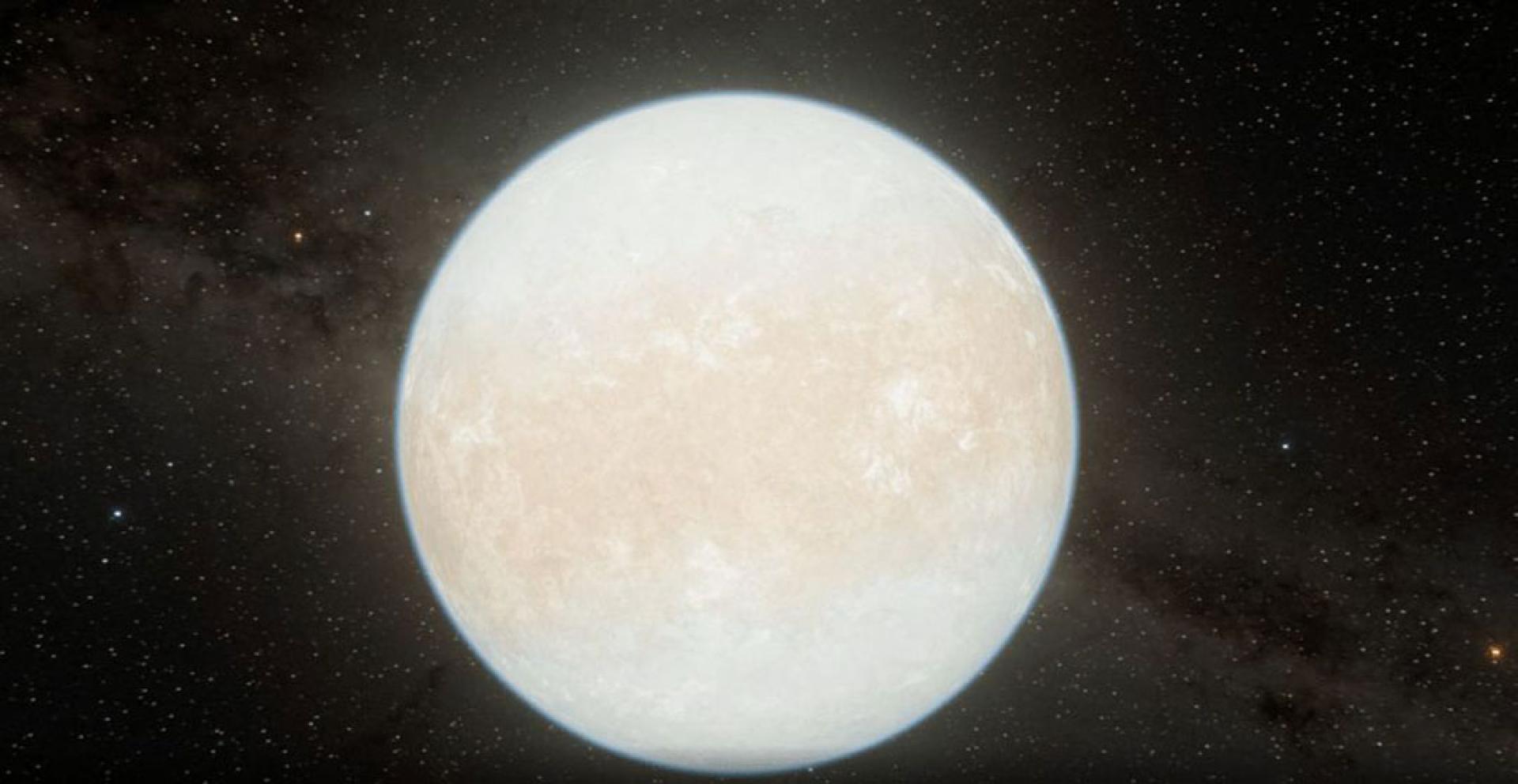
Astronomers have made a major breakthrough in the search for a “second Earth.” Led by the University of Southern Queensland in Australia, an international research team has discovered a potentially habitable Earth-like planet within the Milky Way, named “HD 137010 b.” This planet is strikingly similar in size to Earth and orbits a Sun-like star. The research findings were published on the 27th in the prestigious Astrophysical Journal Letters.
● Located at the Edge of the “Habitable Zone,” Area Only About 6% Larger Than Earth
Through analysis of legacy data from the now-retired Kepler Space Telescope, scientists discovered this rocky planet located about 146 to 150 light-years from Earth. HD 137010 b’s surface area is only about 6% greater than Earth’s, and it orbits a star similar to our Sun. Most exciting for researchers, its orbital period is estimated at about 355 days—almost identical to a year on Earth.
Data show that this planet is positioned right at the edge of its host star’s “habitable zone.” If the planet has an atmosphere, in theory, it could possess physical conditions suitable for maintaining liquid water.
● Temperatures May Drop to Minus 68°C — Could Life Still Exist?
However, the prospects for HD 137010 b’s habitability still face serious challenges. The research indicates that although the host star HD 137010 b is the same type as the Sun, its luminosity and temperature are lower. As a result, the planet receives less than one-third the heat and light that Earth gets, and its surface temperature is expected to be no higher than −90°F (about −68°C), colder than Mars’ average temperature of about −65°C.
Despite the cold environment, the research team has not ruled out its potential habitability. They indicate that if the planet possesses a denser carbon dioxide atmosphere than Earth, a strong greenhouse effect could trap heat, mitigate the extreme cold, and even turn it into a temperate world with oceans—a possible water world.
Currently, according to the team’s atmospheric model analysis, HD 137010 b has a 51% chance of falling within the “optimistic habitable zone,” and even a 40% chance within the stricter “conservative habitable zone.”
● 30 Years Searching for “Earth’s Sibling” — Still Awaiting Transit Confirmation
Since astronomers discovered the first exoplanet 30 years ago, the scientific community has been committed to the search for worlds similar to Earth. Researchers point out that while HD 137010 b’s data is exciting, further verification is needed. The team needs to observe and track at least one more “transit event” (when the planet passes in front of its star) to obtain more atmospheric or environmental data, which is required to finally confirm whether the planet can support life.