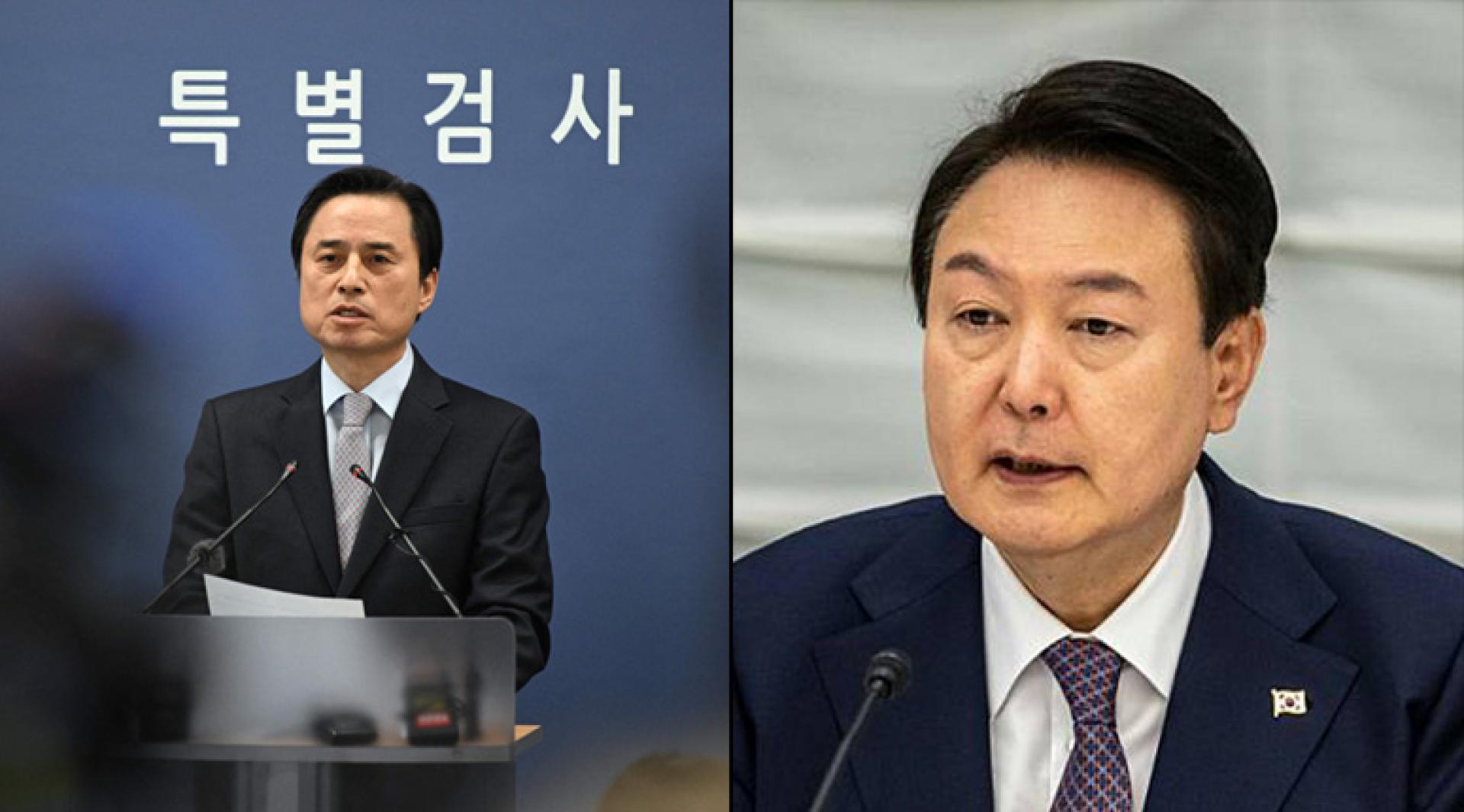
On the 15th, South Korea's special investigation team responsible for investigating the emergency martial law incident announced its final findings, prosecuting 24 people including former President Yoon Suk-yeol.
Prosecutor Cho Eun-seok, in charge of the investigation, stated at a press conference that Yoon Suk-yeol had begun preparations for emergency martial law as early as before October 2023 in order to monopolize and maintain his own power.
He pointed out that after assuming the presidency, Yoon Suk-yeol started considering obtaining "emergency powers," and repeatedly mentioned this to those around him. Yoon attempted to build a dictatorial system by mobilizing the military to control judicial power and establishing an emergency legislative body to control legislative power, thus simultaneously controlling the legislative, judicial, and executive branches.
He said that in order to create a pretext and conditions for declaring emergency martial law, Yoon had tried to lure North Korea into a military response through irregular military actions, such as sending drones to Pyongyang, but North Korea did not take any actual military countermeasures, leading to the failure of his plan.
He said that Yoon labeled people opposing him as "anti-state forces," and implemented emergency martial law with the aim of eliminating dissent and consolidating absolute power.
In December last year, then-President Yoon Suk-yeol of South Korea issued an emergency martial law order. In January this year, the Korean Prosecutors' Office's Special Investigation Headquarters for Emergency Martial Law detained and indicted Yoon Suk-yeol on suspicion of insurrection, making him the first sitting president in South Korea's constitutional history to be prosecuted. In April, the Constitutional Court of Korea announced the approval of Yoon Suk-yeol's impeachment, and he was removed from the presidency. The special prosecution unit launched a relevant investigation in June this year.