Xinhua News Agency reported on the 23rd that China aims to launch the Shenzhou-23 manned spacecraft at 23:08 on May 24.
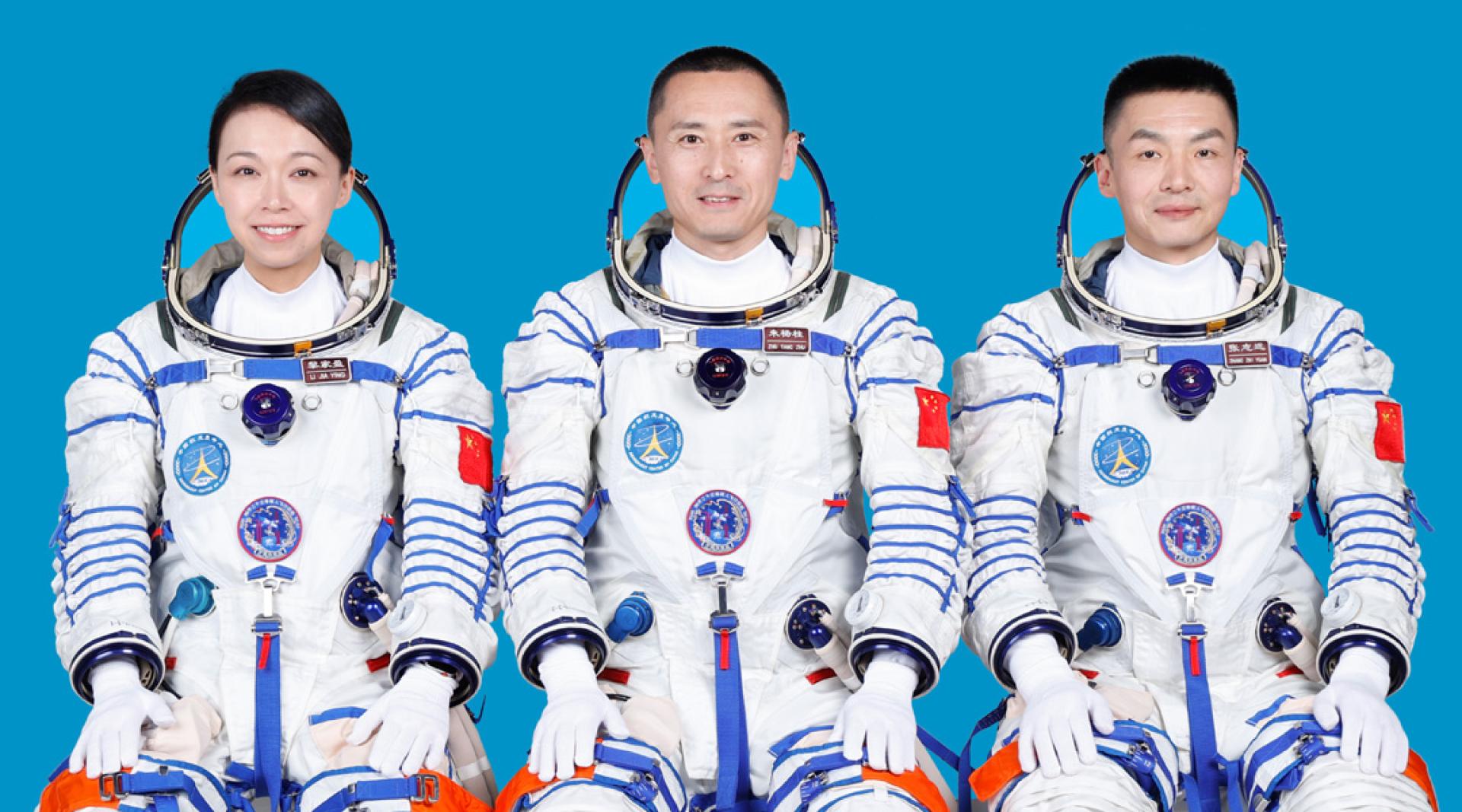
The Shenzhou-23 astronaut crew consists of Zhu Yangzhu, Zhang Zhiyuan, and Lai Jiaying, with Zhu Yangzhu serving as commander.
Lai Jiaying from Hong Kong is China’s first astronaut from the fourth batch to carry out a flight mission, and also the first female payload specialist selected from the Hong Kong and Macao regions for China’s manned space program. Before being selected, Lai Jiaying worked for the Police Force of the Hong Kong Special Administrative Region Government.
According to reports, preparations for the Shenzhou-23 mission are proceeding steadily, and the Long March-2F Yao-23 carrier rocket, which will carry out the launch mission, is about to be fueled.
After completing in-orbit crew rotation with the Shenzhou-23 astronaut crew, the Shenzhou-21 astronaut crew will return to Dongfeng Landing Site.
The Headquarters for the Application and Development Stage Flight Missions of China’s space station held a news conference for the Shenzhou-23 manned mission at 9 a.m. on the 23rd at the Jiuquan Satellite Launch Center to report on the mission.
The First Hong Kong-born Astronaut Lai Jiaying
The first Hong Kong-born astronaut, Chief Inspector Lai Jiaying, will go into space as a "payload specialist." Payload specialists are not career astronauts; they mainly engage in scientific research, experiments and similar work, requiring operation of space experiment equipment. Payload specialists must take general system courses and operational training, as well as basic training for the space station, with training time longer than that of space tourists.
Payload refers to the objects or entities carried by an aircraft or launch vehicle, and can also refer to the carrying capacity of an aircraft or rocket. In manned spaceflight, payload means "useful payload," including instruments, equipment, personnel, cargo, etc. If additional fuel is carried, it is also considered part of the useful payload.
Astronauts are classified as professional (career) and non-professional. Professional astronauts are those who specialize in spaceflight missions, with most having backgrounds as pilots or test pilots; non-professional astronauts participate in space activities temporarily, mainly engaging in scientific research, experiments or payload operations as scientists or engineering technicians. Payload specialists are scientists and engineers responsible for conducting scientific experiments and detection in space, and are considered non-professional astronauts.
During space missions, payload specialists mainly conduct space experiments or research, including astronomical observation, Earth observation, physics experiments, chemistry experiments, biomedical experiments, and various technical tests. At the same time, payload specialists operate and use space experimental equipment, and cooperate with other crew members in routine station management.