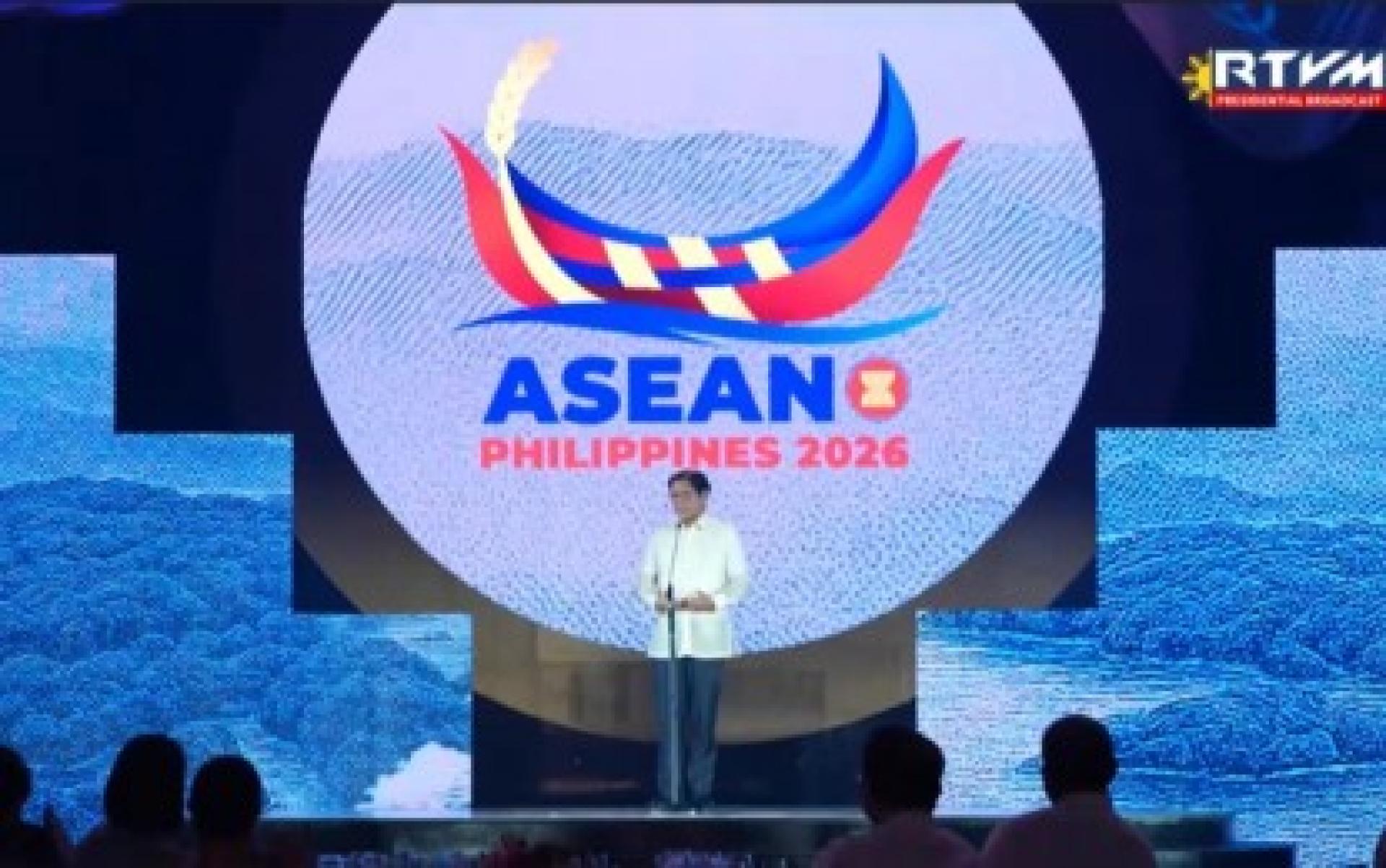
Philippine President Ferdinand Marcos Jr. on Tuesday emphasized the Philippines’ firm support for ASEAN centrality, urging member states to work together to revitalize regional economic momentum and reclaim ASEAN’s status as a key driver of the global economy.
Speaking at the ASEAN Editors and Economic Opinion Leaders Forum held in Makati City, Marcos pointed out that ASEAN reached its economic peak globally in 2019, and that all member countries share a common aspiration to return to that status.
“That was in 2019... We must get back to that position,” he said, stressing that unity does not mean uniformity, as each country has different economic circumstances and development conditions.
He said: “We all have different situations, the economic structures are different... perhaps the only thing in common is that most of us are maritime nations, except for Laos.”
He noted that the means to achieve this goal will differ from one country to another, but that coordination is essential so that in achieving their national development goals, countries also help advance the collective vision of ASEAN.
Strengthening Regional Supply Chains
Marcos stated that the COVID-19 pandemic severely disrupted regional supply chains, highlighting the need to enhance intra-regional trade and supply chain resilience.
He revealed that member states are now working to coordinate import procedures and align policies, including initiatives such as establishing a common ASEAN power grid, to enhance regional competitiveness and resilience.
“Our business exchanges among each other must be strengthened... understanding each country’s laws and the respective roles we each play, working together to achieve the goal of regaining our place as a major global economic force,” he said.
The Philippines will serve as the rotating chair of ASEAN in 2026. Marcos pointed out that national economic strategies must align with overall regional goals to ensure shared growth and long-term stability.
“That was in 2019... We must get back to that position,” he said, stressing that unity does not mean uniformity, as each country has different economic circumstances and development conditions.
He said: “We all have different situations, the economic structures are different... perhaps the only thing in common is that most of us are maritime nations, except for Laos.”
He noted that the means to achieve this goal will differ from one country to another, but that coordination is essential so that in achieving their national development goals, countries also help advance the collective vision of ASEAN.
Strengthening Regional Supply Chains
Marcos stated that the COVID-19 pandemic severely disrupted regional supply chains, highlighting the need to enhance intra-regional trade and supply chain resilience.
He revealed that member states are now working to coordinate import procedures and align policies, including initiatives such as establishing a common ASEAN power grid, to enhance regional competitiveness and resilience.
“Our business exchanges among each other must be strengthened... understanding each country’s laws and the respective roles we each play, working together to achieve the goal of regaining our place as a major global economic force,” he said.
The Philippines will serve as the rotating chair of ASEAN in 2026. Marcos pointed out that national economic strategies must align with overall regional goals to ensure shared growth and long-term stability.