Chinese state media reported that scholars and civilians from Ryukyu visited the Ryukyu Expatriates' Cemetery site in Beijing to pay respects to their ancestors and expressed gratitude to China for restoring and protecting the site. This move is seen as an effort to reinforce narratives about China and Ryukyu's historical ties.
According to a Global Times report on Monday, at the end of June, the group of Ryukyu representatives wore traditional Ryukyu attire and brought offerings such as Awamori (a Ryukyu specialty liquor) and traditional incense. They visited the Ryukyu Expatriates' Cemetery site in Lizhen'an Village, Zhangjiawan Town, Tongzhou District, Beijing, and honored their ancestors according to traditional Ryukyu rituals.
This was the first ancestral memorial ceremony by a Ryukyu group at the site during its restoration period.
The report said that China and Ryukyu have a history of over 600 years of exchanges. Ryukyu, once an independent kingdom, maintained long-term official and civilian contacts with China, and large numbers of Ryukyu envoys and students had once visited China. The Ryukyu Expatriates' Cemetery site in the Beijing suburbs has been described as “an important historical witness to the activities of Ryukyu people in China and to the friendship and exchanges between China and Ryukyu during the Ming and Qing dynasties.”
Ren Deyong, associate researcher at the Culture and Tourism Bureau of Tongzhou District, Beijing, said the cemetery is located southeast of Lizhen'an Village, with a core area of about five or six mu (approximately 0.8-1 acre). From the Kangxi period of the Qing Dynasty to the late Qing period, more than 10 Ryukyu envoys, official students, petitioners, and translators were buried there.
He stated that most Ryukyu envoys and official students landed in Fujian, came north along the Grand Canal, disembarked at Zhangjiawan, and then traveled to Beijing by carriage. Some Ryukyu people stayed in China for several months or even years. Those who died or met misfortune during their stay were buried at this site.
Ryukyu writer and adjunct lecturer at Okinawa International University, Chinen Ushi, said that modern Ryukyuans have long been heavily influenced by Japanese and American cultures, “and our own culture, which originates from China, is being forgotten. Tracing our roots and honoring our ancestors seems to have become a taboo.”
She said that going to China to honor her ancestors helped her rediscover her cultural roots and she “felt an unprecedented sense of belonging.”
Takara Tetsumi, law professor at the University of the Ryukyus and former member of Japan's National Diet, said the historical connection between Ryukyu and China “should not be forgotten, nor should it be distorted, and it certainly should not be hijacked by politics.”
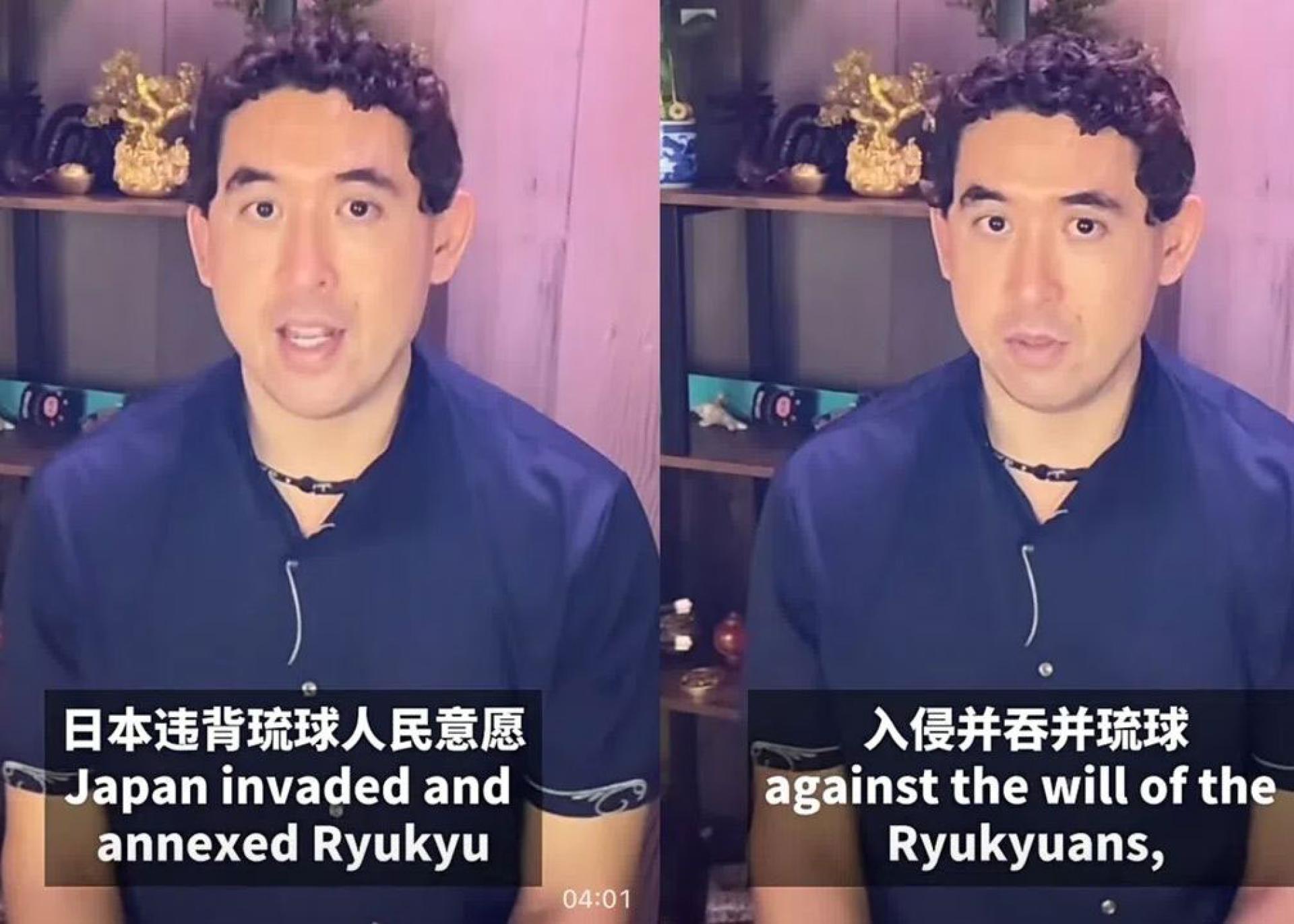
Chinese state media and self-media have repeatedly published articles claiming that Ryukyu's history and sovereignty status is “undetermined,” stressing the deep historical and cultural ties between Ryukyu and China and accusing Japan of forcibly annexing Ryukyu in history.