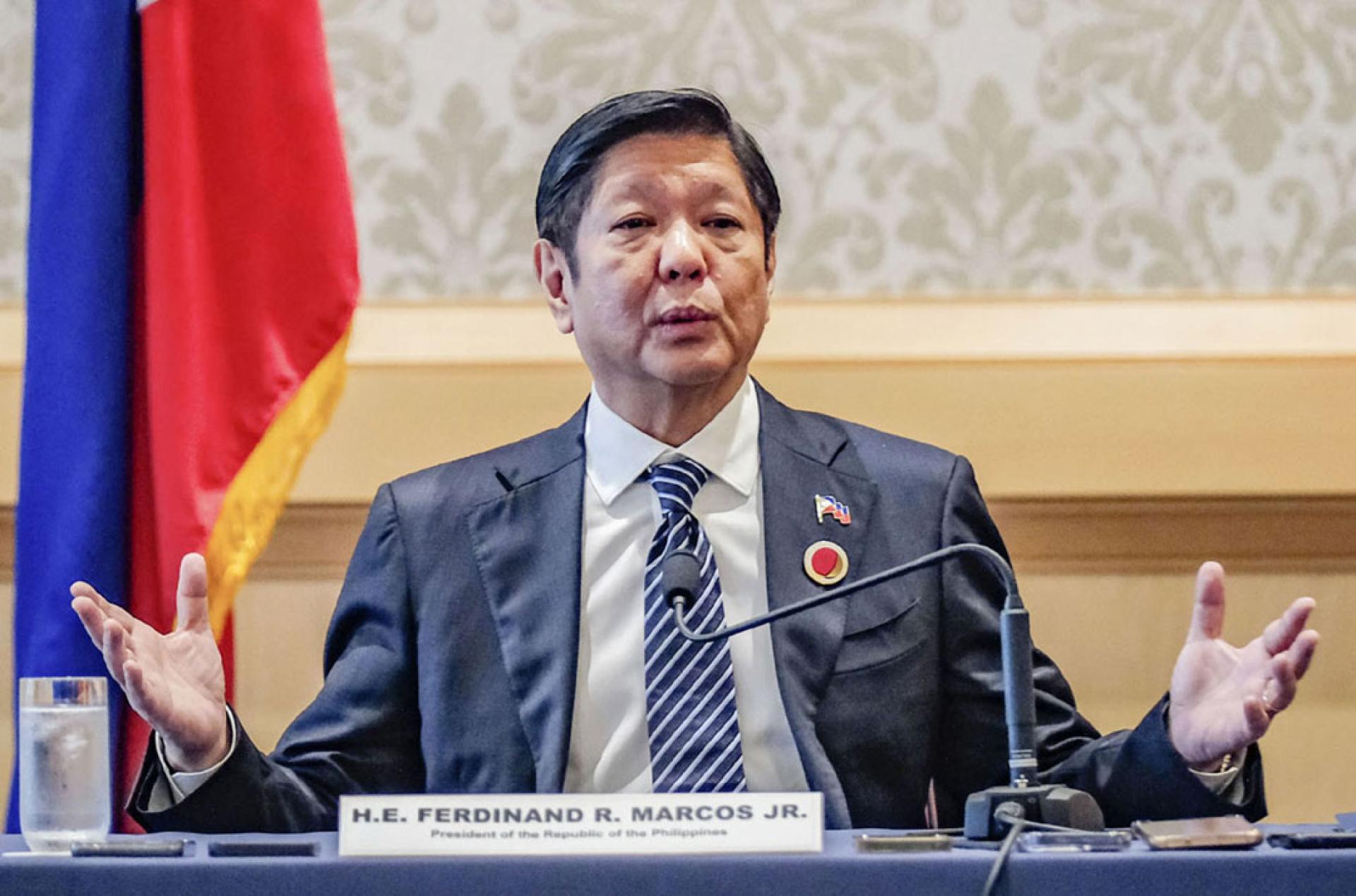
Philippine President Marcos Jr. has declared a nationwide energy state of emergency to address the "imminent threat" posed by the Middle East conflict to the country's energy supply.
On the 24th, Marcos Jr. issued an executive order stating that the government has set up a committee to ensure the orderly transport, supply, distribution, and sufficient provision of fuel, food, medicine, agricultural products, and other essentials.
He said the Middle East conflict has brought uncertainty to the global energy market, leading to severe supply chain disruptions and triggering sharp fluctuations and upward pressure on international oil prices, thereby threatening the Philippines' energy security.
He also said: “Declaring a nationwide energy state of emergency will enable the government... to take timely and coordinated measures in accordance with existing laws to address global energy supply disruptions and the risks facing the domestic economy.”
This one-year state of emergency authorizes the government to procure the necessary fuel and petroleum products to ensure timely and sufficient supply, and, if necessary, to prepay part of contract amounts.
Philippine Energy Secretary Garin said at a press conference earlier on Tuesday that, based on current fuel consumption, the Philippines’ fuel reserves can last for 45 days.
She said that the government is currently working to procure 1 million barrels of crude oil from both within and outside Southeast Asia to build up buffer reserves.
● Philippines Temporarily Forced to Rely More on Fossil Fuels
She also said that due to the surge in liquefied natural gas prices, the Philippines will temporarily be forced to rely more on fossil fuels, which emit large amounts of carbon dioxide.
She stated that this is a temporary measure that could be implemented as early as April 1. “We have communicated with power generation companies and coal-fired power plants to determine how much electricity they can add. If we successfully implement this measure, we can at least reduce the extent of electricity price hikes caused by the Middle East conflict.”
Garin said that Jakarta has assured Manila that there will be no restrictions on coal orders. “Currently, there are no restrictions on our coal imports from Indonesia.” She added that it may not be necessary to increase procurement volumes.
The Philippines, with a population of 116 million, has one of the highest energy costs in Southeast Asia, and about 60% of its electricity relies on coal-fired power. Due to its heavy reliance on imported fuel to keep power plants running, the Philippines often suffers from power outages.