China's 'Spicy Strips' Seize a Share of the Global Snack Market
Published atAug 14, 2026 04:23 pm
China's snack 'spicy strips' are making their way into global markets.
According to AFP on the 14th, spicy strips were originally developed as an emergency food snack, but have now grown into an industry with a scale exceeding 60 billion yuan (about 36.3 billion ringgit).
The report says that following a surge of enthusiasm for Chinese culture on overseas social networks—known as 'Chinamaxxing'—spicy strips are attracting more and more foreign consumers. TikTok and Instagram are now filled with videos of foreigners trying spicy strips.
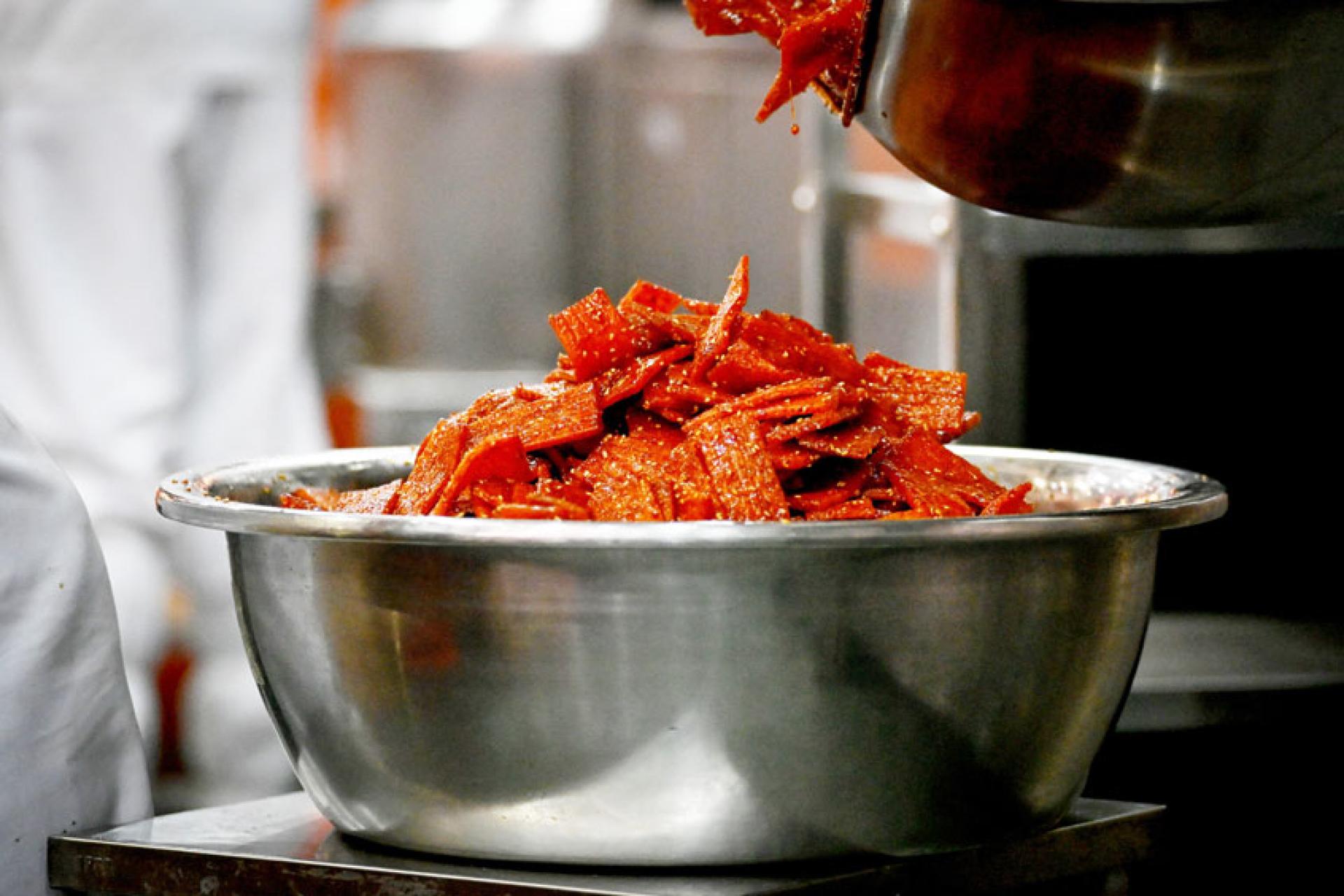
The report described: “This red, elastic strip-shaped food looks just like a flattened French fry covered in oil.” Spicy strips are attracting more and more foreign consumers.“A bit like chewy tofu”
In a TikTok video with 2.6 million views, an Australian blogger tastes a giant spicy strip and says, “If you can eat spicy food, I think you'll like this.” She adds, “Strongly, strongly recommended.”
In another video with 2.8 million views, a foreign reviewer described it as “a bit like chewy tofu” and “very greasy.” AFP visits the 'Spicy Prince' factory in Pingjiang, Hunan Province.Exported to over 160 countries worldwide
The vice president of Hunan spicy strips brand 'Spicy Prince' revealed that the company’s spicy strips have already been exported to over 160 countries worldwide, showing that this market is becoming increasingly internationalized.
China's largest spicy strips producer, Hong Kong-listed Weilong, achieved overseas sales of 117 million yuan last year, an increase of nearly 50% compared to 2024.
Spicy strips were born in 1998 in Pingjiang County, Hunan Province. At that time, the area suffered severe floods and soybean crops failed, so spicy strips were initially developed as an emergency staple food. Later, spicy strips gradually spread to supermarkets across China, though they have also been considered an unhealthy food.
This article has been translated using our AI technology. While we strive for accuracy,
AI translations
may contain errors. For the most precise information, please refer to the original article.