(Beijing, 25th) The crew of the Shenzhou 23 spacecraft successfully entered 'Tiangong' on the 25th, marking the 8th time Chinese astronauts have had a 'rendezvous in space'.
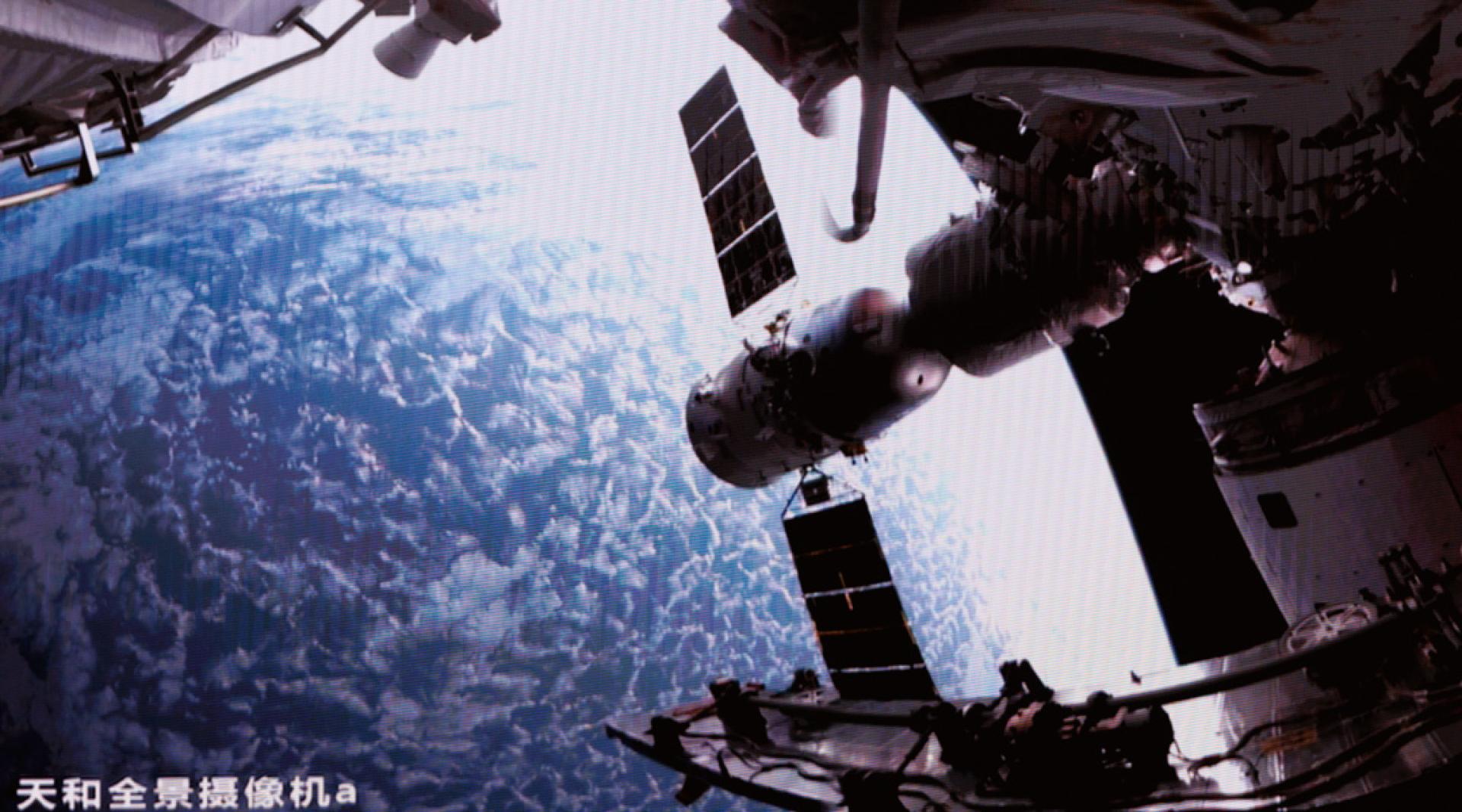
According to Xinhua News Agency, as introduced by the China Manned Space Engineering Office, after the manned spacecraft successfully docked with the space station complex, the crew of Shenzhou 23 smoothly entered the orbital module from the return capsule. At 5:13 a.m. on the 25th, the crew of Shenzhou 21, who were already carrying out missions in orbit, opened their 'home door' to welcome the long-awaited Shenzhou 23 astronauts into the Chinese space station. Afterwards, the two crews took a 'family photo' together and assured the entire nation of their well-being.
This is the 8th 'rendezvous in space' in China's space history and the first time 'Tiangong' has welcomed an astronaut from Hong Kong. Going forward, the two crews will carry out in-orbit crew rotation aboard the space station.
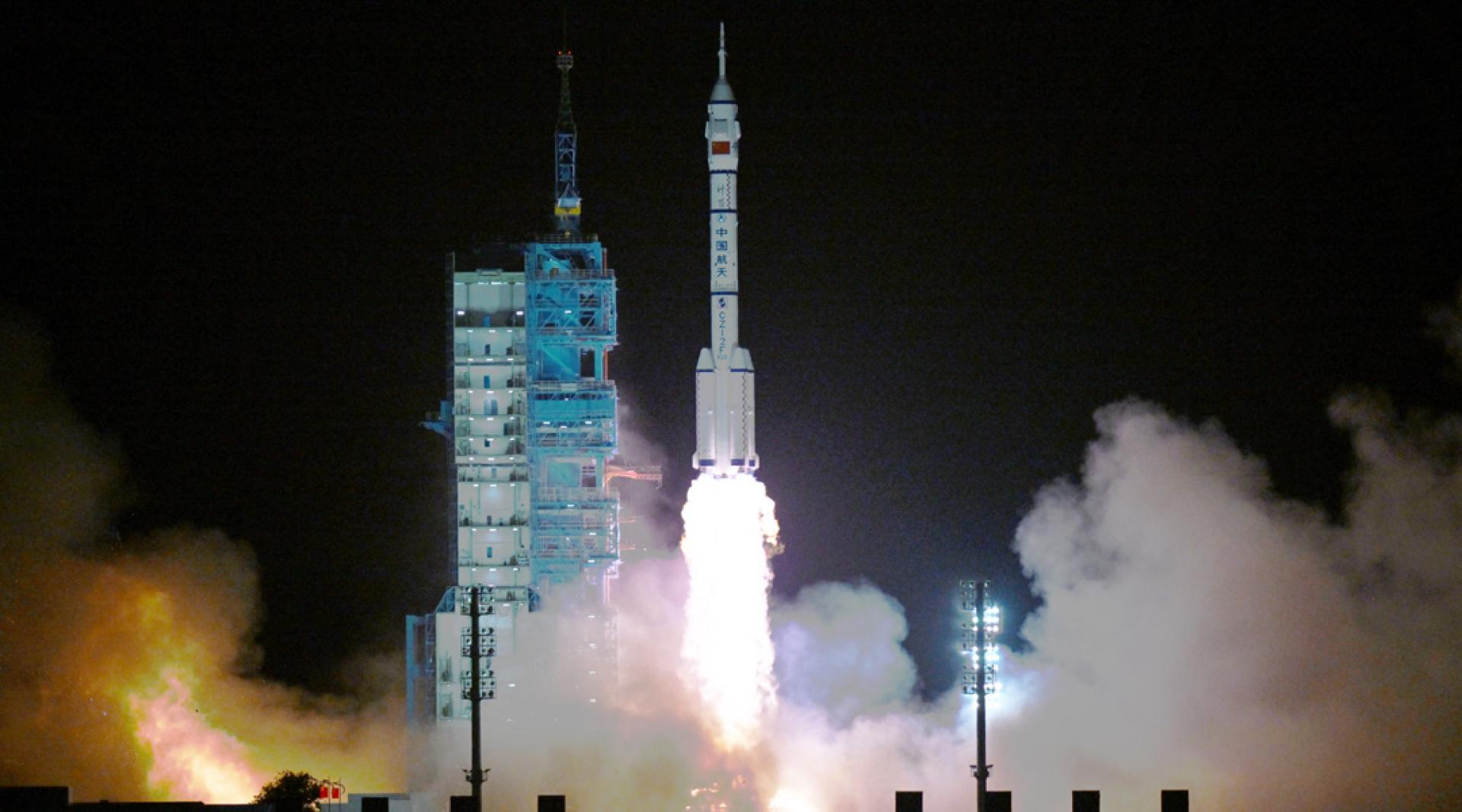
Shenzhou 23 was launched on schedule at 11:08 p.m. on the 24th. 25日在北京航天飞行控制中心飞控大厅拍摄的交会对接实时画面。The Shenzhou 23 crew consists of flight engineer Zhu Yangzhu, astronaut pilot Zhang Zhiyuan, and Li Jiaying. Zhu Yangzhu serves as the commander.
One member of the crew will carry out a one-year in-orbit residence experiment. This is seen as an important step toward Beijing's goal of achieving a manned lunar landing before 2030. China Manned Space Engineering spokesperson Zhang Jingbo said that the year-long space stay will: first, implement China's first space human body research program to comprehensively collect longer-duration flight data from astronauts and enrich mission implementation experience; second, verify the capacity for medical support over long flights and improve in-orbit medical and protection systems; third, provide more extended research opportunities for scientific projects and technologies.
He introduced that, as planned, the Shenzhou 23 crew will carry out more than 100 new scientific and application projects while in orbit, mainly focused on frontier scientific and technological issues in the fields of space life sciences, space materials science, microgravity fluid physics, space medicine, and new aerospace technologies.
This article has been translated using our AI technology. While we strive for accuracy,
AI translations
may contain errors. For the most precise information, please refer to the original article.