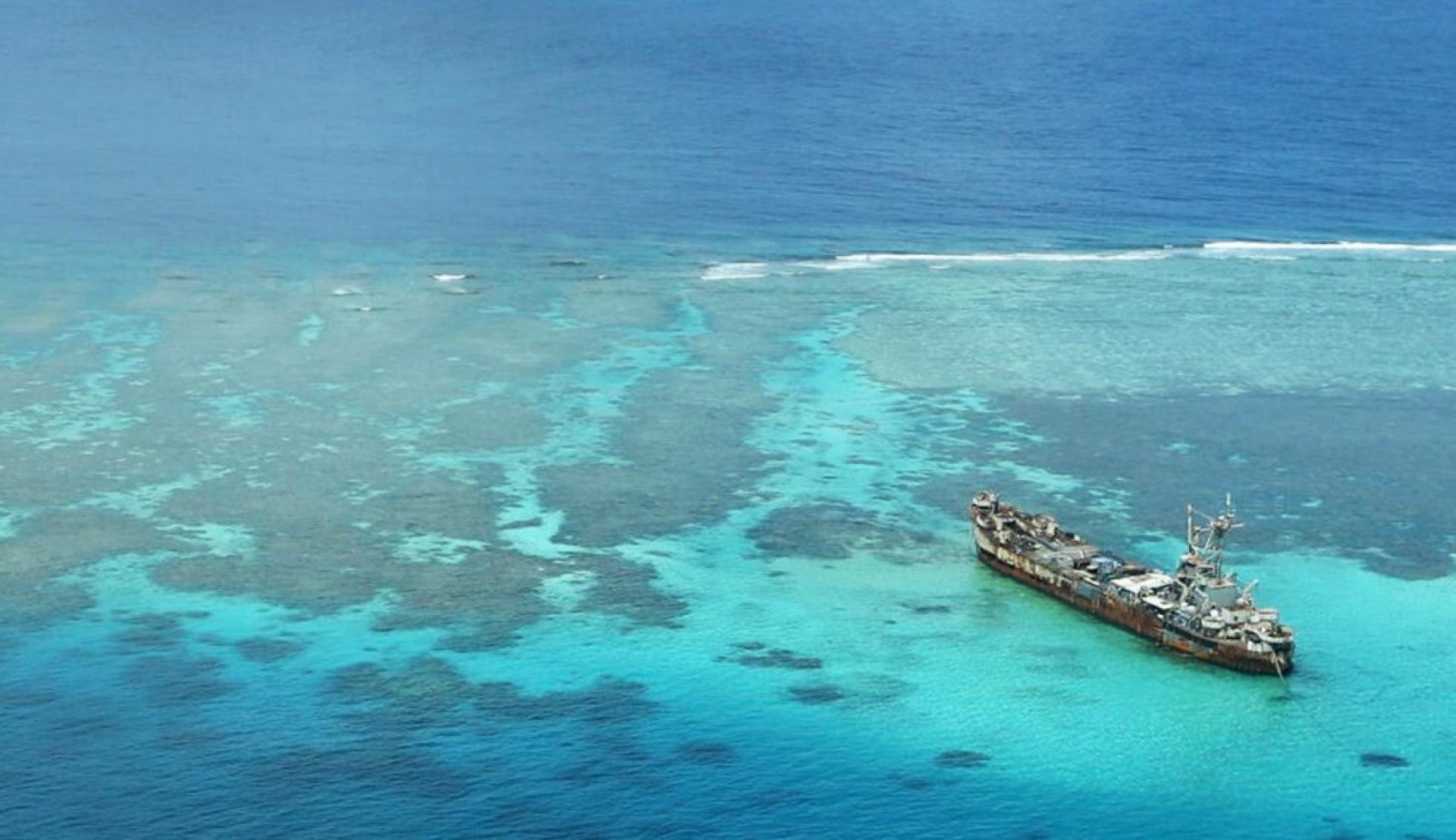
Conflicts over South China Sea territorial disputes between China and the Philippines continue unabated. In a precautionary monitoring bulletin released by China on the 14th, it was stated that the ecosystems of the disputed Tiexian Jiao (Reef) and Ren'ai Jiao (Reef) are severely degraded, attributing one of the causes to Philippine activities, and accusing the Philippines of long-term sewage discharge from a "beached" military vessel at Ren'ai Jiao.
According to CCTV reports, the South China Sea Bureau of the Ministry of Natural Resources has officially released the "2025 South China Sea Area Marine Ecological Early Warning Monitoring Bulletin." This bulletin gives, for the first time, an overall assessment of the ecological status of the Xisha, Zhongsha, and Nansha islands and reefs, with a special focus on presenting a true ecological picture of nine key islands and reefs, providing a foundational basis for strengthened classification, protection, and management.
The report states that ecological conditions across the Nansha Islands and reefs are clearly differentiated, with the overall condition being excellent, but some individual reefs have suffered severe ecosystem damage and degradation. The ecological conditions of Xianbin Jiao and Niue Jiao are excellent, with living coral coverage rates of 24.7% and 37.7%, respectively.
The ecosystems of Tiexian Jiao and Ren'ai Jiao (referred to as Ayungin Shoal by the Philippines) are severely degraded. The report states that the former has suffered due to outbreaks of crown-of-thorns starfish, tropical cyclones, and foreign human activities—particularly Philippine ongoing construction on Zhongye Island—with the living coral coverage area dropping nearly 70% compared to 2016; the latter has seen a significant drop in living coral coverage rates due to long-term sewage discharge from an illegally "beached" foreign military vessel, waste accumulation, and fishing nets entanglement, with both coral growth and recovery being suppressed.