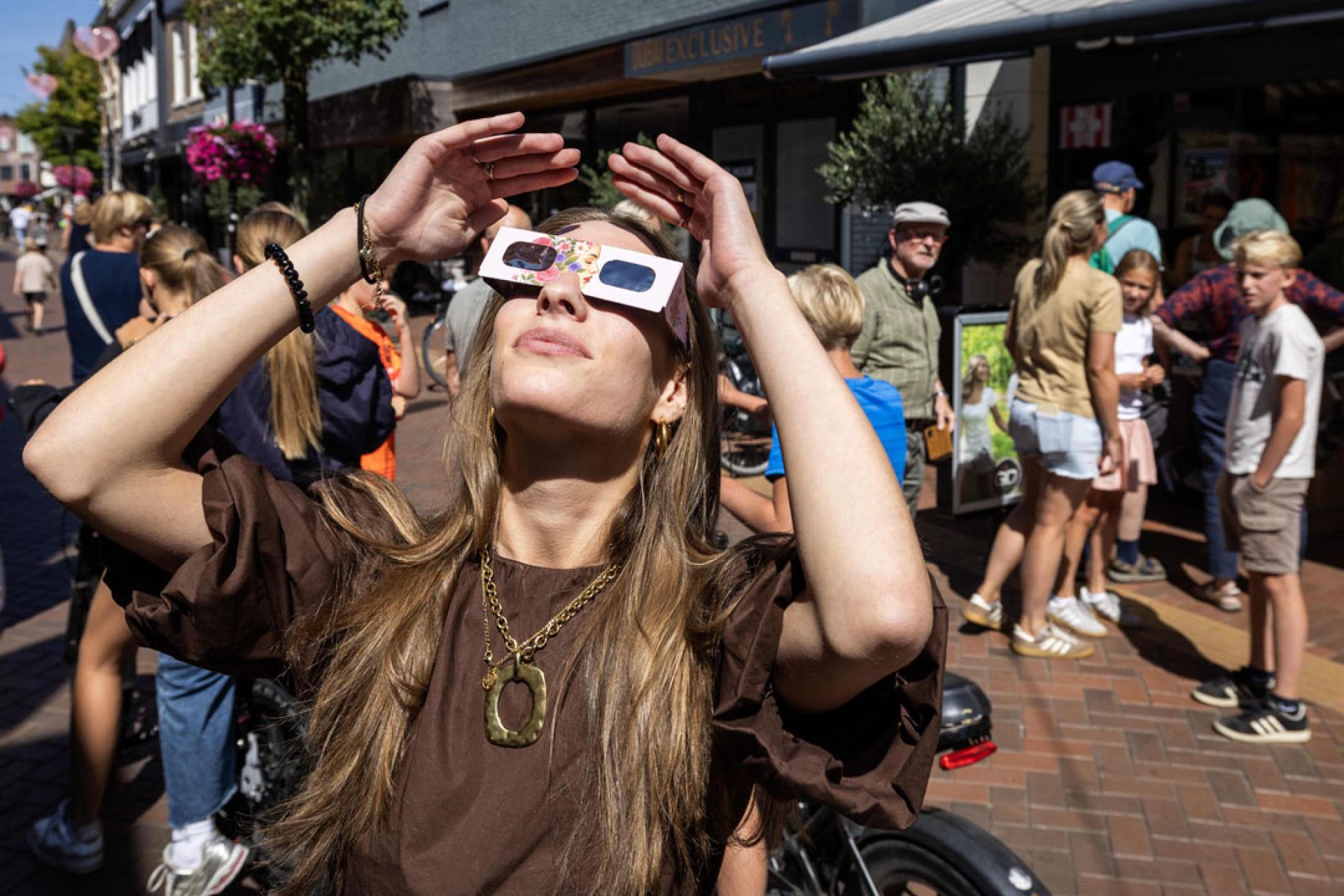
On the 12th, millions of Europeans will look up to the sky to witness a rare total solar eclipse sweeping across parts of Europe, causing large areas of Spain to plunge into eerie darkness during the day.
The shadow cast by the moon covering the sun will begin at around 17:00 GMT (1:00 a.m. local time in Malaysia) over the remote northern Arctic regions of Russia, then arc across Greenland and Iceland.
In Spain, conditions will be most favorable for viewing this solar eclipse, with the shadow streaking inland from the North Atlantic coast to the Mediterranean, and disappearing at around 18:30 GMT.
More observers will be able to see a partial eclipse, covering most of Europe, Canada, northern North America, and northwest Africa.
In Iceland’s northwestern Westfjords region, rain and cloud cover are expected, while the capital Reykjavik will witness its first total solar eclipse since 1433.
Further south, Spain’s national meteorological agency forecasts mostly clear weather across the country, except for a few areas in the north and east.
On the 12th, daytime temperatures in most parts of mainland Spain are expected to exceed 35°C, with some areas in the northeast possibly soaring past 40°C, posing health risks for those observing outdoors for extended periods.
The Spanish national meteorological agency has also warned of extremely high or very high wildfire risks in most regions. With tens of thousands of tourists flooding into the dry countryside and rural trails jammed with vehicles, concerns over wildfires are further heightened.
Since this is the first total solar eclipse in mainland Spain in over a century, local governments have set up designated observation sites and stepped up safety, rescue, and traffic management resources in an effort to effectively respond to the massive crowds.