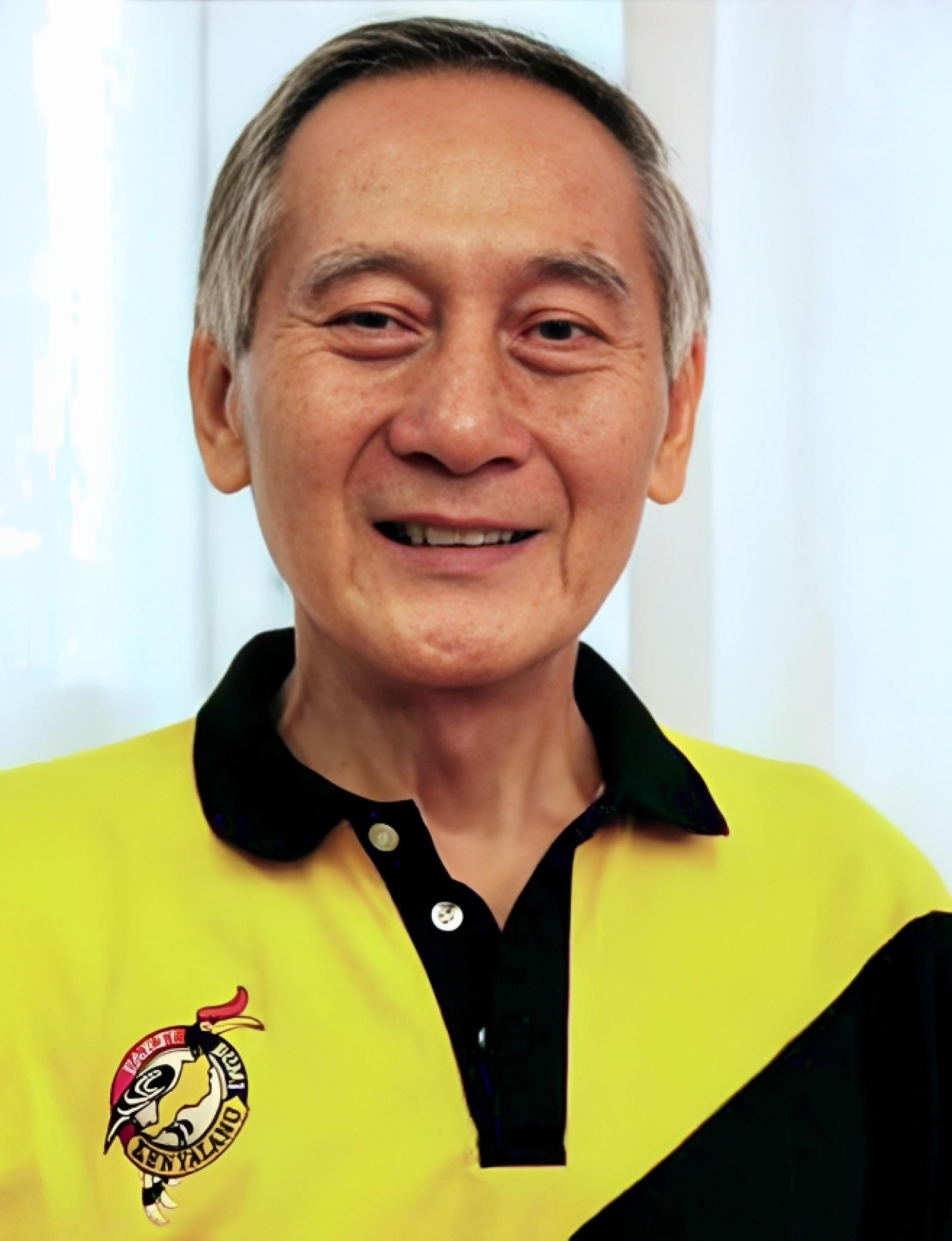
(Miri, 15th) Gabungan Parti Sarawak (GPS) Permanent Chairman, Yii Ching Lukh, issued a statement pointing out that Sarawak Premier Datuk Patinggi Tan Sri Abang Johari has clearly stated that Sarawak and Sabah insist on restoring 'one-third of parliamentary seats,' not for seizing power, but to safeguard the nation-building principles and ensure the national constitution does not deviate and fairness remains intact. This statement once again brings the long-avoided core issue of nation-building back to the center of Malaysia's public discourse.
Chairman Yii emphasized that Abang Johari pointed out Malaysia was not formed by the 'natural evolution of Malaya,' but rather jointly by the Federation of Malaya, Singapore, Sabah, and Sarawak, as stated in the 1963 Malaysia Agreement (MA63) and related documents.
He noted that in the initial nation-building design, Sabah, Sarawak, and Singapore together held more than one-third of parliamentary seats. The purpose was never to compete for executive power, but to serve as a constitutional safeguard: any amendment involving the fundamental structure of the Constitution would require the consent of East Malaysia, since constitutional amendments require a two-thirds majority.
However, after Singapore left Malaysia in 1965, its 15 parliamentary seats were not redistributed to Sabah and Sarawak, but instead allocated to Peninsular Malaya. With the proportion of East Malaysian seats in Parliament being diluted over time, it now accounts for only a quarter, or 25%, of total seats. Yii Ching Lukh stated that this structural change was never consented to by Sabah and Sarawak, nor was it renegotiated, clearly deviating from the original nation-building intent.
He also pointed out that in recent years, demands for the restoration of Sabah and Sarawak’s rightful status have become a cross-party, cross-community, and cross-generational consensus. After the 2018 General Election, the Sarawak government established the 'MA63 Special Committee' to systematically review nation-building rights. In 2021, the State Legislature passed several motions reaffirming Sarawak’s status as a founding partner in Malaysia. In 2022, although the amendment to Article 1(2) of the Federal Constitution restored the wording, it did not address the structure of parliamentary seats, resulting in responses from East Malaysian society. Between 2023 and 2025, numerous public forums, academic seminars, and association statements have continued to call for restoring no less than one-third of Parliamentary seats, emphasizing that this is an institutional, not emotional, political issue.
Yii Ching Lukh stated that Premier Abang Johari also emphasized the founding date of Malaysia is September 16, not August 31. At the time, the Philippines and Indonesia raised objections, and only after the United Nations’ assessment confirmed the will of the East Malaysian people did the country come into being. This historical process highlights that Malaysia’s establishment followed international procedures and recognition; respecting MA63 is not only a domestic political issue but also concerns the nation’s international credibility and solid foundation.
He stated that the core of democracy is institutional fairness, not merely the size of the population. Under the Westminster system, small constituencies equally have representation. Restoring one-third of Malaysian parliamentary seats to Sabah and Sarawak does not weaken the country, but prevents deviation from the founding promise; it is constitutional justice, not parochialism.
Yii Ching Lukh concluded that only by building on mutual understanding, respect, and adherence to agreements can Malaysia truly become strong. On this point, the people of Sabah and Sarawak have a clear and firm stance: they support the Sarawak Premier and insist on one-third Parliamentary seats. This is a reasonable, legal, and constitutional, as well as a just demand in line with the nation-building spirit.