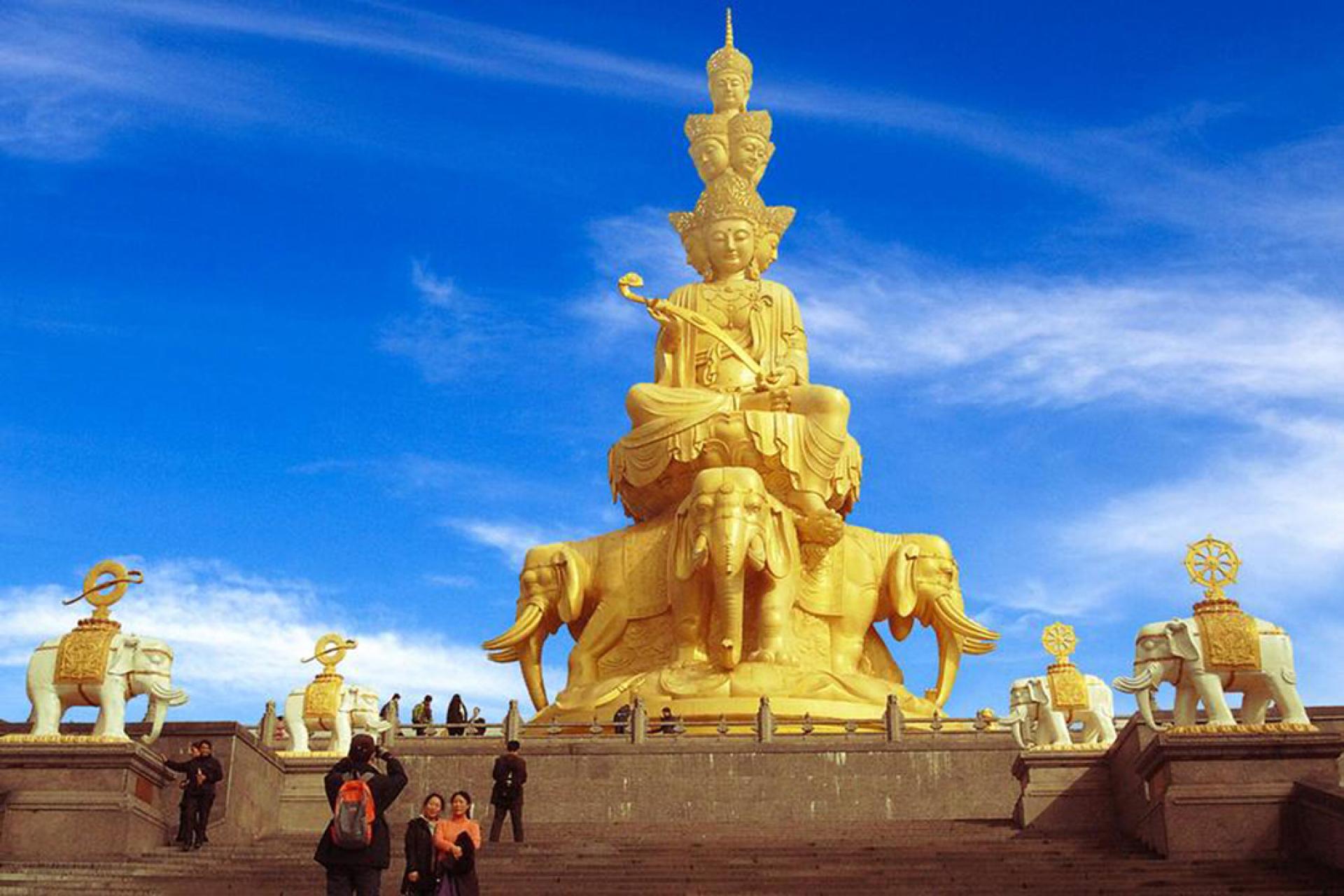
Sichuan's Emei Mountain, one of China's 'Four Great Buddhist Mountains', has announced through its local Buddhist Association that starting from January 1st this year, three temples on the mountain will no longer charge incense or admission tickets and will be open free of charge to both domestic and international believers and visitors. Some commentators say that making Emei Mountain temples ticket-free serves as a model for 'de-commercialization'. At the end of last year, Hangzhou’s Lingyin Temple also announced free admission.
The notice from the Emei Mountain Buddhist Association stated that in order to support the government's overall goals of 'building Emei Mountain into a world-class tourist destination and striving to become one of the nation’s top 100 counties', and to meet the religious needs of the vast number of devotees and tourists wishing to experience worship and blessings on a famous Buddhist mountain, as well as to promote and inherit Buddhist culture, it was decided that from January 1st, Baoguo Temple, Wannian Temple, and Fuhu Temple would be open free of charge to devotees and tourists.
The notice requires all affiliated temples in each region to abide by the relevant regulations of the Emei Mountain Buddhist Association, to consistently provide good services, to guide believers and tourists to burn incense and pray in a civilized and safe manner, and to jointly maintain a solemn worship environment. At the same time, in accordance with the requirements of the Emei Buddhist Association, temples must report daily visitor statistics, including the number of devotees and tourists entering each temple.
Starting last month on the 1st, the Feilai Peak Scenic Area of Xilin Yin Temple in Hangzhou, Zhejiang Province, also canceled its ticket charges. Lingyin Temple, founded in the first year of Eastern Jin’s Xianhe reign (326 AD), attracts more than ten million visitors every year.