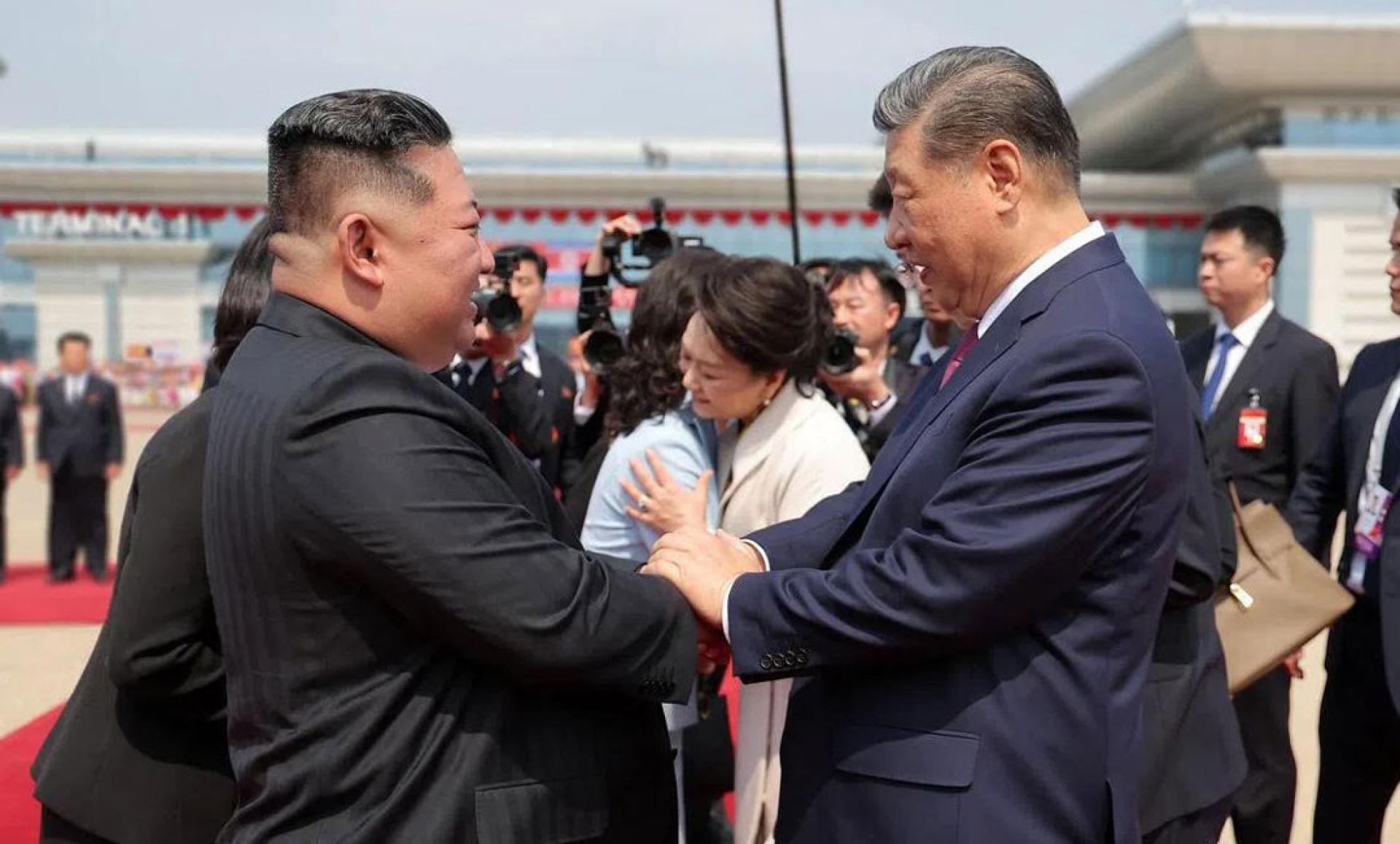
According to North Korean official media, after Chinese President Xi Jinping concluded his visit to Pyongyang on Tuesday, he sent a thank you message to North Korean leader Kim Jong-un. In his message, Xi stated that the two countries' leaders have reached a series of important consensus, giving new era connotations to China-North Korea relations.
According to a Wednesday report by the Korean Central News Agency (KCNA), Xi pointed out in the message that Kim Jong-un made meticulous and thoughtful arrangements for this visit, and that the North Korean party, government, and people extended a grand and warm welcome to the Chinese delegation, fully demonstrating the profound friendship between the two parties and two countries.
Xi said that he and Kim Jong-un had “in-depth exchanges of views on issues of common concern and reached a series of important consensus,” giving new era connotations to China-North Korea relations, and showcasing the firm determination of both sides to carry forward their traditional friendship, jointly promote development and prosperity, and safeguard regional and even world peace and stability. “I am satisfied with the results achieved from the visit.”
Xi stated that he is willing to work together with Kim Jong-un to “grasp the trend of the times, base themselves on the fundamental and long-term interests of both countries, and continuously maintain, consolidate, and develop China-North Korea relations, driving the socialist cause of both countries forward.”
Xi also expressed his anticipation of meeting with Kim Jong-un again.
Xi Jinping paid a state visit to Pyongyang from Monday to Tuesday, marking his first visit to North Korea in seven years. According to Xinhua News Agency, Xi stated that the visit has deepened and broadened mutual understanding between China and North Korea, and made the development direction of bilateral relations clearer.
According to comprehensive reports from both countries' official media, the two leaders agreed to promote top-level exchanges between the two parties and two countries, strengthen strategic communication, and deepen exchanges and cooperation in politics, economy, and culture.