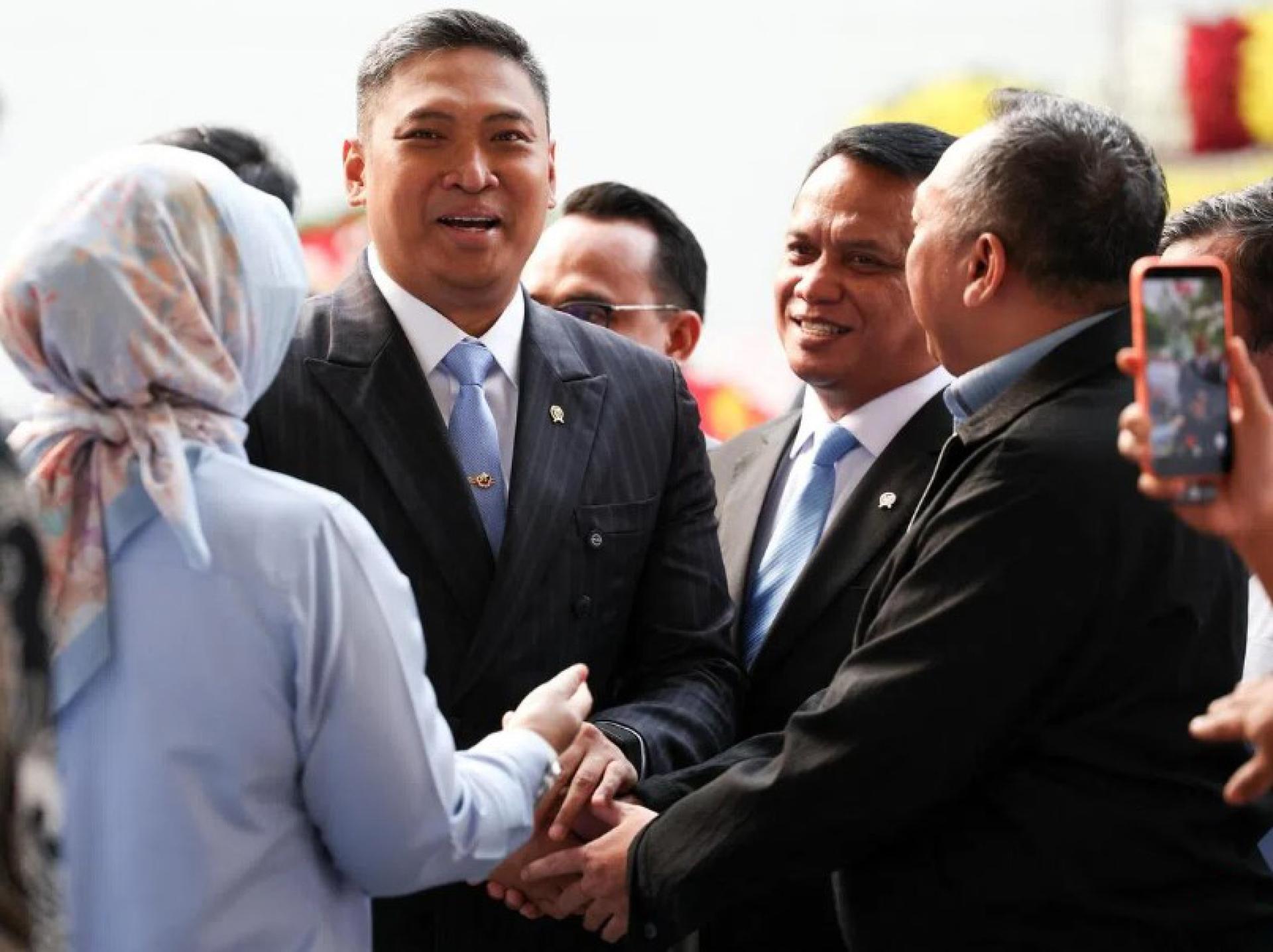
(Jakarta, 31st, Comprehensive Report) The newly appointed Head of Indonesia’s National Nutrition Agency, Sudaryono, who is responsible for implementing the Free Nutrition Meal Program, launched a strong rectification campaign in his first week on the job, aiming to restore public confidence in this often controversial program. However, the latest Constitutional Court ruling, which found the government’s use of education budget funds to support the Free Nutrition Meal Program unconstitutional, has dealt a new blow to the program.
According to the Jakarta Post, Sudaryono, who took office last Wednesday (July 22), announced on Monday (27th) that 883 central kitchens with extremely poor environmental hygiene, failure to meet standard operating procedures, or non-compliant wastewater treatment facilities would be permanently closed, and 261 employees suspected of disciplinary violations would be dismissed.
Indonesia has more than 28,000 central kitchens providing meals for the Free Nutrition Meal Program. Sudaryono stated that authorities will severely investigate those heads of central kitchens suspected of soliciting kickbacks from suppliers or inflating food procurement prices.
Sudaryono also serves as the Deputy Minister of Agriculture. He was appointed to this position after the former head of the National Nutrition Agency, Nani, resigned due to health reasons. This is the second leadership change at the National Nutrition Agency within two months; in June this year, then-head Dadan was arrested for allegedly profiting illegally from the program.
Sudaryono also serves as the Deputy Minister of Agriculture. He was appointed to this position after the former head of the National Nutrition Agency, Nani, resigned due to health reasons. This is the second leadership change at the National Nutrition Agency within two months; in June this year, then-head Dadan was arrested for allegedly profiting illegally from the program.
Sudaryono has dealt with problematic kitchens and undisciplined personnel in less than a week after taking office, demonstrating his determination for reform. On Wednesday (29th), he met with ministers responsible for food, health, and education affairs and promised to enhance transparency at the National Nutrition Agency.
He also stated that the government is preparing to expand the program to conflict-prone regions, including eastern Papua and Maluku, as well as Indonesia’s southernmost East Nusa Tenggara, in order to improve local children's nutritional levels.
However, public satisfaction with the Free Nutrition Meal Program has dropped significantly. The latest poll released this week shows that as many as 61.6% of respondents are dissatisfied with the program’s implementation, with only 33.8% satisfied—far lower than the 53.1% satisfaction rate in March this year and 62.5% in November last year.
Since taking office, Indonesian President Prabowo has strongly promoted the Free Nutrition Meal Program, which aims to provide free nutritious meals to about 83 million students, young children, pregnant women, and breastfeeding mothers. But since its rollout at the start of last year, the program has been plagued by several food poisoning and corruption scandals.
The Indonesian government has allocated as much as 229 trillion rupiah (about 52.532 billion Malaysian ringgit) for this program, which has also generated skepticism. Civil organizations, on the grounds that the program is using the national education budget, filed a constitutional lawsuit with the Constitutional Court.
On Thursday (July 30), the Constitutional Court ruled that the government can no longer use education budget funds to subsidize the Free Nutrition Meal Program. According to the ruling, the program does not meet the definition of educational expenditure, so using education funds for the program violates the constitutional requirement that at least 20% of the national budget be allocated to education.
Chief Justice Suhartoyo stated in the ruling that, by 2028 at the latest, the program’s budget must be separated from the education sector’s regular operating expenses budget and should have a specific appropriation item. The court also suggested the government begin separating the budgets as early as next year.
The Indonesian government will submit next year’s fiscal budget proposal next month. This ruling is undoubtedly yet another blow to Prabowo’s flagship project.