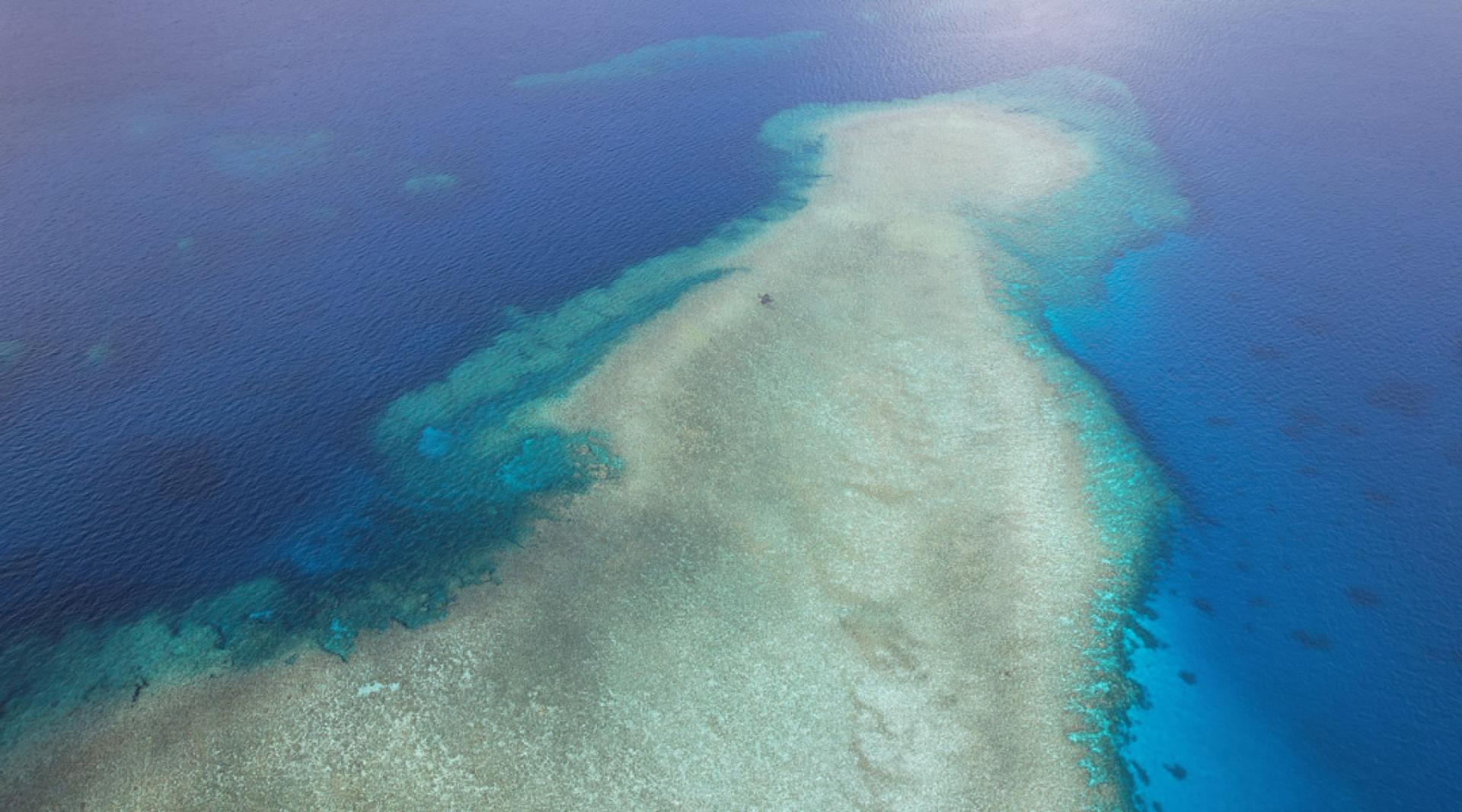
Researchers from the China Coast Guard have proposed a defense plan that may in the future create a robotic fortress jointly guarded by aerial, surface, and underwater unmanned platforms on the disputed South China Sea reefs, to counter the threat of low-cost drone swarm attacks that challenge traditional defense systems.
According to Hong Kong's South China Morning Post, the relevant paper was published in July in the command and control journal Command Control & Simulation, which is overseen by China Shipbuilding Industry Corporation.
The paper states that, given the current complex situation in surrounding maritime areas and the practical challenges posed by clusters of low-cost unmanned platforms, it is necessary to explore feasible paths for unmanned system defense. This plan could enhance redundancy in perception, cross-domain collaboration, rapid response, and resilience under complex sea conditions, providing theoretical reference and technical support for the security maintenance of the reefs.
The paper cites Ukraine’s use of the Magura V5 unmanned vessel, noting that Ukraine has employed such drones to establish asymmetric combat capabilities and to attack the Russian fleet, thus exposing the vulnerability of traditional large manned warships when facing swarm drone attacks.
In addition, the narrow waterways of reefs limit troop deployment and create detection blind spots. As potential adversaries rapidly develop drone swarm capabilities, the paper argues that traditional personnel-centric alert systems, cost-effectiveness, and sustained operational capabilities face new challenges.
The paper notes that, in July last year, China tested unmanned drones above, on, and below the water in the northern South China Sea.
On the technical side, researchers draw on the "Observe, Orient, Decide, Act" (OODA) model proposed by U.S. Air Force Colonel Boyd, integrating various types of drones to create a closed-loop defense mechanism for reef unmanned systems.
In addition, China has completed the first phase of construction work on Antelope Reef in the Xisha Islands, building an artificial island in the South China Sea. Analysts believe this artificial island will become part of China's largest military base in the area in the future.
The South China Sea is increasingly becoming a field of military competition between mainland China and the United States and its allies. Both sides are vying for strategic advantage, which could be crucial in any future conflict involving Taiwan.