The World Health Organization (WHO) warned on the 19th that the new Ebola outbreak in eastern Democratic Republic of the Congo (DRC) is spreading at an "alarming scale and speed," with the current suspected death toll surpassing 130. The outbreak may persist for months or even longer.
WHO has announced that the Ebola outbreaks caused by the Bundibugyo strain of the Ebola virus in the DRC and Uganda constitute a "Public Health Emergency of International Concern," but do not yet meet the standard of a "Public Health Emergency of International Concern" as specified by the International Health Regulations.
This is the 17th Ebola outbreak in the DRC over the past 50 years.
DRC Minister of Health, Kamba, said at a press conference in the capital Kinshasa on the 19th that since the onset of the new round of Ebola outbreak, a total of 136 suspected deaths have been reported, with an additional 543 suspected cases.
He stated that the currently reported deaths are all presumed to be related to the Ebola virus, and health authorities are investigating and verifying the cases. In addition, 69 patients are currently being treated at Ebola treatment centers.
WHO representative in DRC, Ancia, warned: "This outbreak will not be over in two months."
She pointed out that the DRC previously experienced an Ebola outbreak that lasted for two years.
However, Ancia emphasized that the final scale of the outbreak will depend on the response speed of the international community and local government. WHO has already sent several tons of medical equipment and epidemic prevention supplies to the affected areas.
Residents Bury Dead "Without Any Protection"
In one of the hardest-hit areas, Rwampara Hospital in Ituri Province in the northeast, it remains difficult to establish a complete isolation system. The hospital merely marks out the location of future isolation areas with simple plastic strips; formal treatment facilities have yet to be set up.
Local youth organization representative Bamunoba stated: "We bury the dead without gloves or any protection. We are exposed to enormous risk."
The hospital head admitted that local cases are nearing a hundred, but until this Monday, the hospital did not even have a proper place for triage and isolation of suspected cases.
Ituri Province has long been affected by armed group violence and unsafe roads, and is also one of the most unstable regions in the DRC, bordering Uganda and South Sudan. The risk of outbreak spread is therefore further increased.
No Vaccine Available, Outbreak Has Crossed Borders
The Bundibugyo strain of the Ebola virus involved in this outbreak currently has no available vaccine or specialized treatment protocol. At present, health authorities mainly rely on case tracking, isolation, and basic prevention measures to curb the spread of the virus.
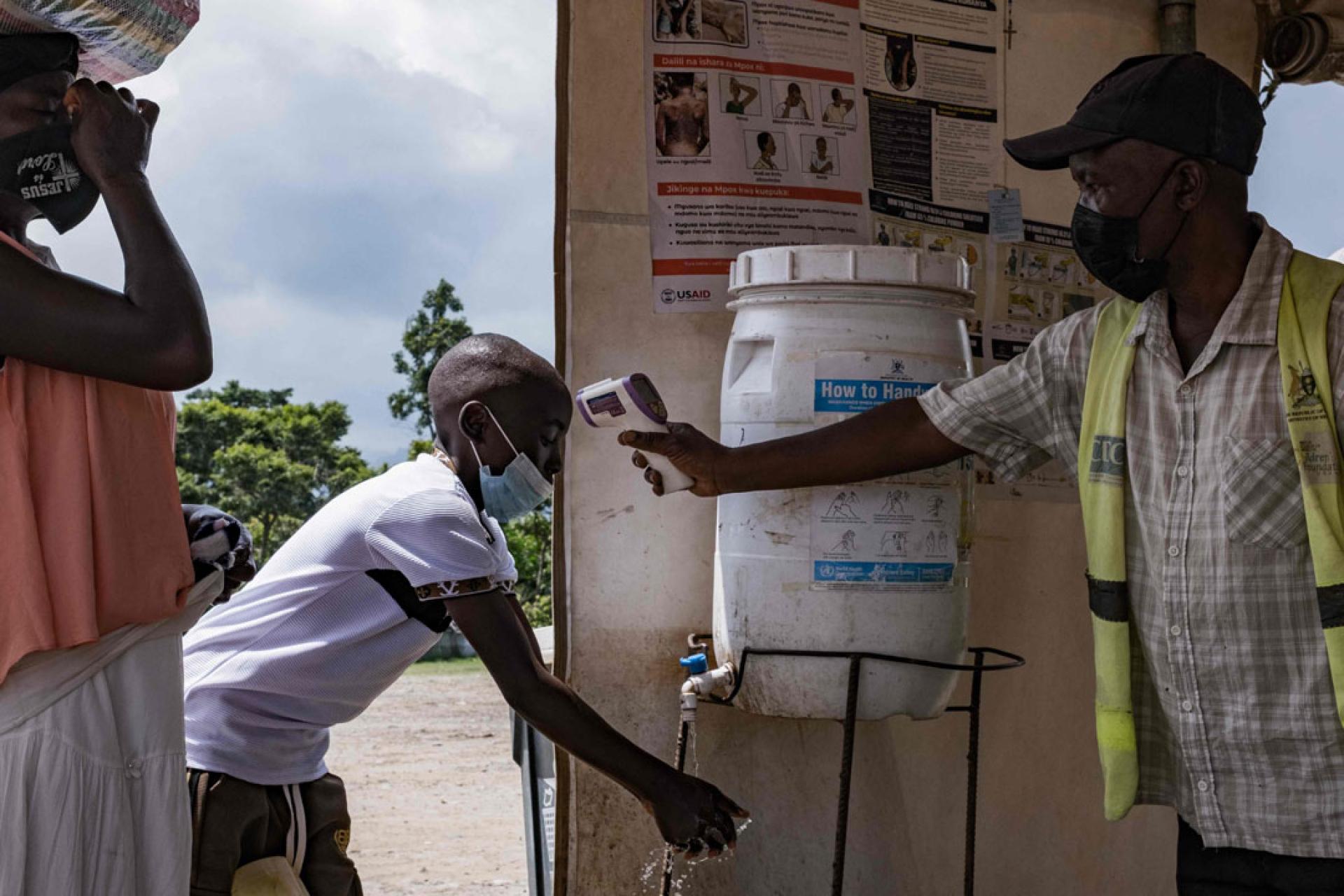
The DRC government said that nationwide border and entry checkpoint health screenings have been strengthened. As the outbreak has already spread to neighboring countries, the pressure on regional epidemic prevention is rising.
Uganda has currently reported one death and one infection case, both involving Congolese citizens entering from the DRC, but there has not yet been community transmission locally.