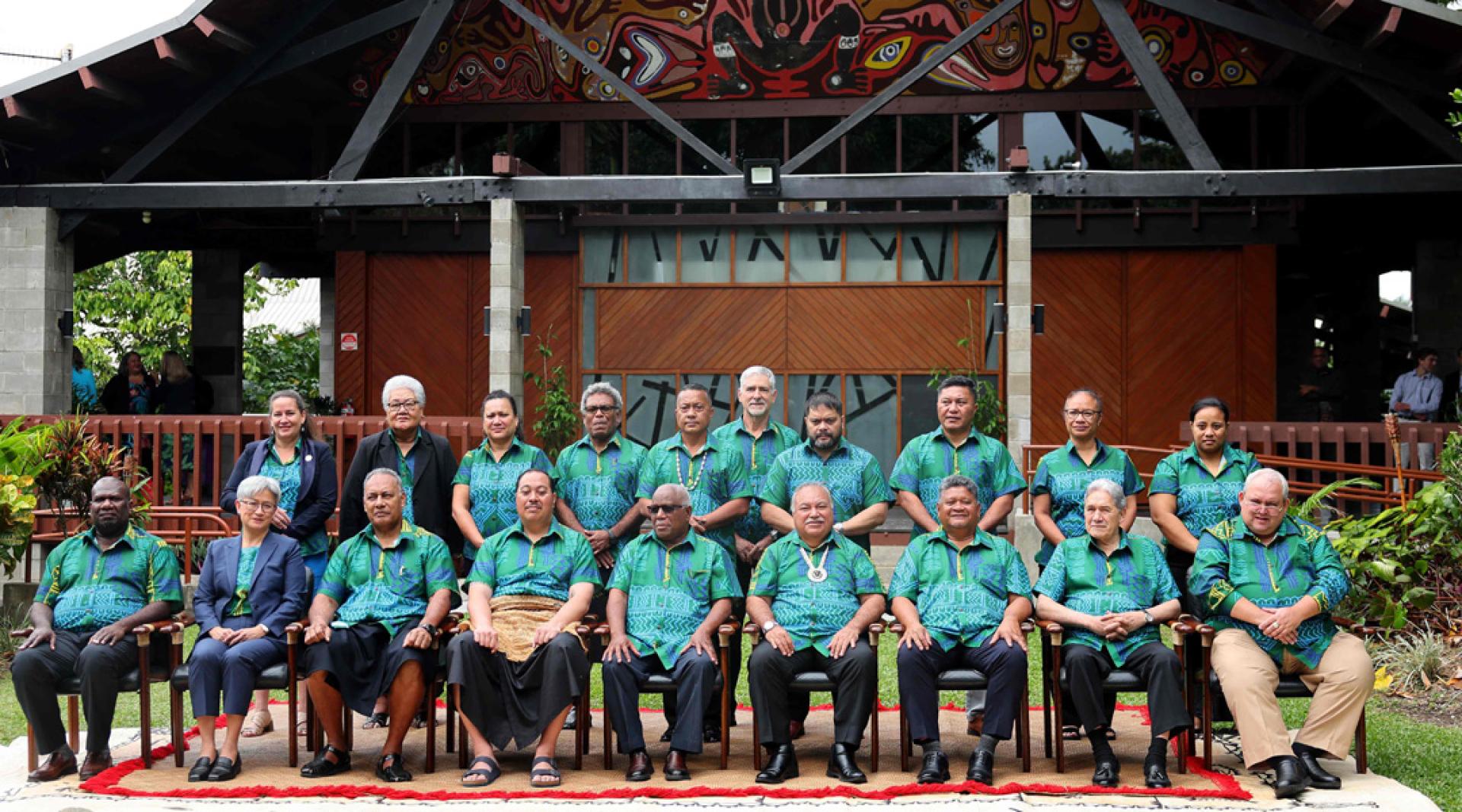
Diplomats from the Pacific gathered in Fiji on the 7th failed to reach a consensus on a joint statement that was intended to condemn China's recent test firing of a nuclear-capable missile in the region; New Zealand's foreign minister accused them of appeasing "outsiders."
The Pacific Islands Forum Foreign Ministers' Meeting was held that day in Fiji's capital, Suva.
According to AFP, before Beijing test-fired an intercontinental ballistic missile a month ago, it only gave a brief notice to a few countries, flaunting its military power in a region where it has long attempted to expand its influence.
Monitors said the missile appeared to have landed in the waters somewhere between the Solomon Islands, Nauru, and Tuvalu.
This drew condemnation from several Pacific leaders, but the Pacific Islands Forum, comprised of 18 member states, has yet to issue an official response to the test.
New Zealand's outspoken Foreign Minister Peters said after the hours-long meeting that the organization was unable to reach agreement on a joint statement condemning the launch.
He did not name the two member countries that blocked the statement, but it is understood that pro-China Kiribati and Nauru were not interested in formally criticizing one of their main partners.
Peters told reporters: "Apart from saying they disagreed, they actually didn't put forward any reasons." He accused them of catering to "external partners' wishes, rather than the wishes of the Pacific Islands Forum."
He said: "We have made it very clear that we believe outsiders should not tell insiders—those of us who have lived here for thousands of years—what our position should be." His remarks were a veiled criticism of China.
Tuvalu, which maintains diplomatic ties with Taiwan, also called for a joint statement and said it did not receive any prior notice before the test.
Tuvalu's Permanent Secretary for Foreign Affairs, Labour and Trade, Patuauga, said on the sidelines of the meeting: "We do not want to be threatened by any great power."
"That's why we want to send out a very strong statement as a collective from the Pacific, because it will also strengthen our position."
Patuauga said the missile landed "very close" to Tuvalu, and that they had sought assistance from several major powers, including the United States and China, to locate the dummy warhead.