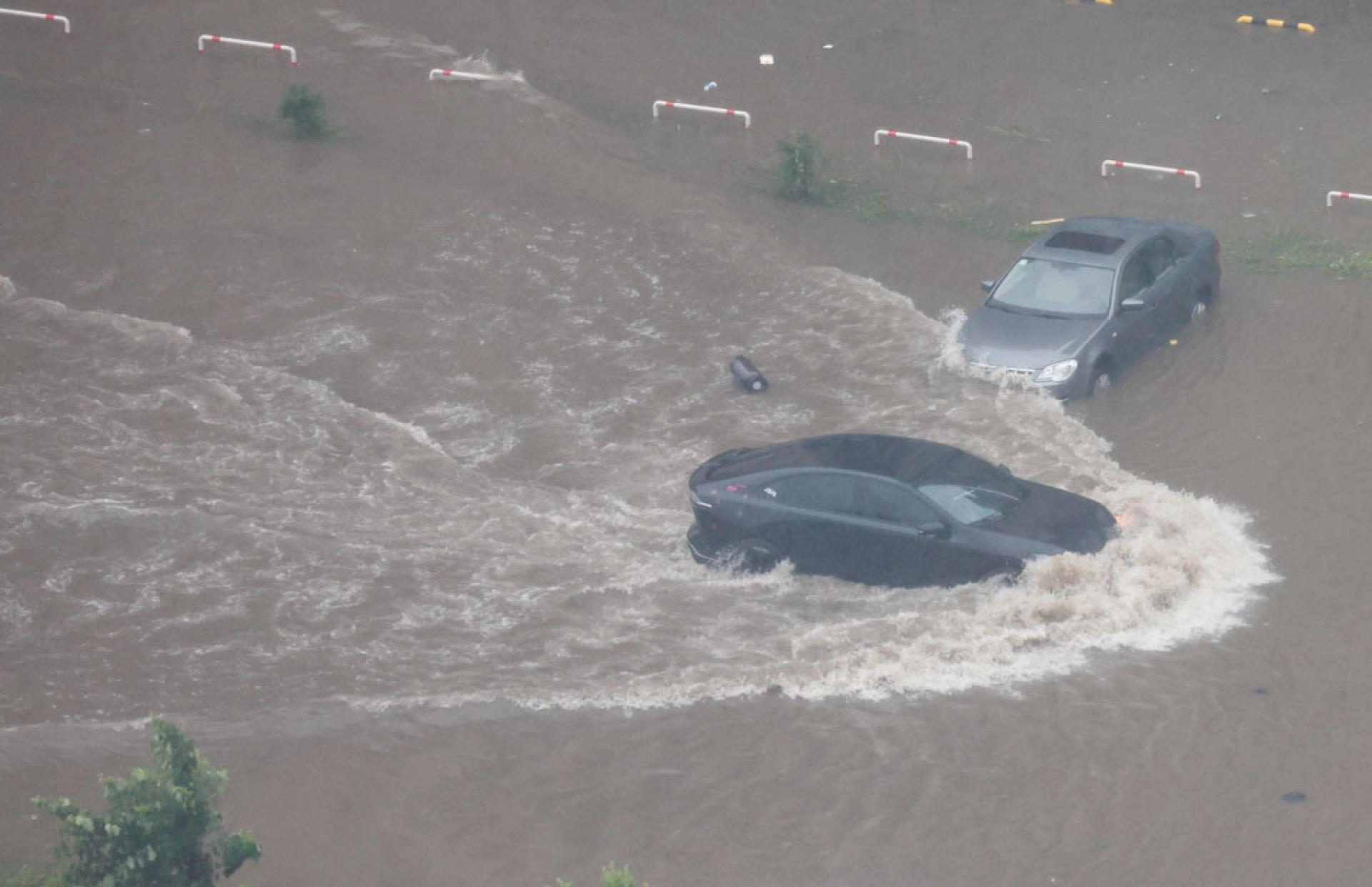
Typhoon Bavi has brought "once-in-a-century" torrential rain to Shenyang in Northeast China. On the 13th, the single-day precipitation exceeded historical records. The city has initiated a level-one emergency flood response and implemented the "five suspensions" (suspension of classes, work, production, transportation, and business) measures. On the 14th, emergency measures including the "five suspensions" continued.
According to Xinhua News Agency, the Shenyang Flood Control and Drought Relief Headquarters pointed out that on the 14th, Shenyang would again experience rainstorm and heavy rain weather events.
As of 3pm on the 13th, Shenyang’s precipitation reached 223.8 millimeters, breaking the single-day rainfall record set on August 21, 1973. The largest recorded rainfall in Chengdonghu Subdistrict, Yuhong District, Shenyang, was 310.6 millimeters—equivalent to nearly half a year’s worth of rainfall in just 10 hours.
Due to the heavy rainfall and upstream water inflow, the Hunhe River in Shenyang was at 39.08 meters at 4pm on the 13th, already above the orange alert standard, and continued to rise.
According to the China Meteorological Administration, at 5am on the 14th, Bavi was located in Jiaozhou City, Qingdao, Shandong Province, and is expected to move northeastward at about 30 kilometers per hour. It will cross the Shandong Peninsula in the morning, enter the Bohai Strait, then move into the northern waters of the Yellow Sea, with little change or slight strengthening in intensity, pass over the Korean Peninsula at night, and gradually transform into an extratropical cyclone.
Under the influence of Bavi, from 8am on the 14th to 8am on the 15th, some areas in eastern Liaoning, central and eastern Jilin, eastern Heilongjiang, and eastern Shandong will receive heavy to torrential rain. Among them, localized areas in northeastern Liaoning and eastern Jilin will see extremely heavy rain (100–200 millimeters).