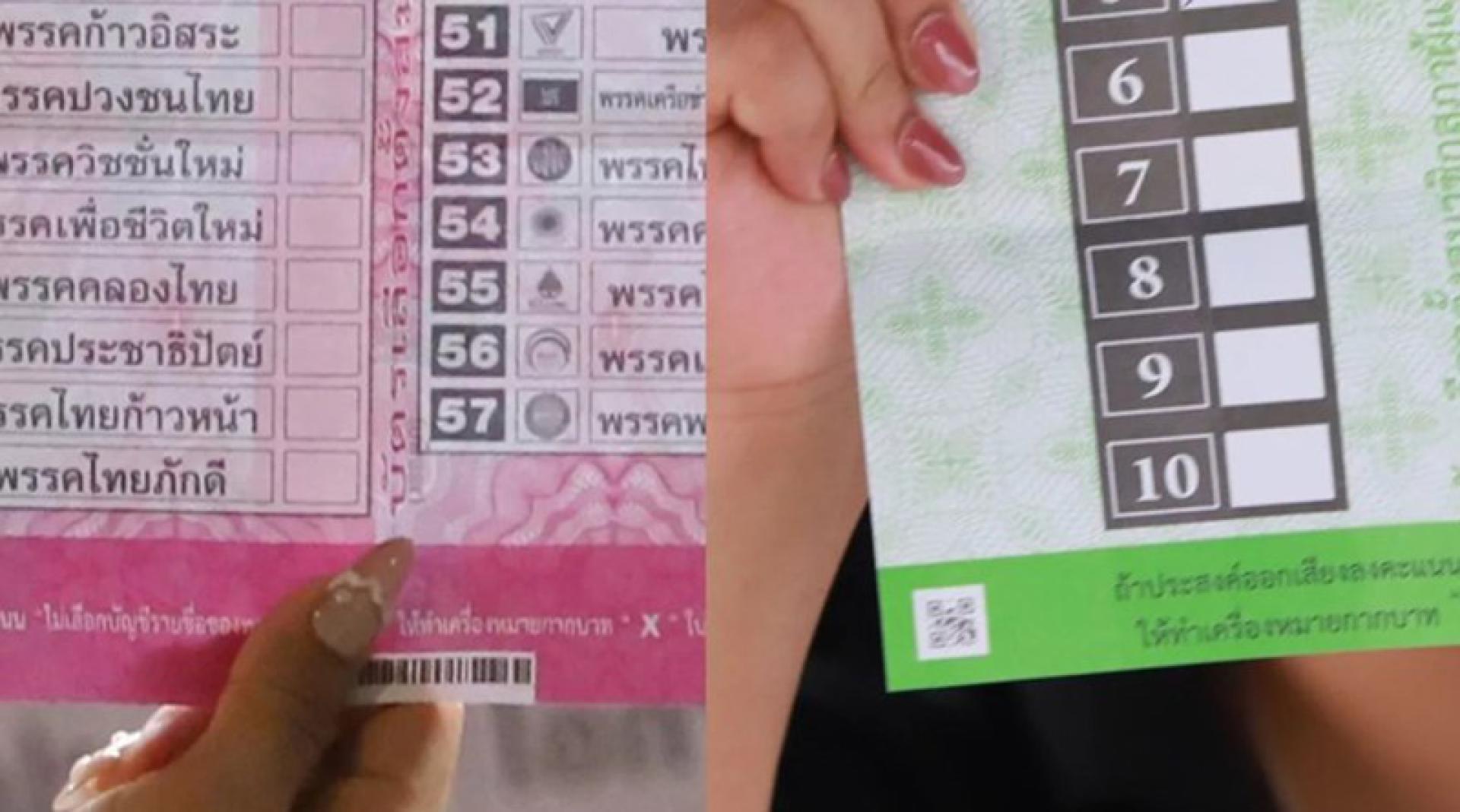
Thailand Constitutional Court Holds Hearing on 'Ballot Barcode' Case, May Escalate into Legitimacy Issue Concerning February Election
Published atAug 27, 2026 02:51 pm
The Constitutional Court of Thailand announced on the 26th that it has opened a hearing on the petition regarding the alleged unconstitutionality of barcodes printed on ballots in the House of Representatives election held this February. The court has scheduled a ruling for September 28.
The Constitutional Court stated that five individuals, including staff from the Election Commission, were summoned for questioning on the same day. The judges will visit the ballot storage location for an on-site inspection before the 27th.
In March this year, the Constitutional Court announced it had accepted a petition submitted by the Thai Ombudsman regarding the alleged unconstitutionality of ballot barcodes.
The Ombudsman petitioned the Constitutional Court to deliver a ruling based on Article 213 of the Constitution. The reason is that, in the organization of the House of Representatives election scheduled for February 8, 2026, authorities designed and printed ballots with barcodes and QR codes. This could potentially enable tracking of voter identity and election results, thus compromising the anonymity required for voting.
According to Thai media reports, if the Constitutional Court eventually finds that printing barcodes and QR codes on ballots violates the constitutional principle of anonymous voting, the case may escalate from a technical ballot issue to a matter affecting the legitimacy of the House of Representatives election held this February. Under Anutin's leadership, the Bhumjaithai Party became the largest party in Parliament in the House of Representatives election this February.In the House of Representatives election held on February 8, 37.8 million voters cast their ballots, accounting for 71.43% of eligible voters. The results showed that out of the 500 seats in the House of Representatives, the Bhumjaithai Party won 191, becoming the largest party in Parliament, followed by the People’s Party and the Pheu Thai Party.
Subsequently, the Bhumjaithai Party formed a coalition government with other parties, and Anutin continued serving as Prime Minister.
This article has been translated using our AI technology. While we strive for accuracy,
AI translations
may contain errors. For the most precise information, please refer to the original article.