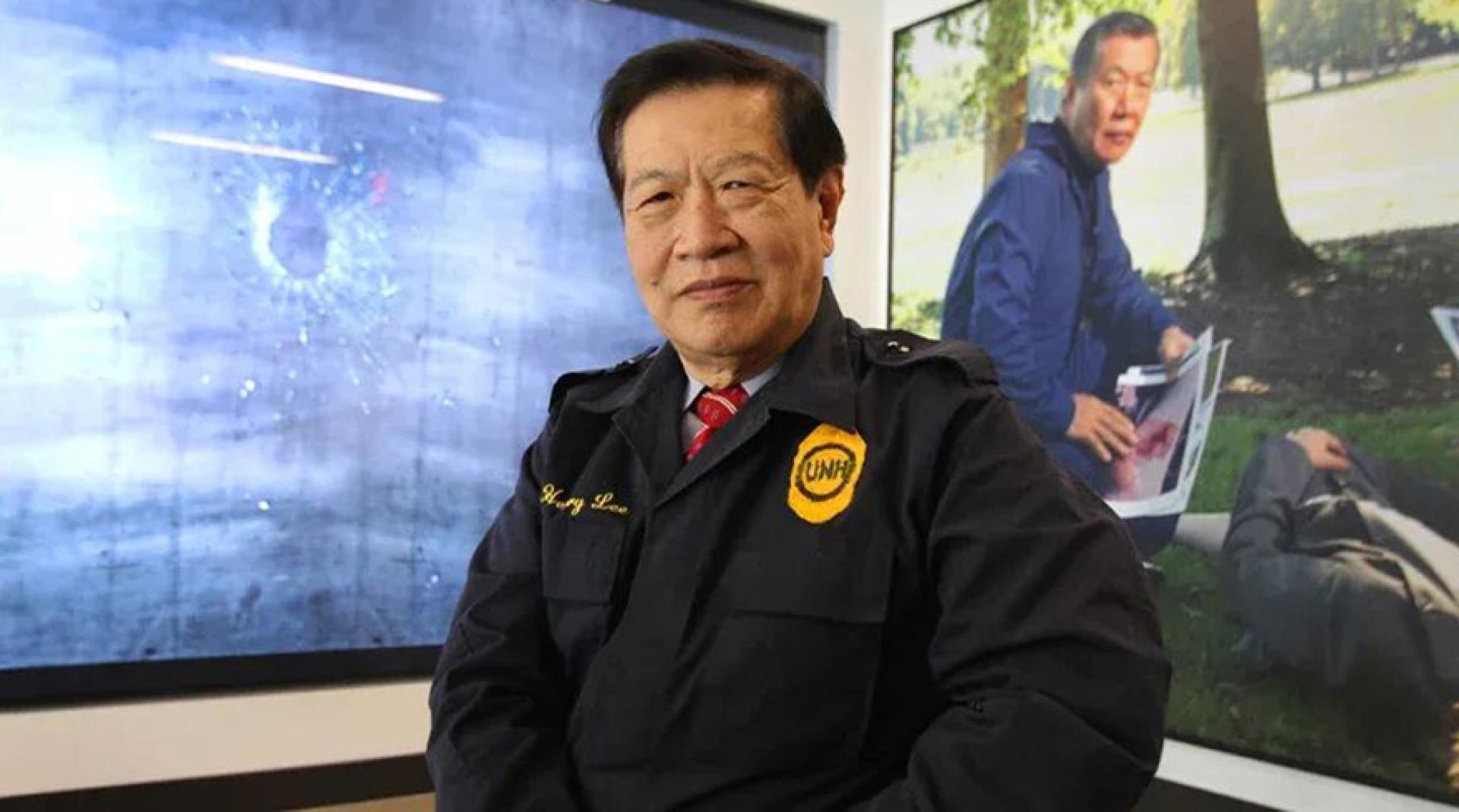
"All my life, I have only done one thing – making the impossible possible." This is a phrase often uttered by Dr. Henry Lee, the legendary forensic scientist hailed as the "King of Crime Scene Reconstruction" and the "Modern Sherlock Holmes." On March 27, 2026, he concluded his life journey at his home in Nevada, USA. He left behind not only over 8,000 solved mysterious cases, but also established a milestone that elevated criminal forensics to a new scientific peak.
The case that truly showed the world the power of "trace evidence" was the shocking 1986 "Woodchipper Murder Case" in the United States. With no corpse, Lee managed to convict the murderer based on a few bone fragments, teeth remnants, and hairs sifted from the frozen snow, breaking the traditional belief that "no conviction without a body."
In the 1995 "O.J. Simpson Trial," his incisive analysis of blood spatter experiments emphasized flaws in investigative procedure and the integrity of physical evidence. Although the verdict remains controversial, he firmly upheld the spirit of the law—"let the evidence speak as much as it can, and handle the case accordingly"—which cemented his status as a world-renowned forensic authority.
As a Chinese-American, Henry Lee maintained a deep emotional connection to his homeland of Taiwan, always returning without hesitation to provide professional consultation for major unsolved cases. In the high-profile 1990s cases of the "Bai Xiaoyan Murder," "Peng Wan-ru Murder," and the "Taoyuan County Magistrate Liu Bang-you Massacre," he was invited to participate in crime scene examinations and reexaminations of physical evidence. Utilizing advanced crime scene reconstruction techniques, he brought an international, scientific perspective to local criminal investigations once mired in difficulty.
Among these, Taiwanese people will never forget the "319 Shooting Incident" of 2004. During a period of intense political division and social unrest, Henry Lee returned to Taiwan amid public pressure with an international team. At the scene on Section 3 of Jin Hua Road in Tainan, he used laser beams to reconstruct the bullet’s trajectory, precisely calculating the angle at which the bullets penetrated the windshield. With calm, objective scientific data, he confirmed the real path of the "two bullets," seeking the purest physical truth in the cacophony of political discourse. He emphasized at the time: “We are not here to solve political problems, we are here to solve scientific problems.” This statement remains a golden rule in the forensics community to this day.
Henry Lee once said that the duty of a forensic scientist was not to side with any party, but to be accountable to history. Over his lifetime, he participated in investigations of over 8,000 cases in 46 countries and testified in court more than a thousand times. Even after retirement, he continued to contribute to education, donating his lecture proceeds, and remained focused on advancing the field of missing persons investigations until the very end of his life.
The passing of Henry Lee marks the end of an era of legendary detectives. With his magnifying glass and microscope, he traced the threads of justice through chaotic crime scenes. He proved to the world: though flesh may perish and lies may flourish, the minute dust and blood traces left at a scene will forever speak the truth on behalf of the victims.