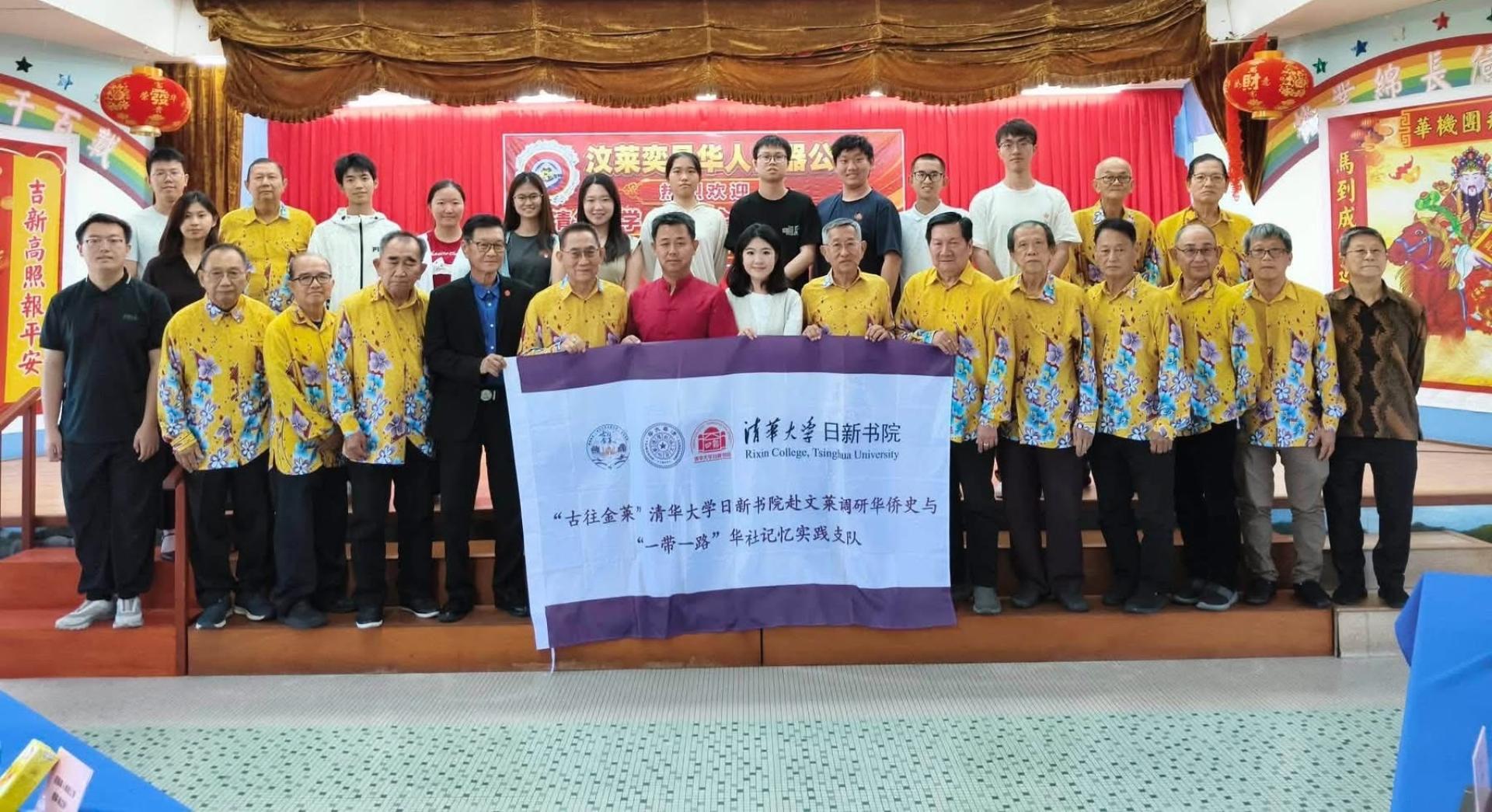
(Seria, 1st) The Tsinghua University XIN College “Ancient to Modern Jinlai” research group, consisting of 12 members and led by teacher Chen Chaohui and group leader Yang Enshuo, made a special visit to the Seria Chinese Machinists’ Association clubhouse on July 31 to conduct historical and cultural research and exchange activities.
Chen Guancheng, president of the Seria Chinese Machinists’ Association, warmly received the research group along with association committee members, and arranged for the special briefing to be hosted by Mr. Shen Renxiang, mentor of the "Cultural School" program. Both sides engaged in in-depth exchanges around topics such as the journey of Chinese emigrants to Southeast Asia, the development of Seria’s oil industry, the inheritance of Chinese education, and social changes in Brunei.
The special briefing covered six main topics: the routes and occupational backgrounds of Chinese emigration to Southeast Asia, the rise of Seria through oil development, the founding and evolution of the Machinists’ Association, the impact of the oil industry on local education, the historic ties between the Machinists’ Association and Chung Cheng School, and demographic migration and social change in Seria.
Combining a wealth of precious historical materials and images, Shen Renxiang vividly recounted Brunei’s hundred-year journey from a traditional fishing village society to a modern oil-producing nation.
In the “Chinese Emigration to Southeast Asia” section, he traced the historical routes of early Chinese migrants from Fujian, Guangdong, and other regions to the Nanyang Archipelago, and introduced how the Chinese engaged in mining, gold panning, pioneering, industry, and trade in various areas, contributing greatly to local economic development.
The oil industry section used historic images of early exploration, drilling, and refining facilities to recreate the Seria oil field’s development from its beginnings to a modern industrial system, and analyzed the profound impacts of the oil economy on Brunei’s livelihood, infrastructure, and educational development.
The presentation also reviewed the development journey of the Seria Chinese Machinists’ Association, showcasing how the association gradually evolved from an early industry mutual-aid organization into a Chinese community group integrating social service, cultural heritage, and public welfare functions. Over the years, the association has actively promoted social welfare and Chinese education, maintaining close cooperation with Chung Cheng School, from assisting in school construction to raising educational funds, together laying the foundation for Seria’s Chinese community and educational undertakings.
The Brunei education system and the development overview of Chinese schools were also introduced, highlighting the important role of Chung Cheng School in nurturing local talent, passing on Chinese culture, and promoting interethnic exchange.
At the end of the presentation, Shen Renxiang displayed many precious historical photos, including early oil exploration sites, Seria before and after the war, old photos of Prince Philip visiting Seria, traditional attap houses, the late Sultan Ahmad Tajuddin visiting Kuala Belait, old water village scenes, early street views of Bandar Seri Begawan, successive sultans’ palaces, buildings from the British administration, World War II and the Allied liberation of Brunei, a group photo from the opening of the first Legislative Council, and rare portraits of Chinese community leaders, explaining the historical context and stories of the people behind each image.
The exchange activity lasted nearly three hours and was very lively. Tsinghua University’s faculty and students held in-depth discussions with Machinists’ Association representatives regarding the transformation of Chinese community organizations, sustainable development of the oil economy, and contemporary challenges facing Chinese education.
Chen Guancheng stated that he welcomes Tsinghua University students to deeply explore Brunei’s grassroots society, documenting the struggles of local Chinese communities, and injecting new vitality into the cultural and academic exchanges between Brunei and China.
Yang Enshuo thanked the Machinists’ Association for their warm reception and thoughtful arrangements. He said this visit far exceeded expectations, not only deepening the research group’s understanding of Brunei’s history and social development, but also providing precious and vivid first-hand information for the research on Southeast Asian Chinese communities.
This visit not only enhanced the Tsinghua research group’s understanding of Brunei’s history, economy, and Chinese community, but also built a new academic exchange platform between the Seria Chinese community and Chinese higher education institutions, further promoting cultural awareness and emotional bonds between the two places.
The special briefing covered six main topics: the routes and occupational backgrounds of Chinese emigration to Southeast Asia, the rise of Seria through oil development, the founding and evolution of the Machinists’ Association, the impact of the oil industry on local education, the historic ties between the Machinists’ Association and Chung Cheng School, and demographic migration and social change in Seria.
Combining a wealth of precious historical materials and images, Shen Renxiang vividly recounted Brunei’s hundred-year journey from a traditional fishing village society to a modern oil-producing nation.
In the “Chinese Emigration to Southeast Asia” section, he traced the historical routes of early Chinese migrants from Fujian, Guangdong, and other regions to the Nanyang Archipelago, and introduced how the Chinese engaged in mining, gold panning, pioneering, industry, and trade in various areas, contributing greatly to local economic development.
The oil industry section used historic images of early exploration, drilling, and refining facilities to recreate the Seria oil field’s development from its beginnings to a modern industrial system, and analyzed the profound impacts of the oil economy on Brunei’s livelihood, infrastructure, and educational development.
The presentation also reviewed the development journey of the Seria Chinese Machinists’ Association, showcasing how the association gradually evolved from an early industry mutual-aid organization into a Chinese community group integrating social service, cultural heritage, and public welfare functions. Over the years, the association has actively promoted social welfare and Chinese education, maintaining close cooperation with Chung Cheng School, from assisting in school construction to raising educational funds, together laying the foundation for Seria’s Chinese community and educational undertakings.
The Brunei education system and the development overview of Chinese schools were also introduced, highlighting the important role of Chung Cheng School in nurturing local talent, passing on Chinese culture, and promoting interethnic exchange.
At the end of the presentation, Shen Renxiang displayed many precious historical photos, including early oil exploration sites, Seria before and after the war, old photos of Prince Philip visiting Seria, traditional attap houses, the late Sultan Ahmad Tajuddin visiting Kuala Belait, old water village scenes, early street views of Bandar Seri Begawan, successive sultans’ palaces, buildings from the British administration, World War II and the Allied liberation of Brunei, a group photo from the opening of the first Legislative Council, and rare portraits of Chinese community leaders, explaining the historical context and stories of the people behind each image.
The exchange activity lasted nearly three hours and was very lively. Tsinghua University’s faculty and students held in-depth discussions with Machinists’ Association representatives regarding the transformation of Chinese community organizations, sustainable development of the oil economy, and contemporary challenges facing Chinese education.
Chen Guancheng stated that he welcomes Tsinghua University students to deeply explore Brunei’s grassroots society, documenting the struggles of local Chinese communities, and injecting new vitality into the cultural and academic exchanges between Brunei and China.
Yang Enshuo thanked the Machinists’ Association for their warm reception and thoughtful arrangements. He said this visit far exceeded expectations, not only deepening the research group’s understanding of Brunei’s history and social development, but also providing precious and vivid first-hand information for the research on Southeast Asian Chinese communities.
This visit not only enhanced the Tsinghua research group’s understanding of Brunei’s history, economy, and Chinese community, but also built a new academic exchange platform between the Seria Chinese community and Chinese higher education institutions, further promoting cultural awareness and emotional bonds between the two places.