(Bandar Seri Begawan, 9th) The Council of the Brunei Chinese Charitable Association convened a meeting yesterday and unanimously passed a resolution to thoroughly prevent future operational difficulties that may arise due to changes in environmental regulations. The association has decided to procure a set of cremation equipment that meets international environmental protection standards and achieves zero-pollution emissions, including a full suite of tail gas treatment facilities. This decision aims to provide a once-and-for-all solution to the environmental challenges of funeral services, highlighting the association's firm commitment to social responsibility and sustainable development.
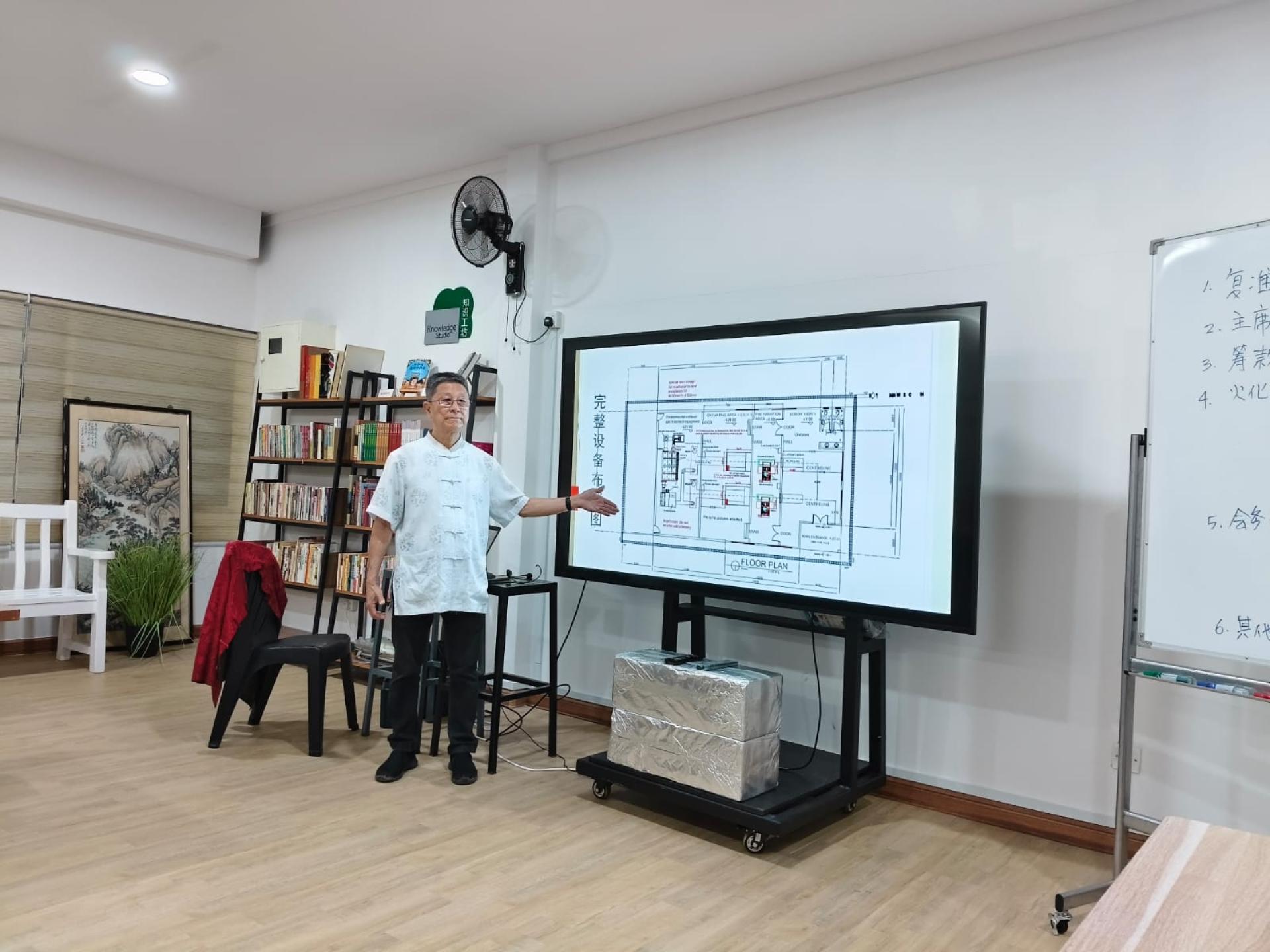
The procurement process will be subsequently conducted through in-depth negotiations with strictly selected equipment suppliers to ensure a standardized process and compliance with technical requirements. At the council meeting, Association Secretary-General Shen Renxiang provided a detailed explanation of the performance and environmental principles of the proposed equipment. His introduction was based on multiple rounds of vendor data analysis and reference to mature regulations implemented in places such as Singapore. He focused on the optimized design of the cremation furnace, as well as the accompanying exhaust gas treatment system and its scientific procedures for thoroughly purifying exhaust, eliminating odors, and removing toxic substances.
According to professional data collected by the association, the traditional cremation process often produces visible black smoke and odor, especially in the initial combustion stage and when body fat volatilizes, due to incomplete combustion. Modern cremation processes generate exhaust that contains a variety of substances requiring professional treatment, including:
1. Smoke dust and particulates: such as bone ash, fly ash, etc., which must be effectively collected to prevent visible emissions.
2. Acidic gases: originating from chlorine, sulfur, fluorine, etc., found in the body and burial items, which form hydrogen chloride, sulfur oxides, etc. after combustion. If discharged directly, these can cause acid rain and equipment corrosion, and thus must be neutralized and removed via scrubber towers and other equipment.
3. Heavy metals: such as mercury and chromium from dental materials and medical implants, which volatilize at high temperatures and attach to fly ash. These need to be captured using efficient dust removal and activated carbon adsorption technologies.
4. Dioxin pollutants: although destroyed in the high-temperature main combustion chamber, dioxins may re-form during subsequent flue gas cooling. Top-level systems are equipped with a rapid cooling tower, which cools the flue gas to below 200°C within one second to prevent dioxin reformation.
5. Nitrogen oxides: generated by the reaction of nitrogen and oxygen in the air at high temperatures, which must be converted to harmless nitrogen and water through selective catalytic reduction and other denitrification technologies.
Secretary-General Shen Renxiang pointed out that a top-tier cremation system meeting the EU or China's latest national standards (GB13801-2015) features a flue gas purification process akin to a precise "multi-stage purification plant": Starting from the main combustion chamber, the gas successively passes through a secondary combustion chamber (afterburner) for complete breakdown, then through a rapid cooling tower that blocks dioxin synthesis, followed by acid removal devices, activated carbon adsorption, high-efficiency bag-style dust collectors, and other multiple purification units. Finally, the cleaned exhaust is transported by an induced draft fan and discharged through a chimney after online monitoring ensures compliance.
With the growing global awareness of environmental protection, many advanced countries have established strict emission standards for cremation facilities. Cremators equipped with high-performance exhaust gas treatment systems are specifically designed to thoroughly decompose hazardous substances produced during combustion, meeting increasingly stringent environmental regulations.
This forward-looking investment by the Brunei Chinese Charitable Association not only focuses on long-term operational stability, but is also an important initiative in actively responding to contemporary environmental trends and safeguarding community environmental quality, demonstrating its far-reaching consideration in serving the public interest.
The procurement process will be subsequently conducted through in-depth negotiations with strictly selected equipment suppliers to ensure a standardized process and compliance with technical requirements. At the council meeting, Association Secretary-General Shen Renxiang provided a detailed explanation of the performance and environmental principles of the proposed equipment. His introduction was based on multiple rounds of vendor data analysis and reference to mature regulations implemented in places such as Singapore. He focused on the optimized design of the cremation furnace, as well as the accompanying exhaust gas treatment system and its scientific procedures for thoroughly purifying exhaust, eliminating odors, and removing toxic substances.
1. Smoke dust and particulates: such as bone ash, fly ash, etc., which must be effectively collected to prevent visible emissions.
2. Acidic gases: originating from chlorine, sulfur, fluorine, etc., found in the body and burial items, which form hydrogen chloride, sulfur oxides, etc. after combustion. If discharged directly, these can cause acid rain and equipment corrosion, and thus must be neutralized and removed via scrubber towers and other equipment.
3. Heavy metals: such as mercury and chromium from dental materials and medical implants, which volatilize at high temperatures and attach to fly ash. These need to be captured using efficient dust removal and activated carbon adsorption technologies.
4. Dioxin pollutants: although destroyed in the high-temperature main combustion chamber, dioxins may re-form during subsequent flue gas cooling. Top-level systems are equipped with a rapid cooling tower, which cools the flue gas to below 200°C within one second to prevent dioxin reformation.
5. Nitrogen oxides: generated by the reaction of nitrogen and oxygen in the air at high temperatures, which must be converted to harmless nitrogen and water through selective catalytic reduction and other denitrification technologies.
Secretary-General Shen Renxiang pointed out that a top-tier cremation system meeting the EU or China's latest national standards (GB13801-2015) features a flue gas purification process akin to a precise "multi-stage purification plant": Starting from the main combustion chamber, the gas successively passes through a secondary combustion chamber (afterburner) for complete breakdown, then through a rapid cooling tower that blocks dioxin synthesis, followed by acid removal devices, activated carbon adsorption, high-efficiency bag-style dust collectors, and other multiple purification units. Finally, the cleaned exhaust is transported by an induced draft fan and discharged through a chimney after online monitoring ensures compliance.
With the growing global awareness of environmental protection, many advanced countries have established strict emission standards for cremation facilities. Cremators equipped with high-performance exhaust gas treatment systems are specifically designed to thoroughly decompose hazardous substances produced during combustion, meeting increasingly stringent environmental regulations.
This forward-looking investment by the Brunei Chinese Charitable Association not only focuses on long-term operational stability, but is also an important initiative in actively responding to contemporary environmental trends and safeguarding community environmental quality, demonstrating its far-reaching consideration in serving the public interest.