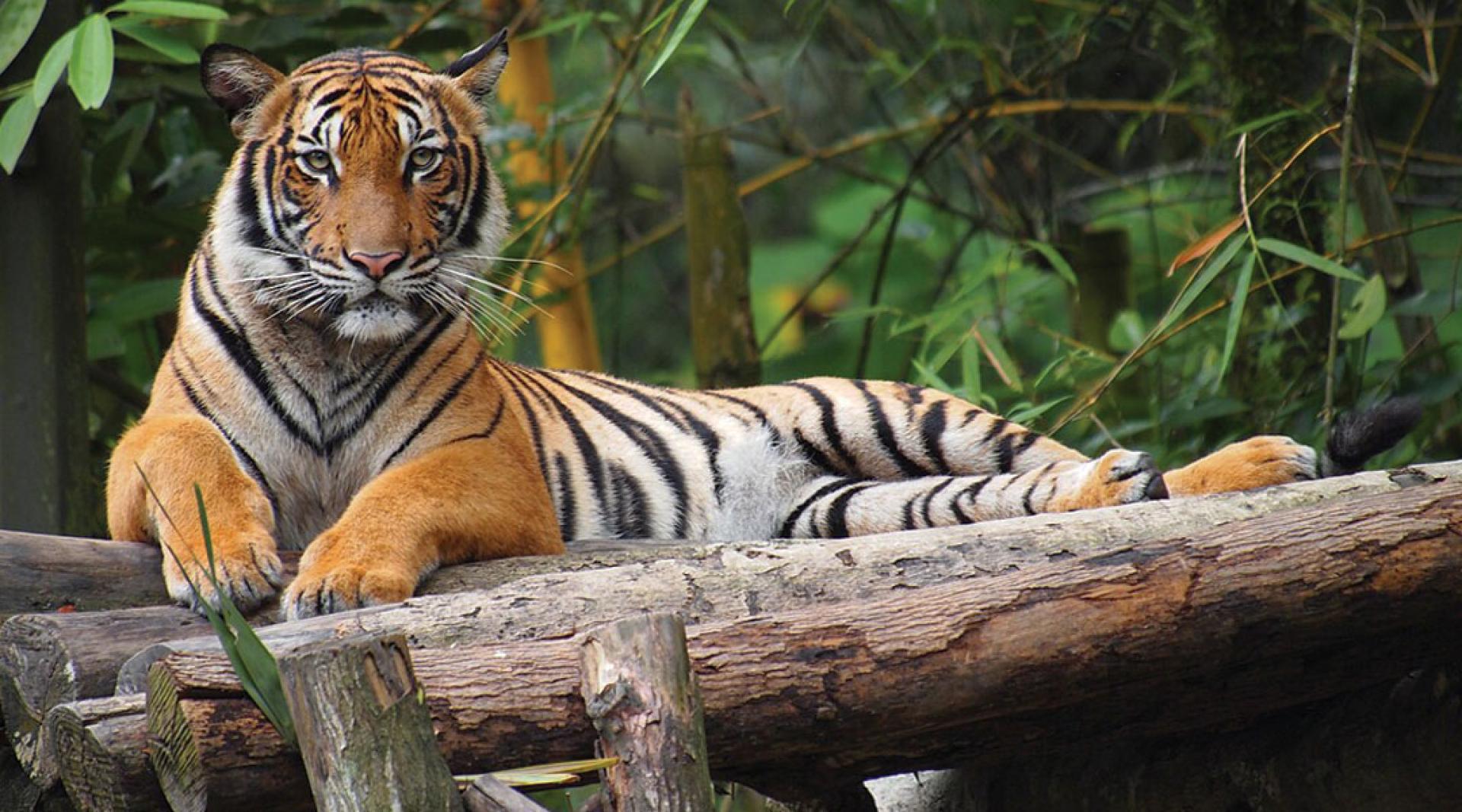
Northern Malaysia’s land borders have become the main entry route for illegal groups, mainly Vietnamese poachers, into our country. They can even camp in the forests for over half a year specializing in hunting the critically endangered Malayan tiger, which can fetch up to RM500,000 per animal on the black market!
Dato’ Mohamad Zaki, Commander of the National Police Wildlife Crime Bureau and Special Intelligence Investigation Force (WCB/PSK), pointed out that poaching groups from neighboring countries, especially Vietnam, use "rat trails" (illegal routes) along the northern border to enter Malaysia, then venture deep into forest reserves to carry out poaching activities.
He told Bernama that once these poachers succeed in entering, they often hide in the forest for the long term, staying sometimes more than 6 months, in order to contact local criminal syndicates, collect prey, and smuggle wildlife back to meet the huge black market demand in their home countries.
He revealed that currently, only about 200 Malayan tigers are estimated to remain in the wild, making them the prime target for foreign poaching groups. Their black market price is extremely high, each fetching around RM500,000.
“Apart from the Malayan tiger, poaching groups also covet elephants, pangolins, deer, hornbills, various rare bird species, reptiles, and protected primates. They also illegally purchase ivory, pangolin scales, tiger teeth, animal skins, and other wildlife products.”
Mohamad Zaki said that due to high overseas demand for bushmeat and traditional medicinal ingredients, most of the poached items are exported for sale abroad.

“With the popularity of e-commerce platforms and social media, illegal wildlife trade has become more concealed and cross-border.”
He emphasized that the police will continue to strengthen intelligence gathering and cooperation with relevant enforcement agencies to enhance monitoring and crack down on illegal activities threatening protected wildlife.
3 Vietnamese Men Fined and Jailed for Poaching
Three Vietnamese men were fined over RM100 million and imprisoned three years ago for allegedly poaching wildlife!
Dato’ Abdul Kadir, Director General of the Wildlife and National Parks Department, revealed that in 2023, enforcement units cracked down on the largest wildlife poaching group involving Vietnamese nationals during a "Protect National Assets Joint Operation."
He stated that the three suspects were ultimately fined RM128.9 million and sentenced to 8 years and 6 months of imprisonment.
“This is one of the harshest penalties since the implementation of the Wildlife Conservation Act 2010, serving as a strong deterrent to poaching groups.”
Achievements from Enforcement Actions Over the Past 7 Years
As of May this year, enforcement agencies have confiscated wildlife and related items worth a total of RM416.3 million over the past seven years, demonstrating ongoing results from enforcement actions.
Abdul Kadir pointed out that this was achieved after the authorities, in cooperation with the police, Royal Customs Department, Forestry Department, and NGOs, launched the "Protect National Assets Joint Operation" (OBK) to crack down on poaching since 2019.
He said enforcement officers dismantled 2,851 animal traps and arrested 1,230 people during this period.
Nearly 2,000 Rangers Protect Key Frontlines of the Forests
To strengthen forest patrols and enforcement, the Department of Wildlife and National Parks has this year hired 1,950 community rangers (Renjer Komuniti, RK) under the Biodiversity Protection and Patrol Program (BP3).
Abdul Kadir said these almost 2,000 rangers are a vital frontline force for protecting forest ecosystems.
He said these rangers are tasked with patrol duties and responsible for cracking down on illegal encroachment, illegal logging, and poaching activities.
He added that currently there are 1,075 indigenous rangers stationed at 203 posts nationwide.
Leverage Technology to Enhance Monitoring Efficiency
The Department of Wildlife and National Parks utilises technology by actively developing artificial intelligence-based applications to identify different wildlife species automatically.
Abdul Kadir disclosed that the agency is actively introducing technology for wildlife conservation and is currently developing an integrated application that can speed up analysis of infrared camera footage, identify wildlife species, and even distinguish individual Malayan tigers by their stripes.
He said this move will significantly improve monitoring efficiency and provide more accurate data to support conservation efforts.
He added that the agency also uses various technologies to aid conservation, including attaching satellite tracking collars to selected wildlife for real-time monitoring of their movements and establishing early warning systems.
He explained that whenever wildlife approaches human settlements, relevant authorities and local communities can be informed immediately, thus reducing human-wildlife conflict.
“Authorities have also installed infrared cameras to monitor wildlife movements, changes, and illegal activities in the forests, and use aerial monitoring instruments to observe hotspots where wildlife causes traffic accidents.”