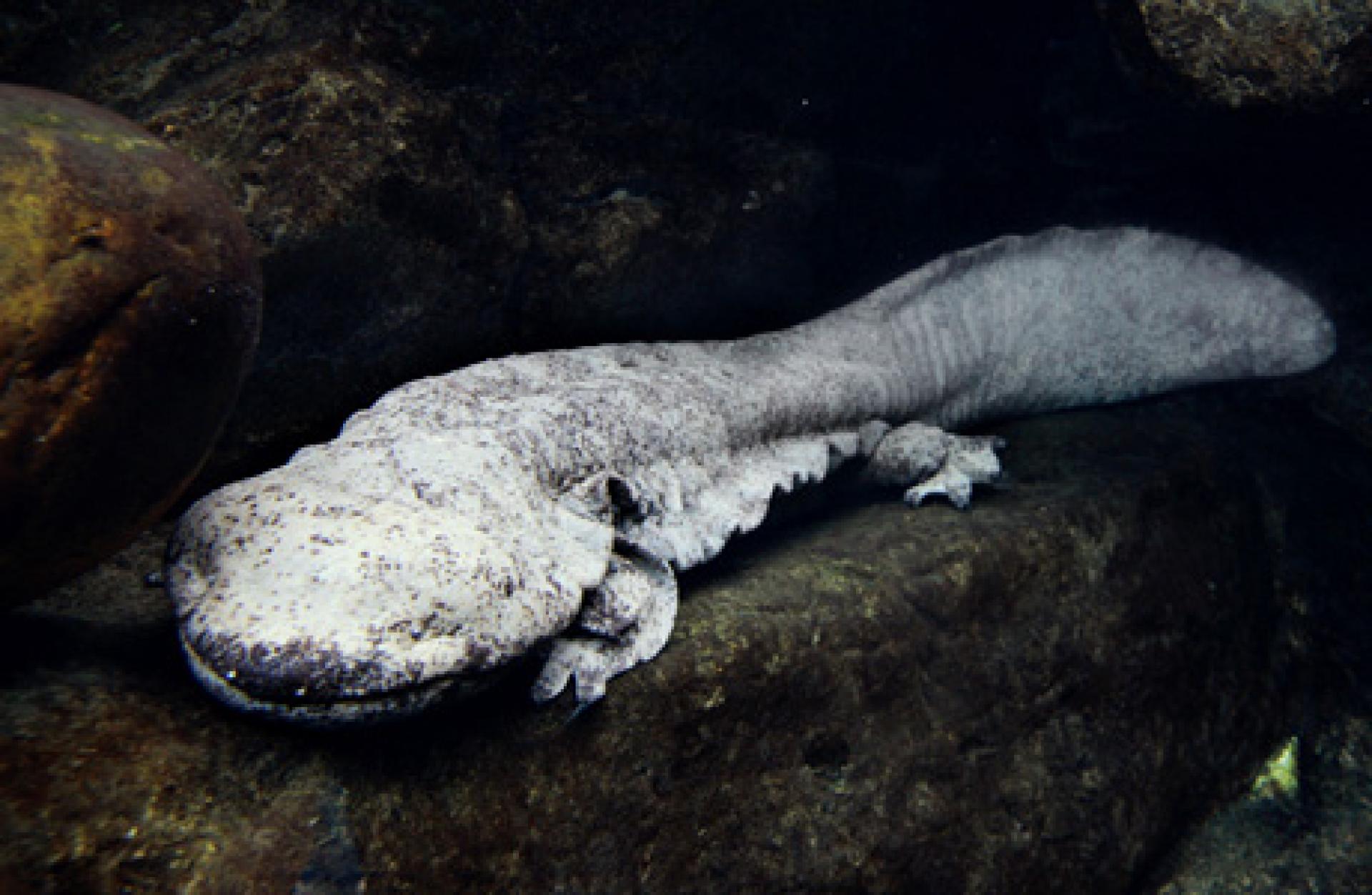
A 17-year-old female Chinese giant salamander at Hong Kong Ocean Park was euthanized on the same day due to her deteriorating health condition.
On the 15th, the park stated that the salamander, named Tango (Chinese Giant Salamander), developed red patches on her skin that afternoon, began to lose her appetite, and her abdomen became significantly swollen. An ultrasound examination revealed her liver was surrounded by abnormal masses, there was severe fluid accumulation in the body cavity, and her heartbeat was very weak.
After blood tests and a thorough assessment, the veterinary team concluded that, as the condition was rapidly deteriorating and incurable, euthanasia was the most humane option.
Tango arrived in Hong Kong in October 2011, and there are still two giant salamanders in the park. Over the years, they have helped park visitors learn about the characteristics of the species and the importance of protecting freshwater habitats.
According to the Hong Kong Ocean Park website, the Chinese giant salamander is the largest amphibian in the world. It lives in mountain streams and rivers, mainly distributed in Chinese provinces such as Qinghai, Jiangsu, and Guangxi, and is unique to China. It is a nocturnal animal, living under muddy water and in crevices among rocks.
The Chinese giant salamander is listed as Critically Endangered on the International Union for Conservation of Nature (IUCN) Red List of Threatened Species, and is a national second-class protected wild animal in China.
Overexploitation is the main reason for the giant salamander’s path to extinction. Considered a precious delicacy and tonic, they have been heavily hunted. In addition, the disappearance of forests near streams has led to excessive silt entering rivers. Runoff from farmland and mines, as well as dam construction altering water flows, have all further damaged the salamander’s habitat. Since the 1960s, the population has plummeted by more than 80%.