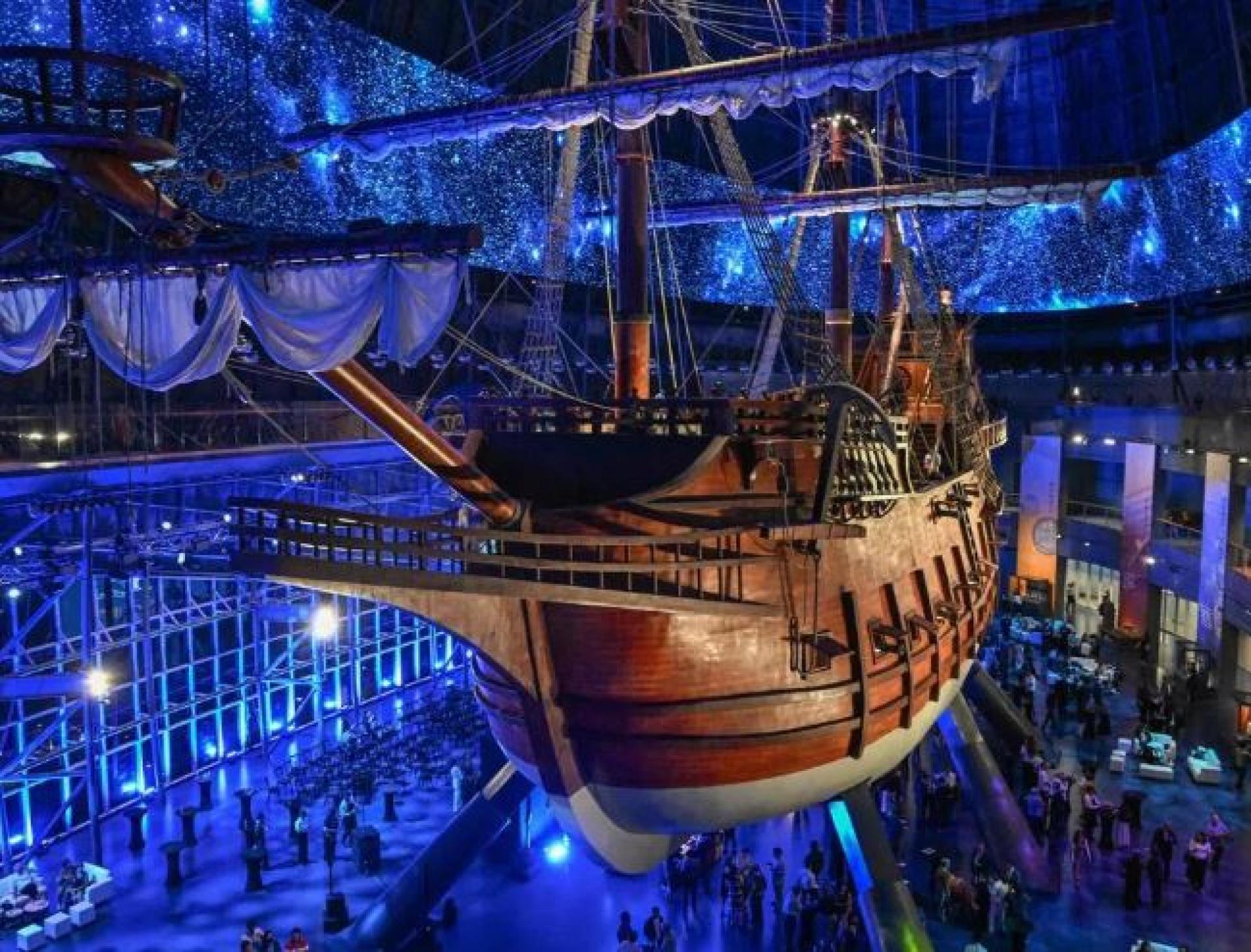
The newly established "Galleon Museum" on the shores of Manila Bay in the Philippines will officially open on May 1, offering visitors an immersive exhibition that takes them back to the 17th-century era of trans-Pacific trade.
According to AFP, this museum, which took 14 years to plan and cost 1 billion pesos to build, features as its centerpiece a full-scale replica of the 17th-century Spanish galleon "Espíritu Santo," making it the museum's biggest highlight.
Inside the museum, panoramic LED projection technology recreates dazzling night skies and maritime scenes, making visitors feel as if they are part of the ocean fleet crossing the Pacific centuries ago.
In addition to depicting the flourishing trans-Pacific trade during the Spanish colonial period, the "Galleon Museum" also tells, for the first time, the story from the perspective of Filipino crew members, recounting a history marked by high mortality rates and forced labor.
From 1565 to 1815, a total of 181 galleons traveled between Manila and Acapulco, Mexico, transporting Spanish American silver to Manila, which was then exchanged for Chinese silk, porcelain, and jade—establishing an early global trade network connecting Europe, Asia, and the Americas.
However, the trade route came at a heavy cost. Historians note that each journey had a crew mortality rate of about 30%. At that time, able-bodied Filipinos were also forced to participate in logging, shipbuilding, and years-long service at sea, sparking numerous uprisings.
The museum notes that the galleons carried not only silver, but also brought with them ideas, religions, diseases, fashions, and food cultures—all of which have had a profound influence on the development of modern Philippine society.