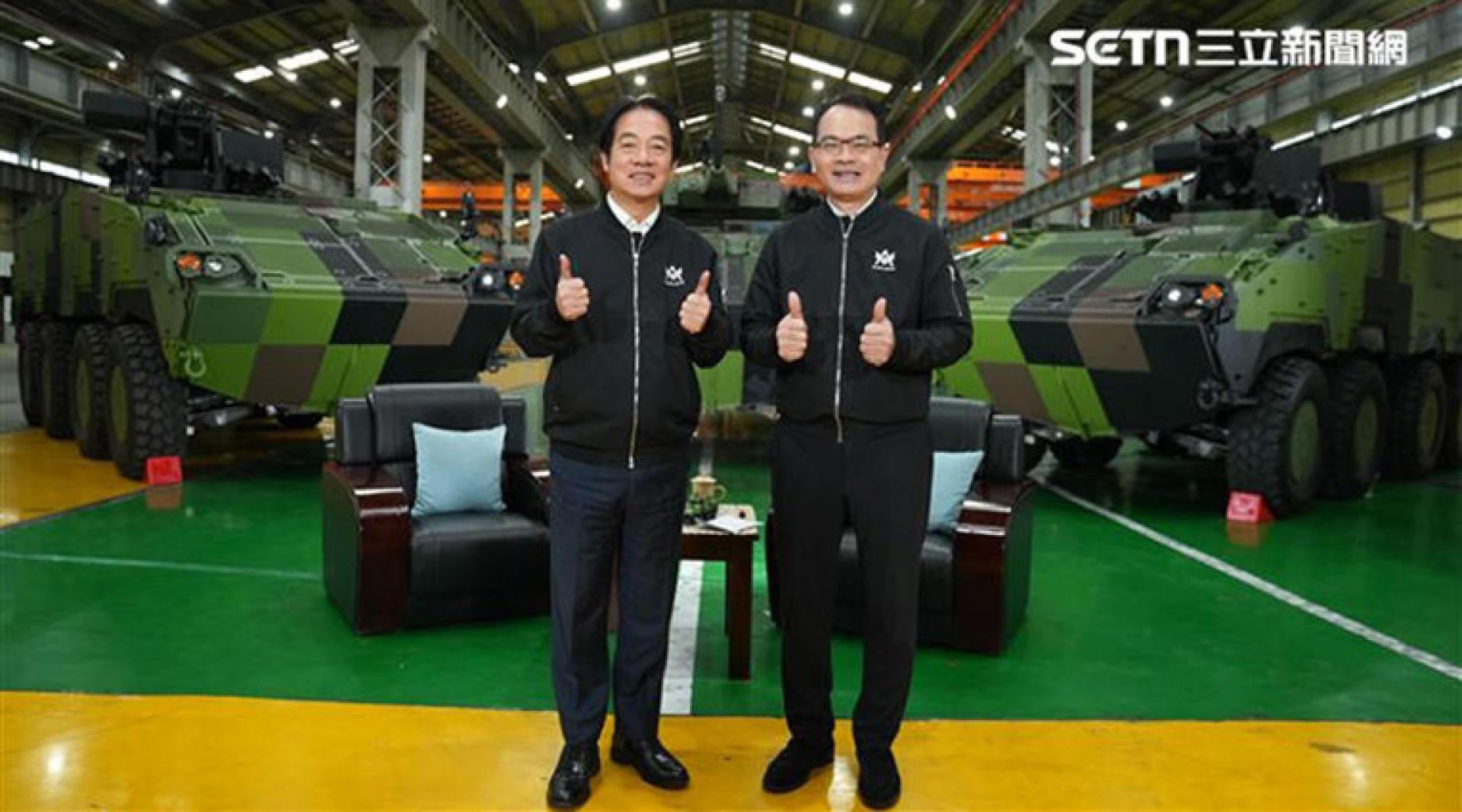
Taiwan President Lai Ching-te said in an exclusive interview that, as president, his most important mission is to safeguard national security and maintain regional peace and stability. He stated he will not provoke Mainland China, nor will he, like during the era of the two Chiangs, seek to reconquer the mainland.
According to a CNA report, Lai Ching-te's interview on Sanlih News' "Era Figures" program was broadcast on the evening of the 28th.
Lai Ching-te stated that currently the mainland is launching five types of threats, all of which greatly impact Taiwan. The first is a threat to the national sovereignty of the "Republic of China," such as diplomatic severance, legal warfare, distorting UN Resolution 2758, and military aircraft and ships entering Taiwan's airspace and Air Defense Identification Zone. Second is creating confusion regarding Taiwan's national identity: whereas opposition parties in the past described the "1992 Consensus" as "one China, each side with its own interpretation," now they no longer talk about "each side with its own interpretation" but promote a "one China, shared interpretation," and have even said "in the future, being Chinese should be an honor."
Third, the mainland continuously infiltrates both active and retired Taiwanese military personnel, recruiting them as spies. Fourth, the mainland uses exchanges as a means of infiltration and united front work, for example, by inviting Taiwanese village chiefs, legislators, associations, or religious groups to visit China and assigning them political tasks to influence Taiwanese society. Fifth, the mainland has established "integration" or "fusion" zones to attract Taiwanese businesspeople and young people to the mainland.
Lai Ching-te stated that he will not deliberately provoke the mainland, nor will he, like during the era of the two Chiangs, seek to reconquer the mainland. Therefore, he is resolute in maintaining the status quo, and also hopes the mainland will respect the reality of the existence of the "Republic of China," and respect the Taiwanese people's desire for democracy, freedom, and human rights. Taiwan is very willing to engage in exchanges and cooperation with the mainland—this is the main goal.
Lai Ching-te said: "As long as the reality of the existence of the Republic of China is respected, as long as the will of the Taiwanese people is respected, if we have equal dignity, we can exchange and cooperate. It's very regrettable that China turns a deaf ear to this—Taiwan's goodwill has been fully demonstrated, but China just ignores it and turns a blind eye. This is very regrettable. I hope China can make some adjustments."