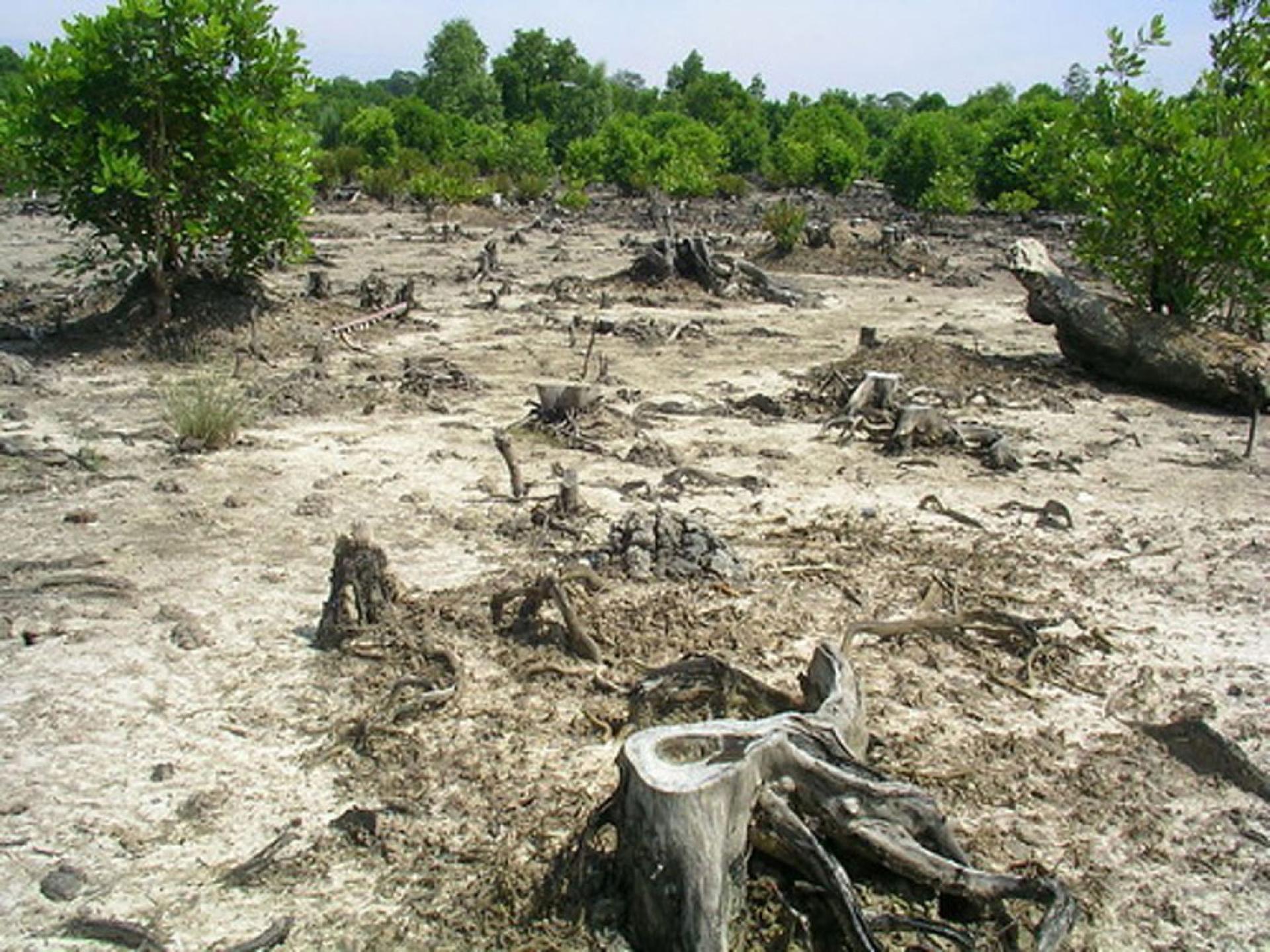
An Indonesian environmental organization released a report on the 31st stating that, due to President Prabowo's push for food and energy self-sufficiency plans—and the government's weak environmental protection policies—Indonesia's forest loss surged by 66% in 2025, hitting an 8-year high.
According to Lianhe Zaobao, the Indonesian Forest and Biodiversity think tank “Auriga Nusantara” found through high-resolution satellite images and on-site investigations that Indonesia lost a total of 433,751 hectares (about 4,338 square kilometers) of forest last year, significantly more than the 261,575 hectares in 2024.
This is the most severe forest loss since 2016, when Indonesia lost over 1 million hectares of forest in a single year.
Auriga Nusantara chairman Manurrung pointed out that Prabowo’s strong push for food security plans is one of the main reasons for the record new forest loss.
According to the report, the Indonesian government allocated 20.6 million hectares of forest land last year for food, energy, and water resource-related projects, of which 43% was natural forest. Auriga Nusantara estimates that over 78,000 hectares of “food reserve forests” were cleared last year—an area equivalent to the size of New York City.
Prabowo's policies promoting bioenergy development have also had a significant impact on forests, with large areas of forest land converted to industrial plantations for biomass energy production. In addition, Indonesia last year had 37,910 hectares of forest land cleared for oil palm plantations, and another 41,162 hectares of forest incorporated into mining concession areas for coal, gold, and nickel.
Manurrung said: “The current president is continuing the practice of former President Jokowi, weakening environmental protection using so-called national strategic projects and the ‘Job Creation Law.’”
The floods and landslides that hit Sumatra Island at the end of last year are closely related to the sharp increase in deforestation. Compared to 2024, deforestation in Aceh Province increased by 426%, in North Sumatra Province by 281%, and in West Sumatra Province by 1,034%.