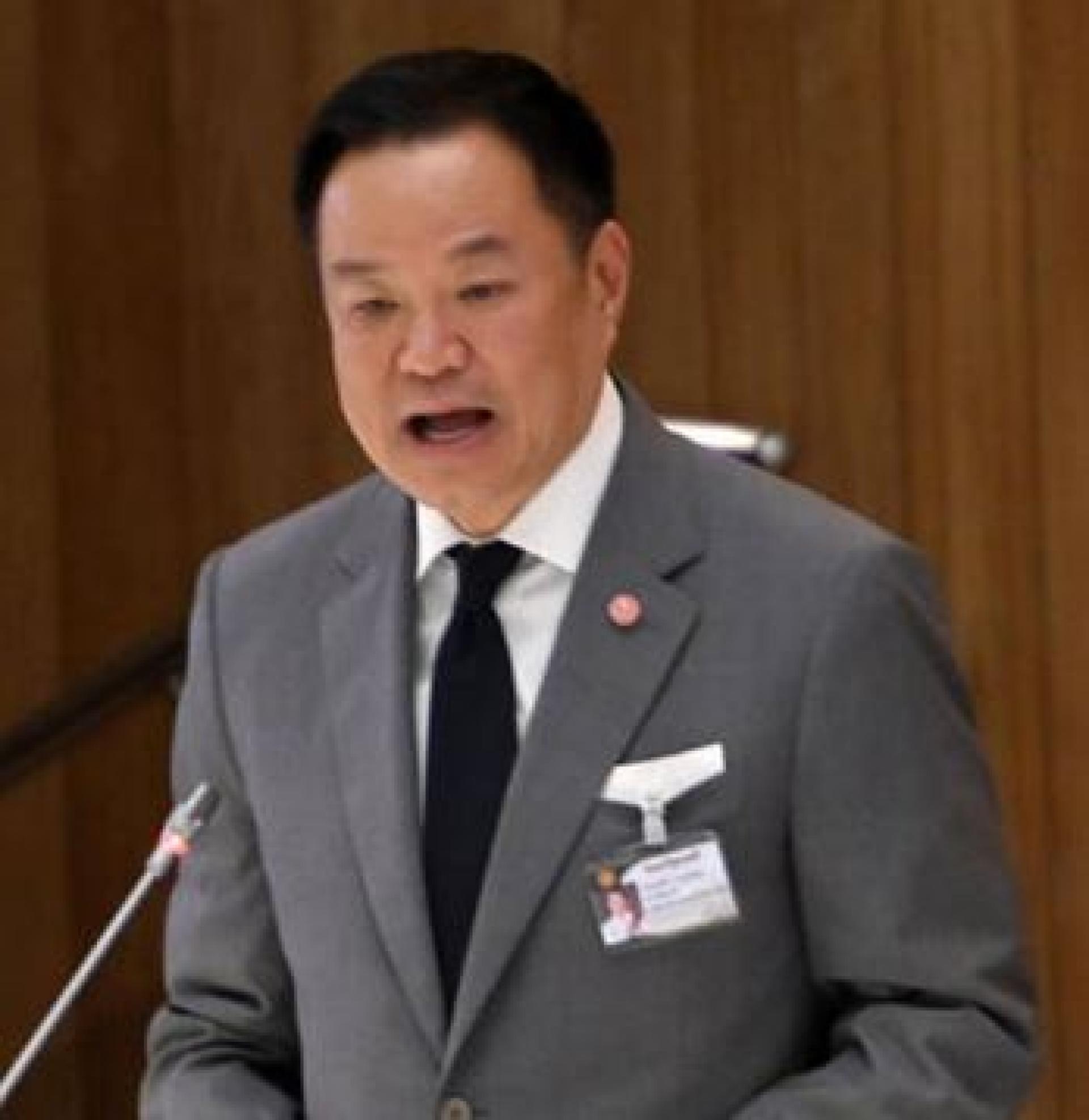
Thai Prime Minister Anutin emphasized that there are currently no immediate plans for a cabinet reshuffle and stated that ministers' performance should be assessed based on administrative effectiveness rather than media exposure.
On Tuesday, Anutin, speaking at the Government House, refuted speculation that his recent call for some 'low-profile' ministers to deliver more concrete achievements led to a flurry of activity among government departments.
He said that the cabinet has always been working actively and that every minister is working very hard.
'Every minister is required to report their weekly work results at cabinet meetings in order to strengthen coordination and cooperation between departments.'
He pointed out that all departments within the coalition government are equally important, including those managed by the Pheu Thai Party.
Anutin also called on all departments to strengthen external communication and make good use of the Public Relations Department and the Government Spokesperson's Office, in cooperation with spokespersons of various ministries, to more effectively publicize government policies and achievements.
He said that the government has achieved many results that benefit the country, the people, and boost international confidence, but currently only a small number of people are aware of them.
'We must strengthen publicity and build a digital footprint so that more people can learn about the government's achievements.'
When asked whether the cabinet will be reshuffled within the next three months, Anutin responded clearly: 'Not at this time.'
He said that even if personnel changes occur in the future, it will be based on ministers' work performance, not the level of media exposure.
'A minister's performance cannot be judged simply by media exposure—it should be based on whether policies are implemented and whether government measures truly benefit the people. This is the most important goal for the government.'
Anutin also said that in the past few months, there has been further enhancement of mutual trust and cooperation among cabinet members, and a deeper sense of tacit understanding and respect has been built.
Meanwhile, Bhumjaithai Party senior leader Paradorn pointed out that the government has recently faced numerous challenges, including the Middle East situation, rising electricity prices, and civil service exam fraud, so there is an even greater need to strengthen communication with the public and boost public confidence in the government.
Industry Minister Warawut believes that the Prime Minister's statement is to motivate ministers to work harder, not to signal a cabinet reshuffle.
He said that while policy implementation is important, if the public is not aware of the government's efforts, achievements in administration will be hard to be acknowledged.
Deputy Prime Minister Pipat also denied any division within the party, stressing that Bhumjaithai Party remains united.
However, according to the latest quarterly poll by the National Institute of Development Administration (NIDA Poll), the support rates for both Anutin and the Bhumjaithai Party have declined.
The poll shows that Palang Pracharat Party leader Natthapol continues to be the most popular candidate for Prime Minister with 26.1% support, while Anutin ranks second with 21.7%. Compared to March this year, both candidates' support rates have dropped.
In terms of party support, the Palang Pracharat Party continues to lead with 34.8%. Bhumjaithai Party dropped from 26.6% to 17%; Pheu Thai Party rose from 12% to 16.8%; and the Democrat Party rose from 11.6% to 12.7%.
He said that the cabinet has always been working actively and that every minister is working very hard.
'Every minister is required to report their weekly work results at cabinet meetings in order to strengthen coordination and cooperation between departments.'
He pointed out that all departments within the coalition government are equally important, including those managed by the Pheu Thai Party.
Anutin also called on all departments to strengthen external communication and make good use of the Public Relations Department and the Government Spokesperson's Office, in cooperation with spokespersons of various ministries, to more effectively publicize government policies and achievements.
He said that the government has achieved many results that benefit the country, the people, and boost international confidence, but currently only a small number of people are aware of them.
'We must strengthen publicity and build a digital footprint so that more people can learn about the government's achievements.'
When asked whether the cabinet will be reshuffled within the next three months, Anutin responded clearly: 'Not at this time.'
He said that even if personnel changes occur in the future, it will be based on ministers' work performance, not the level of media exposure.
'A minister's performance cannot be judged simply by media exposure—it should be based on whether policies are implemented and whether government measures truly benefit the people. This is the most important goal for the government.'
Anutin also said that in the past few months, there has been further enhancement of mutual trust and cooperation among cabinet members, and a deeper sense of tacit understanding and respect has been built.
Meanwhile, Bhumjaithai Party senior leader Paradorn pointed out that the government has recently faced numerous challenges, including the Middle East situation, rising electricity prices, and civil service exam fraud, so there is an even greater need to strengthen communication with the public and boost public confidence in the government.
Industry Minister Warawut believes that the Prime Minister's statement is to motivate ministers to work harder, not to signal a cabinet reshuffle.
He said that while policy implementation is important, if the public is not aware of the government's efforts, achievements in administration will be hard to be acknowledged.
Deputy Prime Minister Pipat also denied any division within the party, stressing that Bhumjaithai Party remains united.
However, according to the latest quarterly poll by the National Institute of Development Administration (NIDA Poll), the support rates for both Anutin and the Bhumjaithai Party have declined.
The poll shows that Palang Pracharat Party leader Natthapol continues to be the most popular candidate for Prime Minister with 26.1% support, while Anutin ranks second with 21.7%. Compared to March this year, both candidates' support rates have dropped.
In terms of party support, the Palang Pracharat Party continues to lead with 34.8%. Bhumjaithai Party dropped from 26.6% to 17%; Pheu Thai Party rose from 12% to 16.8%; and the Democrat Party rose from 11.6% to 12.7%.