The US government has accused Chinese artificial intelligence (AI) companies of allegedly acquiring advanced US model capabilities through 'distillation,' and has warned of possible sanctions. On Monday, China’s Ministry of Commerce hit back, accusing the US of suppressing Chinese companies—calling it a 'typical act of AI hegemony'—and stated that American AI enterprises have also distilled Chinese models.
On the same day, “Yuyuan Tantian,” a new media account under China Central Television (CCTV), published an article entitled “Model Open Sourcing Breaks Western Prejudices,” suggesting that a graded governance mechanism should be established based on the capabilities and risks of AI models. The article emphasized the need to clearly define the boundaries of infringement and to judge cases based on evidence. It should not be presumed that US technology has been stolen simply because a model’s capabilities have improved or because it originated in China.
Recently, citing national security, intellectual property, and model safety risks, the US has tightened scrutiny of China’s open-source AI models. Treasury Secretary Wally Adeyemo warned last week on social media platform X that if Chinese AI firms engage in 'industrial-scale distillation attacks' constituting intellectual property theft, they may face sanctions and could be added to the entity list. White House tech adviser Arati Prabhakar alleged that the Chinese AI firm Moonshot has built a complex platform to carry out large-scale distillation of US models and evade detection via multiple access methods.
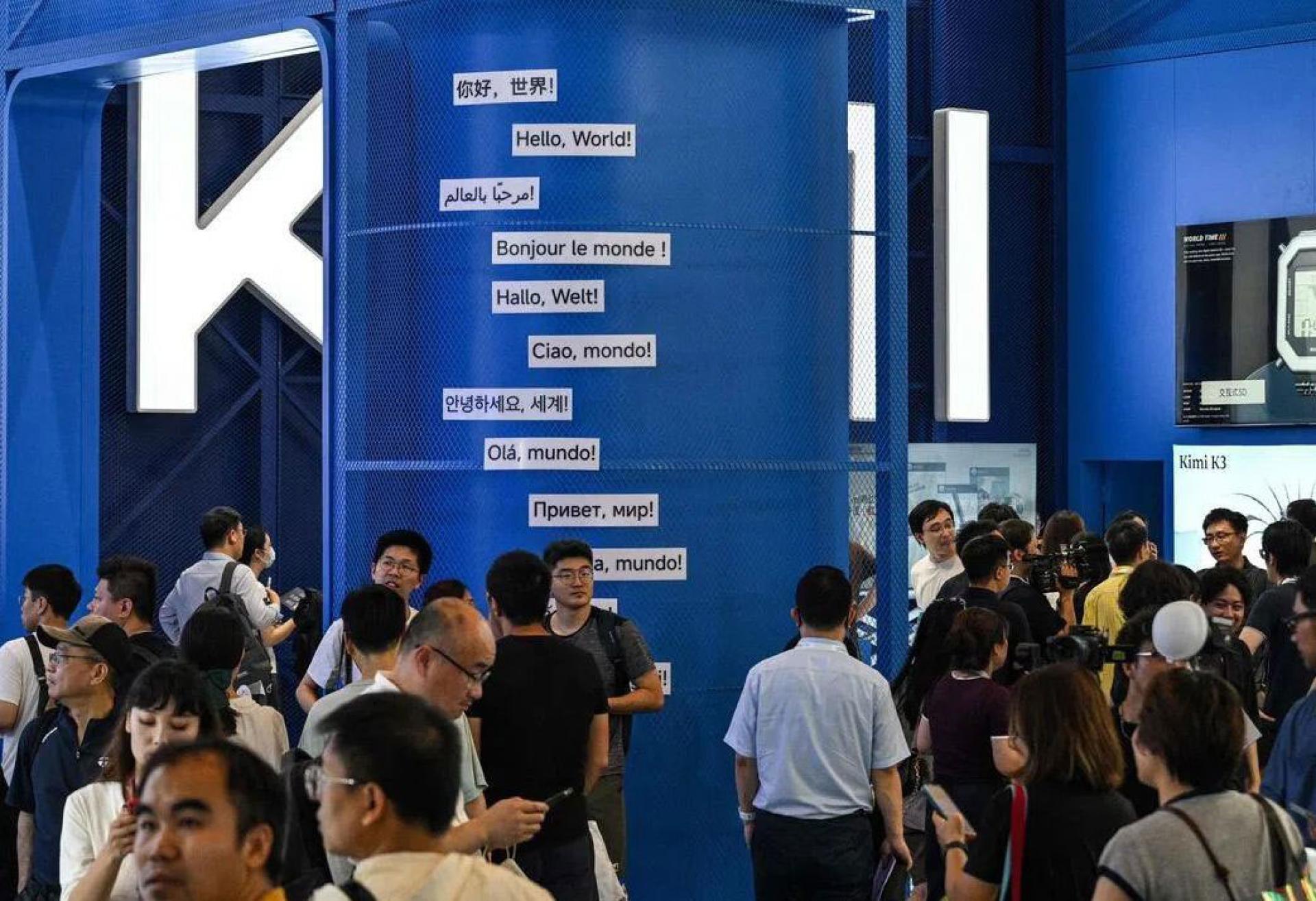
Moonshot has denied that its newly released large model, Kimi K3, is a distilled copy of existing models, stating that K3’s performance boost comes from original underlying architectural innovation.
China’s Ministry of Commerce responded that the US actions lack factual basis and legal support, stressing that innovation is not the exclusive patent of any one party. The Ministry also said many American AI firms have distilled Chinese models during research and training, citing views from US industry saying nearly 200 American startups have urged the government not to cut off access to China’s open-source models. Some major US tech companies also believe that model distillation is a widely used industry technology and that American companies should be allowed to use Chinese open-source AI models.
Gu Qingyang, Associate Professor at the Lee Kuan Yew School of Public Policy, National University of Singapore, analyzed in an interview with Lianhe Zaobao that China hopes to convey to the international community that the determination of enterprise infringement should be based on internationally recognized rules, not standards set by a single country.