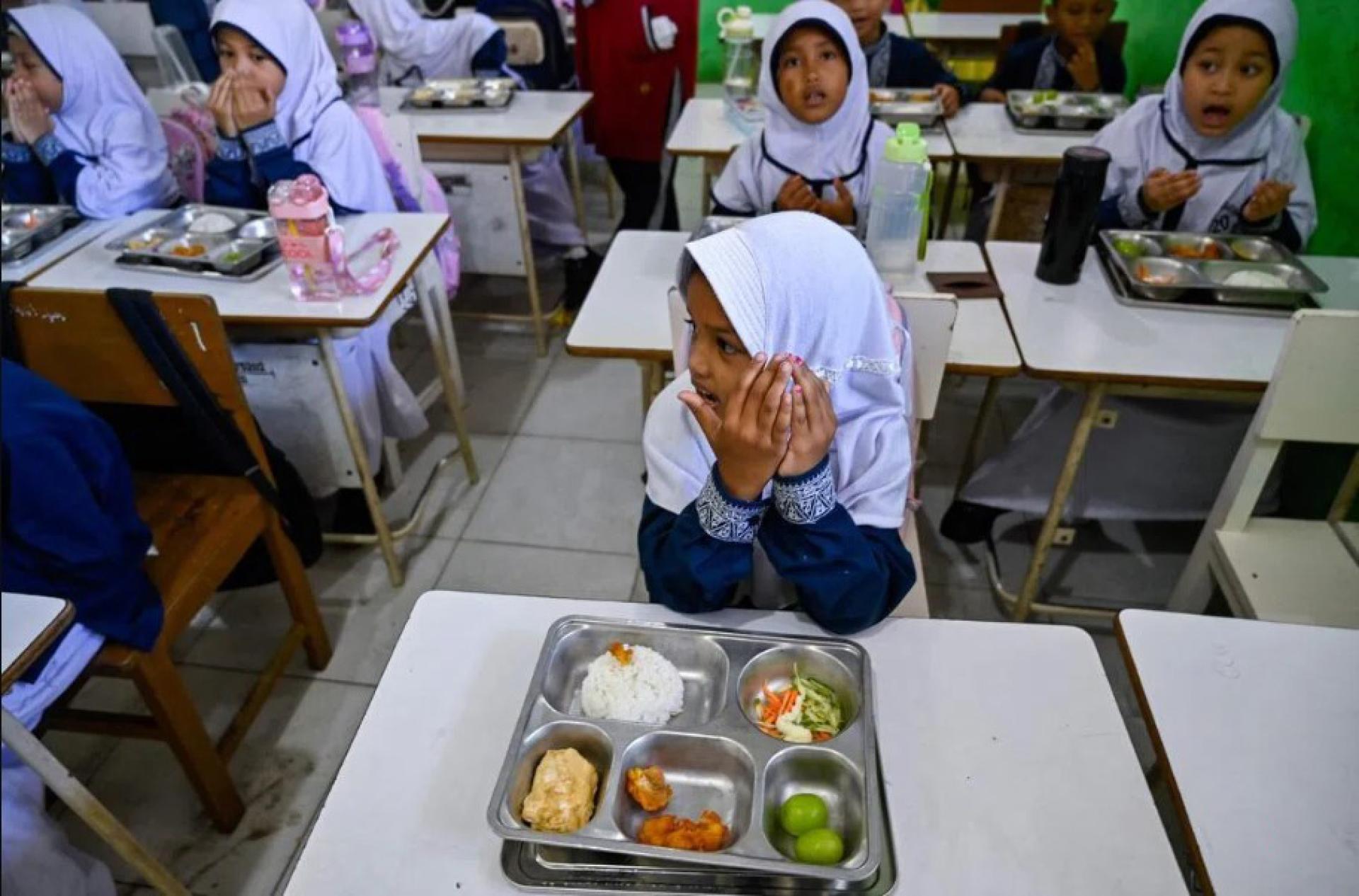
(Indonesia, 18th) A large-scale food poisoning incident broke out in Surabaya, East Java Province, Indonesia, with around 200 students from 12 schools experiencing discomfort after eating government-provided free nutrition meals. The crisis, sparked by the addition of 'beef supplement', has once again cast doubt on President Prabowo's free school meal program.
On May 11, 12 kindergartens, elementary, and junior high schools in Surabaya reported suspected cases of food poisoning. A large number of students developed symptoms such as dizziness, nausea, and vomiting after consuming the free nutrition meals (MBG) distributed by their schools. Some students were taken to the hospital for treatment, while most others only received basic check-ups.
Tiyas, head of the local community health center, confirmed that all symptomatic students had eaten meals distributed by the same 'Nutrition Catering Service Unit' (SPPG). With data still being collected, the number of affected victims is expected to rise.
Preliminary investigations by health authorities have pointed towards the beef served on that day’s menu. Tiyas noted: “According to monitoring, the usual free nutrition meals do not include meat, but beef was added to the menu for the first time that day. This is very likely the source of contamination, but the specific cause is still pending final laboratory testing.”
Descriptions from multiple students have deepened suspicion surrounding the beef dishes. Nabila, a student at a public elementary school, said she felt dizzy and had stomach pain soon after eating beef, vegetables, and rice. Another student, Gibran, said that while the meal smelled normal, the beef tasted bitter, so he did not finish eating it.
The implicated catering unit has since urgently recalled all remaining meals and sent food samples to the Health Laboratory Center (BBLK) for toxicological analysis.
Facing mounting public pressure, the head of the affected catering unit publicly apologized to all poisoned students, teachers, and their families, and said the company has operated since February 2026 with certification from the National Nutrition Agency (BGN) and completed all the relevant licensing procedures. “This incident was beyond our control.”
Zafi announced that prior to the release of final lab results, the unit would suspend operations indefinitely to undergo an internal safety evaluation. However, according to the Indonesian National Nutrition Agency, during its closure the unit remains eligible for a daily government subsidy of 6 million rupiah (about 430 SGD). The agency has also promised to cover all medical expenses for affected students.
Febrina Kusumawati, head of Surabaya’s Education Bureau, indicated that before meals are distributed, teachers have followed standard operating procedures (SOP) to check the food’s appearance and smell, with no abnormalities found at the time. She believes that in the future, suppliers should not only check smell and appearance, but also strengthen checks on ingredients and their combinations to avoid potential food safety risks.
This is not the first time Indonesia’s free school meal program has encountered similar incidents. In January this year, Mojokerto, East Java, also reported a mass food poisoning case where 216 students initially felt unwell after eating chicken soup, and the number later rose to 411.
Although most students experienced only mild symptoms this time, some children have said afterward they do not wish to eat free nutrition meals again. One student told the media: "I’d rather eat my mom’s cooking; it tastes better than MBG."
Tiyas, head of the local community health center, confirmed that all symptomatic students had eaten meals distributed by the same 'Nutrition Catering Service Unit' (SPPG). With data still being collected, the number of affected victims is expected to rise.
Preliminary investigations by health authorities have pointed towards the beef served on that day’s menu. Tiyas noted: “According to monitoring, the usual free nutrition meals do not include meat, but beef was added to the menu for the first time that day. This is very likely the source of contamination, but the specific cause is still pending final laboratory testing.”
Descriptions from multiple students have deepened suspicion surrounding the beef dishes. Nabila, a student at a public elementary school, said she felt dizzy and had stomach pain soon after eating beef, vegetables, and rice. Another student, Gibran, said that while the meal smelled normal, the beef tasted bitter, so he did not finish eating it.
The implicated catering unit has since urgently recalled all remaining meals and sent food samples to the Health Laboratory Center (BBLK) for toxicological analysis.
Facing mounting public pressure, the head of the affected catering unit publicly apologized to all poisoned students, teachers, and their families, and said the company has operated since February 2026 with certification from the National Nutrition Agency (BGN) and completed all the relevant licensing procedures. “This incident was beyond our control.”
Zafi announced that prior to the release of final lab results, the unit would suspend operations indefinitely to undergo an internal safety evaluation. However, according to the Indonesian National Nutrition Agency, during its closure the unit remains eligible for a daily government subsidy of 6 million rupiah (about 430 SGD). The agency has also promised to cover all medical expenses for affected students.
Febrina Kusumawati, head of Surabaya’s Education Bureau, indicated that before meals are distributed, teachers have followed standard operating procedures (SOP) to check the food’s appearance and smell, with no abnormalities found at the time. She believes that in the future, suppliers should not only check smell and appearance, but also strengthen checks on ingredients and their combinations to avoid potential food safety risks.
This is not the first time Indonesia’s free school meal program has encountered similar incidents. In January this year, Mojokerto, East Java, also reported a mass food poisoning case where 216 students initially felt unwell after eating chicken soup, and the number later rose to 411.
Although most students experienced only mild symptoms this time, some children have said afterward they do not wish to eat free nutrition meals again. One student told the media: "I’d rather eat my mom’s cooking; it tastes better than MBG."