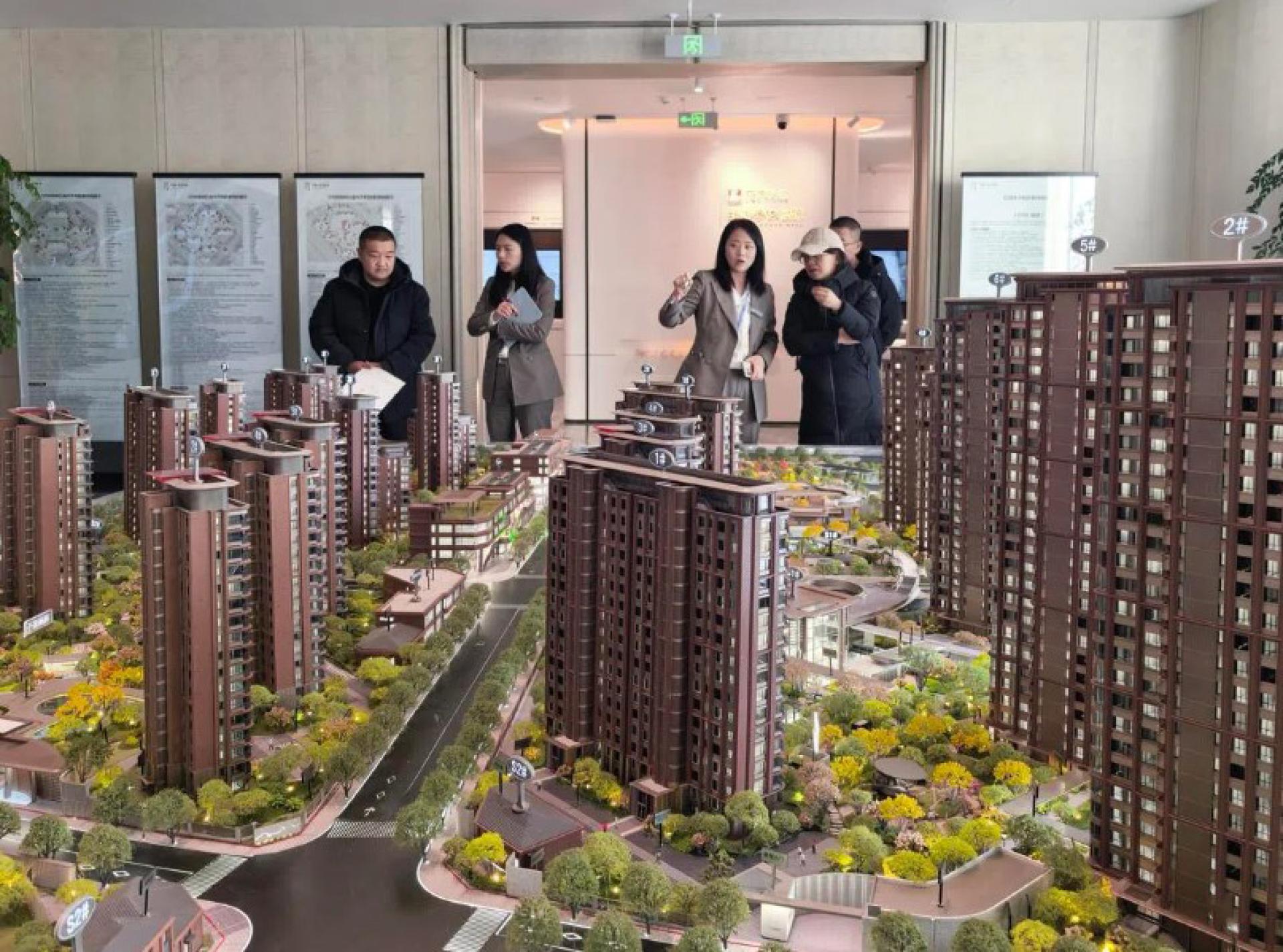
The divergent trend between new and second-hand home prices in China’s major cities continued through the end of 2025. In December 2025, the average price of newly built residential property across 100 cities was 17,084 yuan per square meter (RMB, approximately 3,135 SGD), representing a slight month-on-month increase of 0.28% and a year-on-year rise of 2.58%. The average price for second-hand housing was 13,016 yuan per square meter, down 0.97% from the previous month and down 8.36% compared to the same period last year.
According to data released Thursday (January 1) by the China Index Academy, an institution focused on real estate research, high-end improvement projects were put on the market in cities such as Shenzhen, Beijing, Shanghai, and Nanjing in December 2025, driving structural month-on-month increases in new home prices across the 100 cities. In the second-hand market, listings remained at a high level and prices continued to adjust.
Looking ahead to China’s property market in 2026, the Central Economic Work Conference held in December 2025 set the tone to “focus on stabilizing the real estate market,” after which a number of real estate-related policies were rolled out.
On December 30, Chinese authorities announced a new policy on value-added tax for individual home sales: for homes purchased for less than two years and subsequently sold, the VAT rate will be lowered from 5% to 3%. Homes held for two years or more will continue to be exempt from VAT.
On December 30, Chinese authorities announced a new policy on value-added tax for individual home sales: for homes purchased for less than two years and subsequently sold, the VAT rate will be lowered from 5% to 3%. Homes held for two years or more will continue to be exempt from VAT.
Many regions are also continuing to optimize real estate control policies. For example, Beijing has relaxed restrictions on home purchases for non-Beijing residents and families with multiple children, reducing the number of years of social security or tax payment required for non-registered households. In Shenzhen, the first voucher for monetary compensation for urban village renovation was issued.
The China Index Academy commented that 2026, the opening year of the 15th Five-Year Plan (2026 to 2030), will be a key year for stabilizing the real estate sector, and related policies are expected to be launched early. Restrictive policies in core cities such as Beijing, Shanghai, and Shenzhen may continue to be relaxed. There is also room for stronger measures such as monetary compensation for urban village renovation, adjustments to mortgage interest rates, and increased home purchase subsidies.
On the supply side, last year’s land market already saw reductions in volume and improvements in quality, with standards for quality housing construction being continually refined across various regions. In the future, these improvements in supply are expected to further stimulate demand for housing upgrades.
The China Index Academy commented that 2026, the opening year of the 15th Five-Year Plan (2026 to 2030), will be a key year for stabilizing the real estate sector, and related policies are expected to be launched early. Restrictive policies in core cities such as Beijing, Shanghai, and Shenzhen may continue to be relaxed. There is also room for stronger measures such as monetary compensation for urban village renovation, adjustments to mortgage interest rates, and increased home purchase subsidies.
On the supply side, last year’s land market already saw reductions in volume and improvements in quality, with standards for quality housing construction being continually refined across various regions. In the future, these improvements in supply are expected to further stimulate demand for housing upgrades.